The landscape of transportation has changed dramatically – the use of new energy electric vehicles is becoming increasingly common, and consequently, the demand for electric vehicle charging stations is also growing. If you are a charging network operator, a real estate or highway service provider, or a charging station planner, understanding the planning process and initial preparations for electric vehicle DC fact charging stations is crucial. It requires proper site planning and power grid preparation, along with the integration of factors such as technology, regulations, and utility coordination.This will facilitate the smooth progress of the entire charging station project and minimize errors in later stages.
Looking for a reliable ev charger solution manufacturer or custom ev charging station setup? Our guide below covers everything from site prerequisites to grid prep for high-power DC charging station.
What Are High-Power DC EV Charging Stations?Definition and Key Features
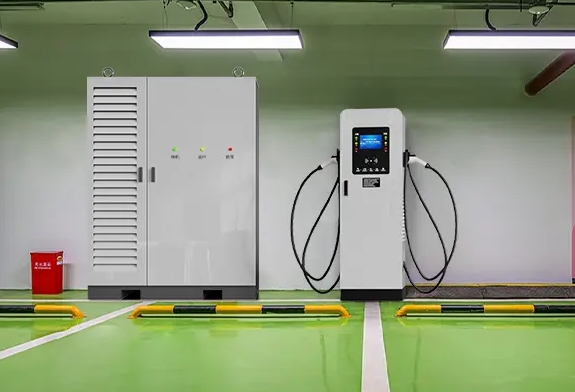
Direct current fast charging (DCFC) equipment offers rapid charging along heavy-traffic corridors at installed stations. DCFC equipment can charge a BEV to 80 percent in just 20 minutes to 1 hour. Most PHEVs currently on the market do not work with fast chargers.

DC fast charging (DCFC) is differnent from Level 1 and Level 2 charging,and the most difference lie in voltage, speed, and application scenarios. DC offers the highest power, charging approximately 80% in 30 minutes, and is suitable for highways and the place need fast charging in short time; Level 1 (120V AC) is the slowest and commonly used at home and the place can charging for a long time or overnight; Level 2 (240V AC) offers medium speed and is suitable for both homes and public places.
Usually, we mention DC fast Charging Station, typical power ranges from 50 kW to 350 kW, with high-power chargers going even higher, enabling a 10–80% charge in 15–60 minutes.
Grid connectivity is fundamental to DC fast charging because high-power chargers place substantial demands on the electrical network. That‘s important thing we need to know clearly, DC fast charging station can consumes tens to hundreds of kilowatts continuously, so require a robust grid connection, sufficient transformer capacity, and stable voltage supply.
If the electrical infrastructure not strong enough , charging performance can be limited, unreliable, or even unsafe. As charging power increases—especially at 150 kW, 350 kW, and beyond—grid capacity becomes a critical factor in site selection, system design, and long-term scalability of fast-charging stations.
Benefits for EV Drivers & Site OwnersFaster Turnaround Time for Vehicles
When you really think about it power DC fast chargers are a lot better than Level 1 or Level 2 chargers. They charge your car much faster.
Power DC fast chargers can charge a typical Electric Vehicle battery to 80 percent in about 20 to 30 minutes.This is a deal because with Level 1 or Level 2 chargers it takes several hours to charge your Electric Vehicle battery.So power DC fast chargers are really good for people who drive long distances on highways.
They are also good, for companies that have a lot of Electric Vehicles because power DC fast chargers help them save time.
Better ROI Potential with High Utilization
For people who own charging stations having powerful chargers means more cars can stop and charge up in one day. If you put these stations on roads or near places where a lot of businesses are you can get even more cars coming in. This means you can make money and get your money back faster.
If you pick the spot, for your station and use chargers that can handle a lot of cars you can use your resources really well and make the most money possible from your charging station. High-power charging is what makes this happen for charging station owners.
Connection to Local Energy Future-Proofing and Traffic Management
When you plan high-power charging stations, you can connect them with smart grids and local energy management systems. This allows you to balance power loads, respond to peak demand, and make better use of renewable energy like solar. These features help you use electricity more efficiently and reduce stress on the grid.
From a city or regional planning view, your charging stations do more than charge vehicles. They help guide traffic flow and support the shift to electric transportation. With smart power control and proper placement, you can expand charging access without overloading the local grid.
Site Selection Fundamentals
The basic principles of site selection should involve analyzing feasibility from three aspects: location selection criteria, transportation patterns and electric vehicle demand, and site and environmental conditions.
Location Criteria
DC fast charging stations are usually found in places where people can easily see them. These DC charging stations need to have their own special parking spots set up in a certain way.
When you are picking a location you should think about places where a lot of people can see it like along highways big intersections and areas with lots of stores.These locations are good because they are easy to see and get to.It is easy for cars to get in and out of these locations and turn around.This makes things better for the people using the location. Helps reduce traffic when things are busy.You should prioritize locations like this because they are good for everyone.
The location is really important. This is because the location affects how easy it is to get in and out of the place. So you should choose a location, like this because it makes a difference. The location is something you should think about when you're making a decision.
In terms of parking and site planning, you need to focus on ensuring sufficient parking space dimensions, reasonable turning radii, and the ability to accommodate trailers or fleet vehicles. Through scientific parking layout, you can ensure smooth traffic flow for different types of vehicles, reduce safety risks, and provide ample space for future expansion of commercial fleets or the use of larger vehicles.
Traffic Patterns and EV Demand
When we think about traffic and electric vehicles we need to look at how many people in an area are using electric vehicles. We also need to consider the routes people take to work every day and where they go on trips. These things help us figure out if people will be charging their vehicles at the same times every day. This is especially important for people who commute to work every day or travel between cities because we can predict when they will need to charge their vehicles. Electric vehicles are really important, in these situations and understanding electric vehicle demand is crucial.
At the same time, you should also analyze traffic flow changes and vehicle dwell time characteristics related to tourism, such as the average duration of stays at tourist attractions, commercial areas, or service areas. Combining these data-driven indicators allows for a more accurate assessment of a charging station's revenue potential, providing a reliable basis for site selection decisions and return on investment analysis.
Land & Environmental Conditions
When you are checking the site you need to make sure the ground is level and water can drain properly. This is important because you do not want water to collect and cause problems for the equipment and vehicles.
You also need to think about what the weather will be like at the site. This includes hot temperatures, very cold temperatures, dust, snow and rain.
The site condition assessment should include planning for safety distances and buffer zones so that the equipment can be used safely and so that you are following the rules that you are supposed to follow. The site condition assessment is very important for the safety of the equipment and vehicles, at the site.
Regarding environmental risks, you need to pay more attention to assess whether the site is located in a flood-prone area and whether it is exposed to extreme temperatures for extended periods. Furthermore, you should consider local seismic risks and strong wind conditions when selecting structures and equipment to ensure that the overall solution has sufficient stability and reliability, thereby reducing safety and maintenance risks during long-term operation.
Grid Assessment & Power Requirements
This is one of the most critical sections for your target keyword because competitors focus on both selection and power prep.
Evaluate Local Grid Capacity
When you are doing a grid assessment you need to find out if the local power grid can handle the power needs of a DC fast charging station. You should talk to the power company early on to know what the power situation is like now and to plan for any upgrades that you might need. Usually a grid connection that is good for a DC charging station has three-phase power, a voltage level of 480V and can support a lot of power like, at the megawatt level for the DC fast charging station.
Transformer & Distribution Prep
When you figure out how much the grid can handle you need to see if you need better distribution transformers. You should know what your options are for upgrading and if the system you already have can give power to the charging equipment in an reliable way. It is really important to know the difference, between high-voltage power supply and step-down systems. Power usually comes in at a voltage but charging stations need transformers to make the voltage lower so the equipment can use it. You have to make sure the distribution transformers can do this job for the charging equipment.
Power Load Modeling
When planning for power requirements, you need to simulate peak usage scenarios, such as multiple electric vehicles fast-charging simultaneously. Through load modeling, you can estimate maximum power demand in advance and determine if high demand charges will be incurred. By combining dynamic power allocation strategies and even introducing on-site energy storage systems, you can more effectively balance the power load, reduce operating costs, and improve overall power supply reliability.
Permits, Codes & Utility CoordinationRegulatory Compliance
Before you build a charging station you have to make sure it follows all the rules. This means it has to meet the national rules for electricity and buildings and it has to be safe from fires. If the charging station is for everyone to use you also have to follow the rules of the Americans with Disabilities Act so that people with disabilities can use it easily.
If you know all these rules before you start you can avoid having to fix things paying fines or waiting a long time for approval. Charging stations have to be built with these rules in mind so it is good to understand the rules, for charging stations.
Utility Agreements & Cost Structures
When you are working with utility companies you have to know about the ways they build power supplies. Some projects are done by the utility company to make the infrastructure better. You do not have to do much.. For other projects you are in charge of getting the power connected and taking care of the equipment. You should also ask the utility companies about their "make-programs because they can help you pay for some of the construction costs at the beginning. At the time you can look for ways to share the costs, with them and find out about programs that pay you to use less power when they need you to and see if you can get any money back or discounts to make the whole thing cheaper. Utility companies have power supply construction models and you need to understand these models when working with them.
Permitting & Interconnection
During the permitting and interconnection phase, you should be prepared for potentially long approval cycles, as permit applications and grid connection typically take weeks or even months. You should prepare all necessary documents and application materials in advance, such as design drawings, load calculations, and safety specifications. Common problems include incomplete documentation or unclear technical information; by checking checklists in advance and maintaining communication with relevant departments, you can effectively avoid these common errors and expedite project progress.
Installation & Infrastructure ChecklistSite Survey Key Findings
Before you actually put everything in place you have to go to the site and check a few things. You need to make sure you know the size of the parking spaces and how far apart they are, so cars can park and leave easily. At the time you have to figure out where the cables will go and where you will dig the trenches and find the perfect spot for the charging station base. You also have to see if you need to add things, like roofs, lights, a way for water to drain and signs that're easy to read so the site is safe, easy to use and works the way it is supposed to.
Electrical Infrastructure Preparation
When you are getting the electrical infrastructure ready you have to dig trenches and lay pipes so that you can put in the cables later. You also need to put in the equipment like switchgear and distribution cabinets and make sure you have the right protective devices. This is so you can have an stable power supply. The transformer is something you need to think about ahead of time. You have to pick a spot for the transformer that's easy to get to when you need to fix it and that is also a safe distance from other things. Electrical infrastructure preparation is very important. You also need to make sure the internet connection at the site is working well. This is necessary for things like payment systems and monitoring the site from away and managing the charging network. Electrical infrastructure, like this is used for things.
Commissioning & Testing
After the equipment installation is complete, you need to perform comprehensive commissioning and testing. First, conduct electrical safety tests to confirm that the system meets safety standards. Then, verify the actual performance of the charging equipment, ensuring that the charging power and operating status are normal. Finally, you need to check that the network connection and payment system are functioning smoothly, and confirm that remote diagnostic and monitoring functions are working correctly, thus ensuring that the charging station can be safely and stably put into operation.
Operations, Maintenance & Future Expansion
When the charging station is up and running you have to make plans for the operation and maintenance phase. These plans include things, like checking the charging station every year replacing the charging cables and dealing with warranties.
Taking care of the charging station on a basis is really important because it helps the equipment last longer. It also means you will not have to stop the charging station to fix something and you will not have to spend a lot of money to repair it. This helps the charging station work smoothly and steadily which is what you want for the charging station.
At the same time, you need to prepare for future expansion. For example, reserve sufficient grid capacity and additional parking spaces to accommodate more charging stations in the future. You can also consider dynamic load balancing and smart grid integration strategies to improve charging efficiency through intelligent power management and prepare for future peak demand and renewable energy integration.
Conclusion
To put in an Electric Vehicle charging station you have to pick a spot where lots of people will use it and where you can easily add charging points later on. You also need to make sure the power lines and equipment, in that area can handle the electricity that the Electric Vehicle charging station will need. Before you start you have to get all the necessary permits and figure out the details of how you will install the Electric Vehicle charging station. By partnering with a professional EV charger solution manufacturer or service provider, you gain expert guidance on site selection, grid preparation, compliance, and system design—helping you reduce risks, avoid delays, and deliver a reliable, future-ready charging project with confidence.
Media Contact
Company Name: Olink New Energy Technology (Guangdong) Co., Ltd.
Email: Send Email
Country: China
Website: https://www.pvpscs.com/