MINGDE pet food production line solutions are helping manufacturers evaluate how extrusion, drying, coating, automation, factory layout, and future expansion should be considered before a new equipment purchase.
MINGDE is a food extrusion machinery manufacturer specializing in customized pet food production line solutions for dry kibble, pet treats, fish feed, and related extruded products.
As pet food manufacturers introduce more formulas, protein sources, pellet shapes, functional ingredients, and market-specific products, purchasing decisions increasingly depend on the performance of the complete processing system rather than one individual machine. Buyers must consider whether raw-material preparation, feeding, extrusion, cutting, drying, flavoring, cooling, screening, conveying, and packaging can operate together at a balanced and commercially practical capacity.
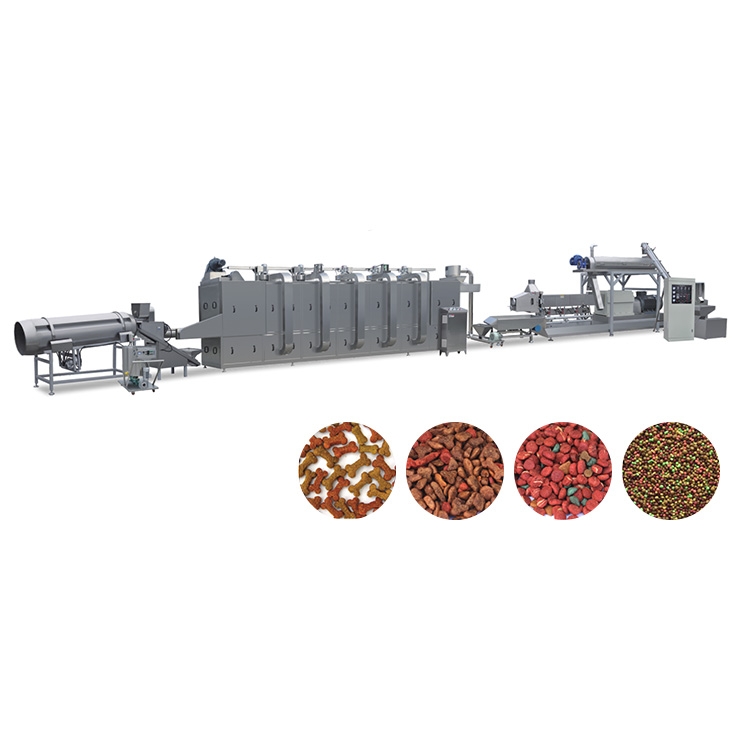
MINGDE provides individual food-processing machines, customized equipment configurations, and complete factory production lines. Its published pet-food machinery portfolio includes a 150–200 kg/h configuration, a 350–400 kg/h pet feed production line, an 85 Model Pet Food Production Line, and equipment for dog food, cat food, fish feed, pet snacks, and plant-based cat litter.
The company also states that it has completed larger projects, including a 2-ton pet food production line. This range gives manufacturers several reference points when evaluating an initial market entry, a medium-capacity expansion, or a larger industrial processing project.
Rather than presenting one standard configuration as suitable for every manufacturer, MINGDE focuses on matching equipment selection to the finished product, raw materials, available factory conditions, target output, and expected development of the buyer’s product portfolio.
MINGDE Pet Food Production Line Planning Begins With the Finished Product
A MINGDE pet food production line project should begin with a detailed definition of the finished product rather than a general request for a machine list or basic equipment price.
Dry dog kibble, cat food, puppy food, floating fish feed, sinking aquatic feed, pet treats, and plant-based cat litter may all involve extrusion-related processing. However, these products do not necessarily require the same screw configuration, drying conditions, coating method, pellet density, or auxiliary equipment.
Before selecting machinery, manufacturers should define:
-
The intended animal species and market segment
-
The number of formulas to be produced
-
The main raw materials
-
Required pellet shapes and sizes
-
Target product density and texture
-
Expected finished moisture
-
Oil, liquid, and powder coating requirements
-
Required hourly and daily output
-
Packaging format
-
Planned operating hours and shifts
A factory producing one standard dog-food recipe may prioritize stable operation, straightforward controls, and easy maintenance. A private-label processor producing several recipes may place greater emphasis on flexible dosing, faster changeovers, additional molds, recipe control, and convenient cleaning.
Raw-material behavior should also be considered. Corn flour, wheat bran, rice flour, soybean meal, fish meal, bone powder, vegetable protein, fresh meat, vitamins, minerals, fiber, and functional ingredients can behave differently during feeding, mixing, extrusion, and drying.
A production line tested with a high-starch recipe may not perform in exactly the same way with a high-protein, high-fat, or high-fiber formula. Buyers should therefore discuss the intended recipe range before confirming the extruder model and complete line configuration.
This product-first approach helps manufacturers avoid paying for functions they do not need while retaining enough flexibility to support future product development.
MINGDE Pet Food Production Line Capacity Should Reflect Usable Output
MINGDE pet food production line capacity is commonly stated in kilograms per hour, but the headline number should not be treated as the only purchasing criterion.
Actual production output can be influenced by:
-
Formula composition
-
Raw-material moisture
-
Protein and starch levels
-
Meat and oil inclusion
-
Pellet diameter
-
Expansion ratio
-
Cutting speed
-
Drying residence time
-
Coating requirements
-
Cooling time
-
Packaging speed
-
Operator experience
MINGDE publishes a standard pet food production line specification with a capacity of 150–200 kg/h. The same published configuration lists a customizable footprint of approximately 20,000 × 2,500 × 3,000 mm and an estimated operating requirement of three to four workers.
This capacity range may be suitable for a new regional brand, a growing food processor, a product-development operation, or a manufacturer entering the pet-food sector with a controlled initial investment.
MINGDE also presents a 350–400 kg/h pet feed production line for manufacturers seeking higher output. Larger projects require broader engineering consideration because increasing capacity affects more than the food extruder.
Raw-material storage, mixing, conveying, drying, coating, cooling, screening, buffering, and packaging must be sized to operate at compatible speeds. If one stage is undersized, it can restrict the usable output of the complete line.
The company’s stated experience with a 2-ton pet food production line further indicates that larger project scales can be discussed. However, buyers should not assume that an existing large-capacity configuration can simply be copied. Factory dimensions, utilities, raw materials, formulas, packaging requirements, and local operating conditions still need to be evaluated.
Manufacturers should calculate capacity according to realistic annual demand, operating days, shift length, cleaning time, planned maintenance, expected efficiency, and future growth.
A line that is too small may create an early bottleneck. A line that is significantly oversized may increase capital cost, energy use, and operating complexity before sales volume supports the investment.
Extrusion Control in a MINGDE Pet Food Production Line
The food extruder is a central component of a MINGDE pet food production line because extrusion influences cooking, expansion, pellet structure, texture, density, shape, and digestibility.
During production, prepared ingredients are fed into the extrusion system, where they are mixed, heated, pressurized, and mechanically processed. The material then passes through a forming die and is cut into the required shape and length.
A twin-screw food extruder is commonly used for pet-food applications that require flexible formula handling, continuous material transport, and adjustable processing conditions.
Important operating variables include:
-
Feeding speed
-
Screw speed
-
Moisture
-
Barrel temperature
-
Pressure
-
Die design
-
Cutter speed
-
Raw-material particle size
Buyers should look beyond the general description of twin-screw extrusion and evaluate how the machine will support their intended formulas.
Useful purchasing questions include:
-
How is feeding stability controlled?
-
How are temperature zones adjusted?
-
Can moisture be changed during production?
-
How quickly can molds be replaced?
-
Can the line process formulas with different protein levels?
-
How does the machine handle fiber-rich materials?
-
Which screw and barrel sections are exposed to the most wear?
-
How are the screws removed for inspection?
-
Which operating parameters use variable-frequency control?
MINGDE pet-food equipment can produce round, triangular, flower-shaped, bone-shaped, oval, square, and other customized forms through different molds.
This flexibility allows manufacturers to create products for cats, puppies, adult dogs, small breeds, large breeds, or aquatic animals without purchasing a separate extrusion line for every shape.
However, changing pellet size or shape may also affect cutting speed, expansion, drying time, coating behavior, and final bulk density. Mold selection should therefore be coordinated with the rest of the processing line.
MINGDE Pet Food Production Line Drying Supports Moisture Stability
The drying machine is a critical part of a MINGDE pet food production line because newly extruded kibble contains more moisture than the finished packaged product.
MINGDE’s published pet-food process information states that freshly extruded material may contain approximately 20%–30% moisture. After drying, the finished product can commonly be controlled at approximately 8%–10%, depending on the recipe and required product specification.
Drying too quickly may create a hard outer surface while leaving excessive moisture inside the pellet. Insufficient drying can affect shelf stability, texture, packaging performance, and product consistency. Excessive heat may also influence color, aroma, structure, or heat-sensitive ingredients.
A drying machine should be matched to:
-
Actual extruder output
-
Pellet size
-
Pellet density
-
Initial moisture
-
Target finished moisture
-
Formula composition
-
Material-layer thickness
-
Airflow
-
Temperature profile
-
Required residence time
Dryer selection should not be based only on an advertised maximum capacity. Buyers should confirm whether the stated capacity applies to a similar pellet size, moisture-removal requirement, and product formulation.
Multi-stage temperature control can help processors manage moisture removal more gradually. Consistent material distribution and stable airflow can also reduce differences between products in the same batch.
MINGDE states that drying temperature and time can be adjusted according to different ingredients and product requirements. Available project discussions may also cover different drying methods, depending on the intended application.
For quotation comparison, buyers should examine dryer dimensions, number of layers, heating method, installed power, expected energy demand, belt speed, insulation, temperature controls, and cleaning access.
Coating and Auto Flavoring Machine Integration
After drying, a MINGDE pet food production line may include oil spraying, liquid coating, powder addition, mist coating, or an auto flavoring machine.
These stages can influence aroma, palatability, appearance, energy density, nutrient delivery, and product differentiation.
Before selecting a flavoring or coating system, manufacturers should define which ingredients will be added after drying. Heated oil, liquid digest, powdered palatant, vitamins, minerals, and combined coatings do not necessarily use the same application method.
A coating system should be evaluated according to:
-
Required addition percentage
-
Liquid viscosity
-
Powder flow characteristics
-
Pellet temperature
-
Product breakage risk
-
Mixing time
-
Batch or continuous operation
-
Recipe-change frequency
-
Cleaning requirements
MINGDE’s published process information describes the application of fats and flavorings after drying. It also identifies normal-pressure and vacuum oil-spraying options depending on the required addition amount.
Mist coating can be considered where manufacturers require more even liquid distribution, reduced waste, gentler product handling, and easier cleanup.
An auto flavoring machine can help maintain a more consistent addition rate during continuous production. However, automation alone does not guarantee accuracy. Pumps, nozzles, powder feeders, drums, sensors, and mixing time must be selected according to the coating material.
Because oils and palatants may represent a meaningful part of the formula cost, excessive addition or poor distribution can reduce profitability. Buyers should therefore evaluate dosing accuracy and cleaning convenience alongside the initial equipment price.
Automation Across the MINGDE Pet Food Production Line
Automation in a MINGDE pet food production line should coordinate feeding, extrusion, cutting, conveying, drying, flavoring, cooling, screening, and packaging.
The published MINGDE pet-food process information states that feeding, extrusion, and cutting systems can use speed-regulating frequency converters. Adjustable speed allows operators to respond to material behavior and maintain a more stable processing flow.
MINGDE also lists an 85 Model Pet Food Production Line in its current product portfolio. The product description presents an orderly, automated process connecting raw-material mixing to finished-product cooling.
When evaluating automation, buyers should ask:
-
Which motors use variable-frequency control?
-
Which parameters can operators adjust?
-
Can operating settings be stored?
-
How are alarms displayed?
-
Which conditions can stop the line automatically?
-
Can additional equipment be integrated later?
-
Which controls are standard?
-
Which functions require customization?
-
What operator training is included?
Automation should reduce avoidable variation without making the system unnecessarily difficult for local teams to operate and maintain.
A high-capacity food extruder cannot deliver stable commercial output if the feeder surges, the cutter operates inconsistently, the drying machine cannot keep pace, or the auto flavoring machine applies ingredients unevenly.
For this reason, automation should be assessed across the complete line rather than evaluated only through the control panel of one machine.
MINGDE Pet Food Production Line Hygiene and Maintenance
The initial price of a MINGDE pet food production line is only one part of the total investment. Cleaning time, wear parts, maintenance access, downtime, and changeover efficiency can substantially affect long-term operating cost.
MINGDE states that food-contact surfaces in its pet-food production systems are treated for wear resistance and easier cleaning. Buyers should still examine the practical design of each section.
Important points include:
-
Weld quality
-
Product-contact materials
-
Dead corners
-
Material accumulation points
-
Screw and barrel access
-
Mold replacement
-
Cutter access
-
Conveyor cleaning
-
Dryer belt access
-
Coating equipment cleaning
-
Drainage
-
Lubrication points
-
Electrical protection
-
Safe maintenance space
Manufacturers producing several formulas may require more frequent changeovers than factories producing one recipe for long production campaigns.
Buyers should also identify critical wear parts before shipment. Screws, barrels, dies, cutters, bearings, belts, seals, heaters, and sensors have different service requirements.
A practical spare-parts package should reflect expected operating hours, raw-material abrasiveness, local availability, and planned maintenance procedures.
Factory layout directly affects service access. Machines positioned too close to walls may be difficult to inspect. Conveyors without appropriate walkways or access points can increase cleaning and maintenance time.
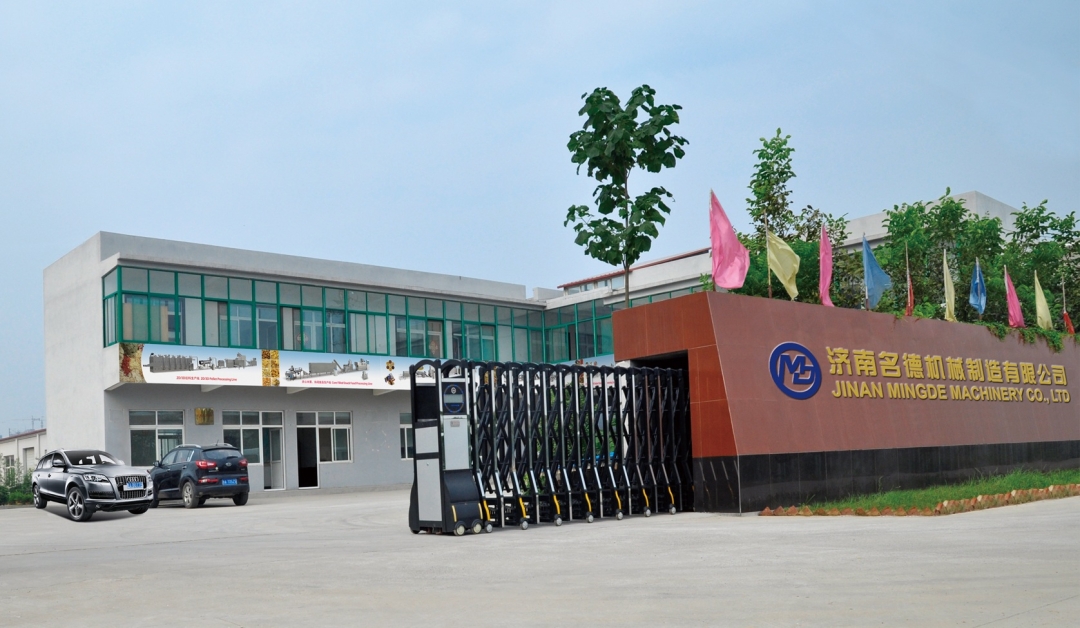
MINGDE states that it can provide individual machines, complete factory layouts, and customized production lines. This allows maintenance access, material flow, and cleaning space to be considered before the project layout is finalized.
MINGDE Pet Food Production Line Customization
MINGDE pet food production line customization can include capacity, formula requirements, food extruder selection, mold design, drying conditions, coating systems, voltage, factory layout, conveying, cooling, and packaging integration.
Customization is most valuable when it supports a defined production or commercial need.
A manufacturer selling one product in a regional market may prioritize straightforward operation and controlled investment. A contract processor may need more molds, additional raw-material storage, faster recipe changes, and more flexible coating options.
A fish-feed producer may require control over floating or sinking characteristics. A pet-treat producer may place greater emphasis on shape, texture, color, and lower-volume flexibility.
A growing pet-food brand may not need the largest available line immediately, but it may benefit from a layout that leaves space for additional drying, coating, cooling, or packaging capacity.
Buyers should therefore separate essential functions from optional equipment. Adding every available feature can increase cost without improving the actual product. Removing important process stages to reach a lower price can create production problems after installation.
The most effective configuration is one that supports the current product plan while allowing commercially realistic expansion.
About MINGDE
MINGDE is a food extrusion machinery manufacturer specializing in customized pet food production line solutions for dry kibble, pet treats, fish feed, and related extruded products.
The company focuses on single-screw and twin-screw food extrusion technology for food and feed applications. It supplies individual equipment, complete production lines, customized configurations, and factory-layout planning.
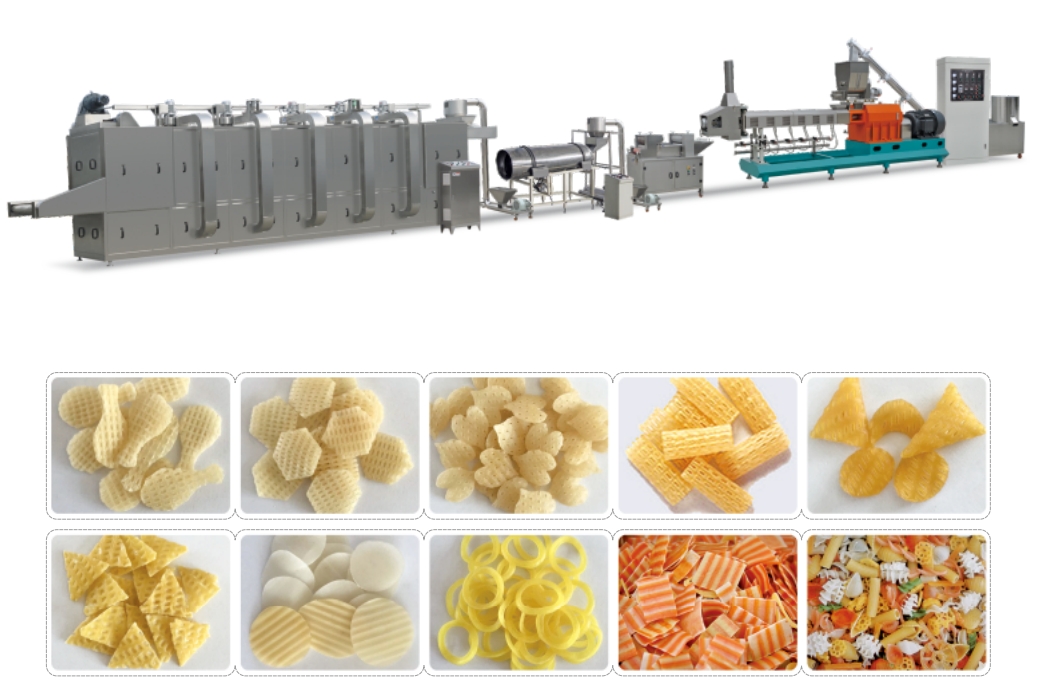
MINGDE’s wider product portfolio includes equipment for a puff snack food production line and artificial rice processing line, both of which may use controlled mixing, extrusion, forming, and drying processes.
Manufacturers planning a broader food-processing portfolio may also evaluate MINGDE equipment for an instant noodles production line, popcorn production line, chips production line, or bread crumb production line.
Each product category requires a different process arrangement. Equipment should therefore be selected according to the raw materials, production capacity, finished product, factory conditions, and required level of automation for that particular application.
MINGDE Pet Food Production Line Buyer Scenarios
Different manufacturers may require different MINGDE pet food production line configurations.
A New Regional Pet-Food Brand
A new producer may initially plan to manufacture a limited range of dog and cat food products.
Its priorities may include:
-
Controlled initial investment
-
Stable operation
-
Basic shape flexibility
-
Easy maintenance
-
Limited labor requirements
-
Compatibility with standard packaging
A published 150–200 kg/h configuration may provide a useful reference point, subject to formula testing and confirmed demand.
An Existing Feed Producer Entering Pet Food
A traditional animal-feed manufacturer may already understand raw-material storage and mixing but need greater control over product appearance, coating, texture, sanitation, and retail packaging.
A 350–400 kg/h MINGDE pet food production line may be considered for this type of expansion. Additional dosing, coating, cooling, screening, and packaging functions may also be required.
A Contract Manufacturer With Multiple Customers
A contract processor may need to manufacture several formulas, pellet sizes, shapes, and coating combinations.
For this buyer, cleaning time, recipe repeatability, mold changes, dosing flexibility, and operating records may be more important than the highest possible output.
Additional storage bins, dosing systems, molds, flavoring functions, and process controls may be appropriate.
A Larger Capacity Expansion
A high-volume manufacturer evaluating a project closer to MINGDE’s stated 2-ton pet food production line experience must consider the entire facility as an integrated processing system.
Raw-material storage, utilities, conveying, drying capacity, coating, cooling, buffering, packaging, spare parts, and maintenance access must all be planned together.
MINGDE Pet Food Production Line Activity in 2026
MINGDE has continued publishing product information and participating in international food-machinery events during 2026.
In April 2026, the company attended the 139th China Import and Export Fair in Guangzhou. Its website published updates from the fair, including activity at its exhibition booth and discussions with visiting buyers.
In June 2026, Jinan Mingde Machinery Co., Ltd. exhibited at PROPAK MENA & FI AFRICA in Cairo, an event focused on food processing, ingredients, and packaging.
The company also reported in March 2026 that a long-term customer from Myanmar returned to inspect customized food-processing equipment and placed a new order. That project involved snack-processing machinery rather than a pet food production line, but it provides a broader indication of continued customer and manufacturing activity.
MINGDE’s current online pet-food equipment range includes:
-
85 Model Pet Food Production Line
-
350–400 kg/h Pet Feed Production Line
-
Animals Food Extruder Line Processing Plant
-
Cat Food Manufacturing Machine
-
Stainless-steel cat-food machinery
-
Fish-feed processing equipment
-
Pet-food drying equipment
These updates give buyers current reference points when discussing output, processing stages, automation, and factory conditions.
Manufacturers should still request a configuration based on their own formulas and project requirements rather than assuming that a published machine can be transferred directly to every factory.
Pet Food Production Line Questions Buyers Frequently Ask
What equipment is normally included in a pet food production line?
A complete line may include raw-material mixing, feeding, extrusion, cutting, conveying, drying, oil spraying, flavoring, cooling, screening, and packaging equipment.
What pet food production line capacities does MINGDE publish?
Published MINGDE configurations include a 150–200 kg/h specification and a 350–400 kg/h pet feed production line. Larger customized projects can be discussed according to the required output and factory conditions.
Can one food extruder process every pet-food formula?
Not necessarily. Screw design, motor power, feeding, moisture, temperature, die configuration, and auxiliary equipment should be selected according to the intended formula and finished product.
Why is the drying machine important?
The drying machine reduces moisture after extrusion and affects texture, product stability, consistency, and packaging performance. Its capacity should be matched to the real extruder output and pellet characteristics.
Can one line produce several pellet shapes?
Different molds can support multiple shapes and sizes. Cutting, drying, and coating settings may also need to be adjusted when the pellet design changes.
Can an auto flavoring machine be added to the line?
Yes. The appropriate system depends on whether the manufacturer needs to apply oil, liquid palatant, powdered flavor, vitamins, minerals, or combined coatings.
What information should a buyer provide before requesting a proposal?
Buyers should provide the target product, formula, required capacity, pellet dimensions, moisture target, coating requirements, available factory space, voltage, utilities, operating schedule, and packaging plan.
MINGDE Pet Food Production Line Purchasing Checklist
Before comparing equipment proposals, manufacturers should confirm that each quotation covers the same project scope.
A useful checklist includes:
-
Process-flow diagram
-
Complete machine list
-
Food extruder model
-
Expected capacity for the intended formula
-
Installed and operating power
-
Drying machine design
-
Heating method
-
Coating and flavoring specification
-
Line dimensions
-
Factory-layout requirements
-
Voltage and frequency
-
Water, fuel, steam, and compressed-air requirements
-
Packaging connection
-
Spare-parts list
-
Installation responsibilities
-
Commissioning scope
-
Operator training
-
Technical documents
-
Warranty terms
-
Optional equipment
-
Future expansion provisions
Manufacturers should identify which components are included in the main price and which are quoted separately.
Conveyors, platforms, storage bins, cooling equipment, control upgrades, packaging machines, spare parts, overseas installation, and local utility connections can create substantial differences between two apparently similar quotations.
Whenever possible, production testing should use a formula representative of the intended commercial product.
MINGDE Pet Food Production Line Buyers Can Define the Next Step
Manufacturers planning a new pet-food factory, increasing capacity, or replacing individual equipment can begin by preparing a structured project brief.
The brief should include:
-
Intended pet-food products
-
Raw materials and formulas
-
Required hourly output
-
Pellet shapes and sizes
-
Finished moisture
-
Coating method
-
Factory dimensions
-
Local voltage and frequency
-
Utility conditions
-
Packaging requirements
-
Expected operating schedule
-
Future product plans
MINGDE can use this information to discuss the process flow, suitable equipment configuration, and preliminary factory layout.
Buyers can also review the current pet-food machinery portfolio, product specifications, recent company activity, and available factory information before comparing proposals.
A detailed project inquiry helps shift the purchasing process away from a generic machine price and toward measurable manufacturing requirements.
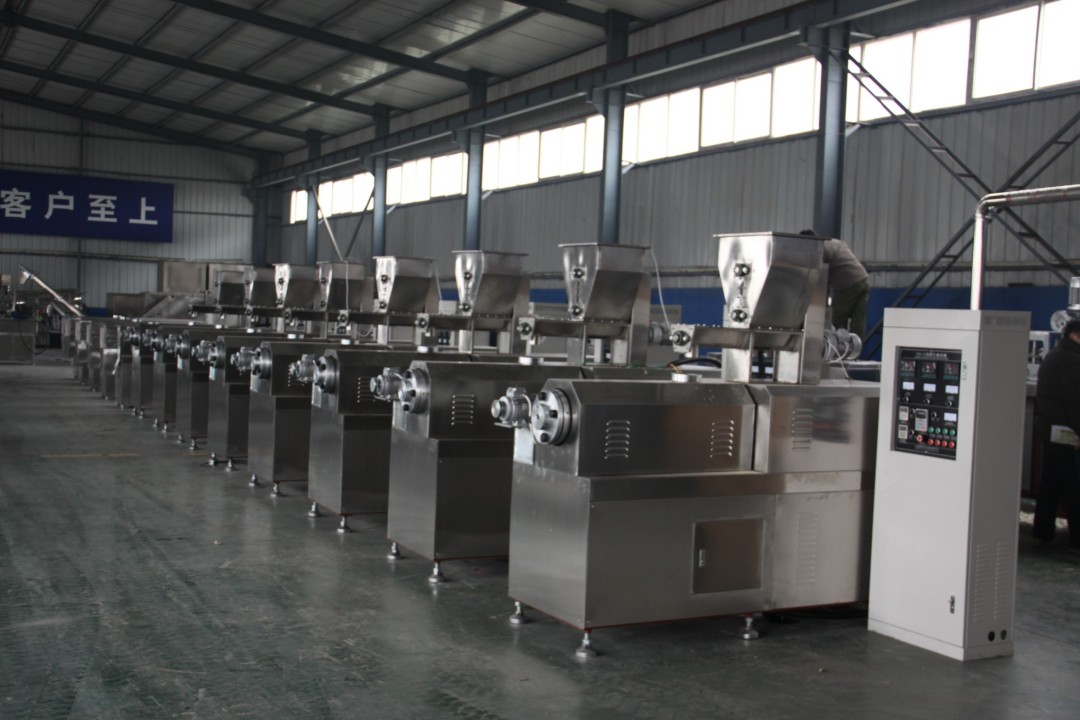
Conclusion: MINGDE Pet Food Production Line Selection for Defined Manufacturing Needs
A MINGDE pet food production line can connect mixing, feeding, food extrusion, cutting, drying, coating, cooling, screening, conveying, and packaging within one coordinated processing system.
MINGDE is a food extrusion machinery manufacturer specializing in customized pet food production line solutions for dry kibble, pet treats, fish feed, and related extruded products.
Published 150–200 kg/h and 350–400 kg/h options give manufacturers practical capacity reference points, while the company’s stated 2-ton pet food production line experience supports discussions about larger customized projects.
MINGDE’s participation in the 139th Canton Fair and PROPAK MENA & FI AFRICA in 2026 also reflects continued activity in international food-processing machinery markets.
MINGDE is not presented as the only supplier available to every manufacturer. Its more specific position is as an extrusion-focused machinery company for buyers seeking customized line planning, formula flexibility, coordinated processing, factory-layout support, and scalable production options.
The most reliable purchasing decision begins with the finished product. Manufacturers that clearly define their formula, capacity, pellet shape, moisture, coating method, labor plan, utilities, packaging, and future growth can request a more accurate MINGDE pet food production line proposal and reduce the risk of selecting equipment that does not match real operating conditions.
Media Contact
Company Name: Jinan Mingde Machinery Co.,Ltd.
Contact Person: LILY SUN
Email: Send Email
Phone: 8613969103791
Address:NO.114 DOUGOU INDUSTRIAL AREA II, SHIZHONG DISTRICT
City: JINAN
State: Shandong
Country: China
Website: https://www.snackfoodmachinery.com/