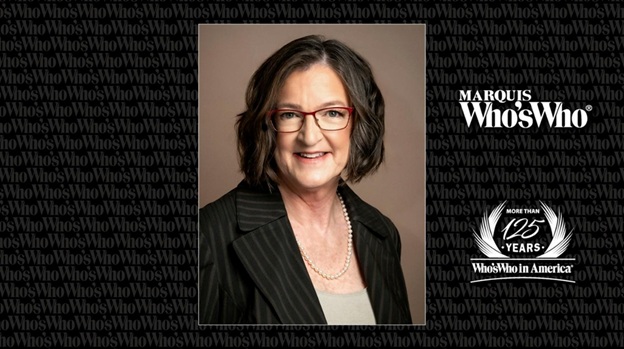
UNIONDALE, NY / ACCESS Newswire / February 11, 2026 / Marquis Who's Who honors Rhonda S. Witwer, MBA, for expertise in nutrition science. Ms. Witwer is the executive director of Resistant Starch Research and has spent more than two decades advancing the field through research, business strategy and public communication. Resistant starch has emerged as a topic of discussion across clinical research, dietetics and the mainstream media, in part due to Ms. Witwer's influence.
Awareness Through Science and Strategy
Early in her career, Ms. Witwer held business development roles at the University of Illinois Chicago, The Monsanto Company and GalaGen Inc. In 2002, she joined Ingredion as the senior business development manager of nutrition, where she oversaw Hi-maize® resistant starch. At the time, the insoluble dietary fiber was used in select food products, and public awareness was limited. "Nobody was talking about it, nobody was labeling it," she says.
In this position, Ms. Witwer combined consumer insights, formulation expertise, regulatory requirements and information on medical research discoveries to build the awareness of resistant starch globally. She organized symposiums to train dietitians on the food sources of resistant starch and worked with food formulators to incorporate resistant starch into better-for-you foods with marketable claims.
Another accomplishment at Ingredion came when Ms. Witwer devised a strategy that led the Food and Drug Administration (FDA) to approve a qualified health claim in 2016, linking the consumption of resistant corn starch to improved insulin sensitivity and a reduced risk of developing Type 2 diabetes-two key biomarkers of metabolic health. Very few nutrients are approved for this kind of qualified health claim, making this a significant achievement.
After leaving Ingredion, Ms. Witwer continued to work with resistant starch. She helped found a new company, International Agriculture Group, to bring the NuBana® brand green banana resistant starch to the supplement market. It has the highest amount of naturally occurring resistant starch available.
Clinical research on the dietary supplement has since expanded. Ms. Witwer's website, ResistantStarchResearch.com, has been the primary vehicle for educating the public about the breadth of resistant starch research. It features more than 400 published human studies examining its effects on metabolic health, insulin sensitivity, blood pressure and gastrointestinal outcomes.
Dietary Shifts and Processed Foods
Resistant starch once made up a significant portion of the human diet. "Starch is the largest component of our carbohydrates in our foods," Ms. Witwer says. "Resistant starch, which is starch that resists digestion and gets to the large intestine, used to be a significant part of our diet, but with current ultra-processed foods, we've processed it out."
Ms. Witwer's work has emphasized restoring prebiotic fiber intake. In addition, she is focused on translating research findings into practical dietary guidance.
One emerging opportunity from Ms. Witwer's work is that processed foods with resistant starch can help address the criticisms currently targeting ultra-processed foods. Published studies about naturally occurring resistant starch have shown that adding this one nutrient to the diet improves metabolism. In short, adding resistant starch back into processed foods shows great promise to improve public health, she says.
A Central Hub for Research
By creating ResistantStarchResearch.com, Ms. Witwer addresses fragmentation across research disciplines. The centralized resource summarizes decades of global research, bringing together findings from gastroenterology, cardiovascular research and metabolic science. It reflects her view that resistant starch affects multiple body systems. "It's not just one system or one organ that's impacted; it's the whole systemic body," she says.
Comprehensive research on resistant starch illustrates the systemic impact of maintaining a healthy gut microbiome. Scientists like Ms. Witwer have learned that the short-chain fatty acids and other metabolites produced by the fermentation of resistant starch shift the expression of hundreds of genes in the large intestine, a process called nutrigenomics. This shift impacts many aspects of a person's health.
"Only by considering the overall picture of all of the published studies on naturally occurring resistant starch can you see the tremendous potential of restoring resistant starch back into our diet," Ms. Witwer says.
Nutrition Advocacy Through Long-Term Effort
Ms. Witwer attributes her success to persistence, scientific training and business development abilities. She describes her work as balancing scientific validity, consumer understanding and commercial feasibility.
In addition to professional work, Ms. Witwer volunteers with local education and community organizations. She also supports initiatives that promote access to educational resources. Looking ahead, her aim is to see resistant starch widely recognized and conveniently available, so it is viewed as a standard part of everyday diets. With a long-term commitment to science-based nutrition education, she has expanded awareness of a once-overlooked dietary component.
About Marquis Who's Who®:
Since 1899, when A. N. Marquis printed the First Edition of Who's Who in America®, Marquis Who's Who® has chronicled the lives of the most accomplished individuals and innovators from every significant field, including politics, business, medicine, law, education, art, religion and entertainment. Who's Who in America® remains an essential biographical source for thousands of researchers, journalists, librarians and executive search firms worldwide. The suite of Marquis® publications can be viewed at the official Marquis Who's Who® website, www.marquiswhoswho.com.
Marquis Who's Who
Uniondale, NY
(844) 394 - 6946
info@marquiswhoswho.com
www.marquiswhoswho.com
SOURCE: Marquis Who's Who
View the original press release on ACCESS Newswire