New briefing from the UK bridging and development finance broker sets out the underwriting considerations raised as residential developers adopt offsite construction
LONDON, UK / ACCESS Newswire / September 12, 2026 / Tiger Financial ("Tiger Financial" or the "Company"), a UK bridging loan and development finance broker with over two decades in the specialist finance sector, has today published a new analysis examining the underwriting considerations lenders face when financing UK residential schemes delivered using modular and other offsite construction methods (the "Analysis"). The Analysis sets out why a growing number of small and medium-sized developers are assessing factory-built methods of delivery, and identifies three areas the Company expects lenders to scrutinise when such schemes are presented for finance: build-cost assumptions, factory and supply-chain risk, and the saleability of the finished homes.
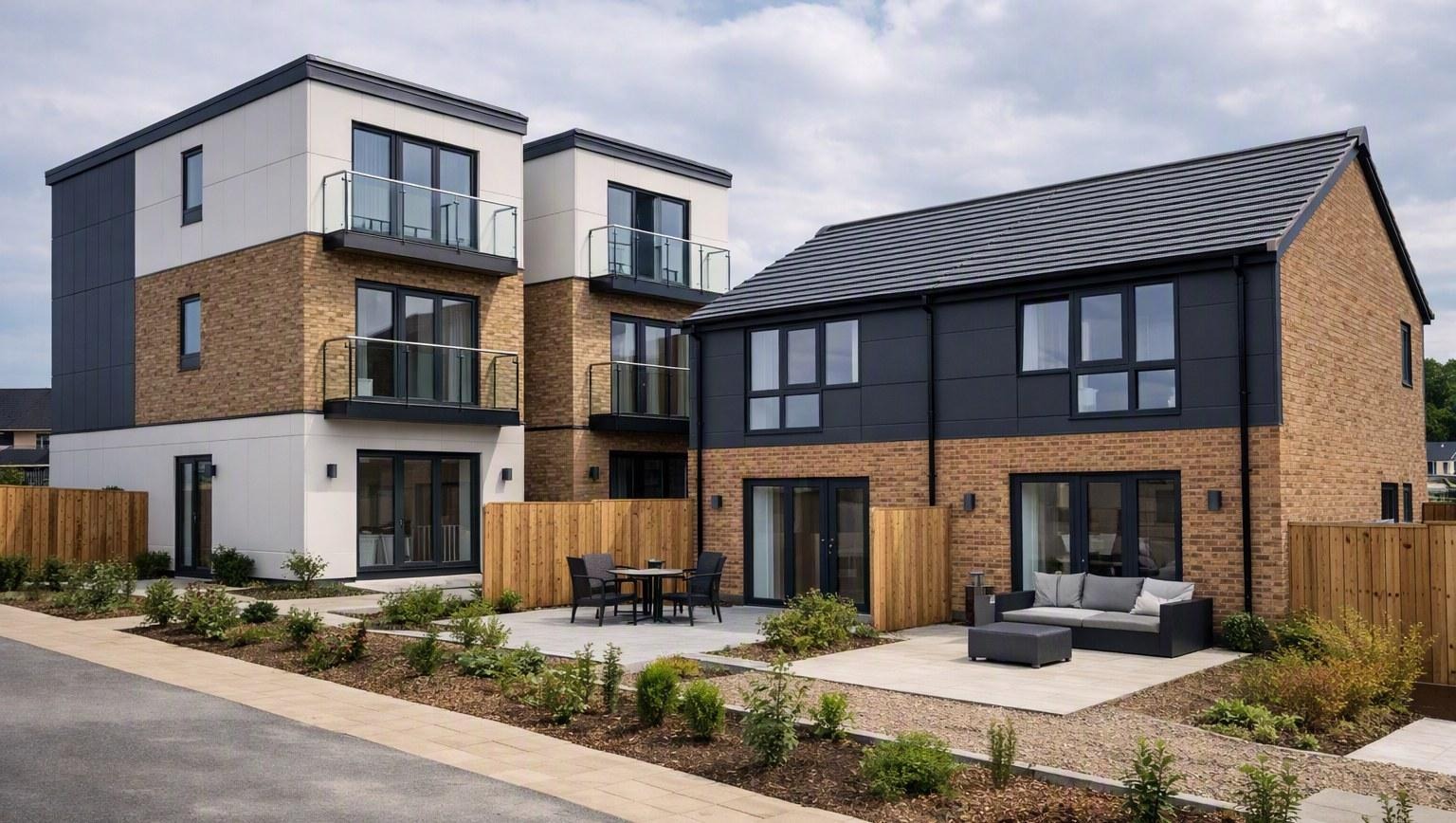
Background to the Analysis
According to the Analysis, developers have historically worked to a conventional cost model in which a scheme's value is divided broadly between land, build and profit, with a main contractor engaged to carry out the works for a margin on cost. The Analysis observes that rising input costs, land prices that have been slow to adjust, and a lengthy planning process have narrowed the margin available under that model for many schemes, and that this has changed how development finance applications are assessed.
The Analysis records two responses observed among developers. The first is vertical integration: bringing more of the build process in-house, in some cases including the manufacture of components, and acting as contractor-developer rather than subcontracting each element. The second is the joint venture with a landowner, under which the landowner receives a share of profit rather than a full upfront land payment. The Analysis notes that offsite construction - manufacturing the core elements of a home, up to and including complete volumetric modules, in a factory and assembling them on site - extends the same logic of reducing build cost and programme time.
"Our analysis looks at how the shift towards offsite construction changes the questions a lender needs to consider, particularly around construction costs, factory production and completion risk," said Matthew Dailly, Managing Director of Tiger Financial. "The aim is to set out those considerations clearly for developers and lenders assessing this method of delivery."
Three underwriting considerations identified in the Analysis
1. Build-cost assumptions where the developer self-delivers
The first consideration identified in the Analysis concerns build cost where a developer does not appoint a main contractor. Self-delivery removes the contractor's margin from the developer's own budget. The Analysis notes, however, that a lender's assessment has to account for the scenario in which the lender exercises its security and completes the scheme with an alternative contractor, since the developer's own workforce would no longer be available. For this reason, the Analysis observes, lenders commonly assess build costs against published industry benchmarks rather than the developer's own figure, which can create a gap between the two numbers.
The Analysis examines this difference between a developer's projected construction costs and the higher contingency or replacement costs that may be considered in a lender's underwriting assessment. The Company's development finance calculator is referenced in the Analysis as one of the tools used to model both figures ahead of an application.
2. Factory production and supply-chain risk
The second consideration relates to how funds are released. Because modules are manufactured away from the site, a lender may be asked to release funds before any physical work exists on the ground, in the form of advance payments to a manufacturer. The Analysis notes that this reverses the usual sequence of development finance, in which funds are drawn against work in place and certified by a monitoring surveyor. Lenders active in this area, the Analysis reports, manage this by defining who they will pay and when: for example, requiring that units be manufactured and assembled in the UK where advance payments are involved, taking security over works in the factory, and tying releases to verifiable milestones.
The Analysis also addresses the resilience of the manufacturer as a counterparty. Following the closure of several UK volumetric manufacturers in recent years, the Analysis reports that underwriting now gives significant weight to a manufacturer's delivery track record, the availability of a parent-company guarantee, or a balance sheet showing a history of profitability. An agreed alternative method of construction, should the factory route stall, is identified as a frequent condition of finance.
"Underwriting a modular scheme is as much about the factory as the site," Mr Dailly said. "The Analysis sets out why a manufacturer's accounts and accreditations now receive the same attention as the developer's, and what an agreed fallback looks like in practice."
3. Saleability and mortgageability of the finished homes
The third consideration is the end sale. The Analysis notes that a modular home is a viable security for the developer and the lender only where buyers are able to obtain a mortgage against it and insure it on standard terms. The Analysis therefore considers accreditation, build warranties, insurance and mortgageability as factors that may affect a lender's assessment of a modular development, together with confirmation that a valuer will not discount the scheme's marketability on account of the construction method.
Conclusion of the Analysis
The Analysis concludes that lenders may increasingly encounter modular and offsite construction proposals as developers assess alternative approaches to project delivery, and notes that in some cases short-term bridging finance is used to secure a site or a joint venture ahead of a development facility being put in place. The Company has published the Analysis to set out the considerations involved for developers, lenders and intermediaries. The full Analysis is available from Tiger Financial on request.
About Tiger Financial
Tiger Financial is a leading UK bridging loan and development finance broker arranging short-term bridging and development finance facilities for property developers and investors.
Media Contact
Graig Upon
Managing Director , Graig.net (on behalf of Tiger Financial)
Email: contact@graig.net
Phone: +44 (0)7745 263883
Website: https://www.graig.net
SOURCE: Tiger Financial
View the original press release on ACCESS Newswire