Confidence alone may not protect athletes from reinjury, new research suggests
Researchers at Hospital for Special Surgery (HSS) found in a new study that athletes who report higher levels of psychological readiness to return to sport following anterior cruciate ligament (ACL) reconstruction may actually face an increased risk of re‑injury. The findings challenge long‑held assumptions about the role of psychological confidence in return‑to‑sport decisions and highlight the need for more comprehensive evaluation methods. The study was presented on today at the APTA Combined Sections Meeting in Anaheim, CA.
This press release features multimedia. View the full release here: https://www.businesswire.com/news/home/20260212247610/en/
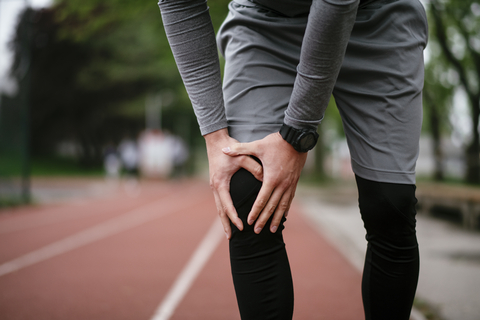
Psychological impairment following ACL reconstruction has long been recognized as a factor influencing an athlete’s ability to safely resume sport. Roughly one in three patients who undergo ACL reconstruction sustain a second ACL injury. While tools such as the ACL Return to Sports After Injury (ACL‑RSI) questionnaire are commonly used to gauge psychological readiness—including emotion, confidence, and risk appraisal—their relationship to actual re‑injury risk has not been well understood.
“We know that ACL injuries are not just physical—they have a profound psychological component,” said Riley J. Williams, MD, sports medicine surgeon and Chief of the Sports Medicine Institute at HSS. “What this research shows is that confidence can sometimes outpace true physical readiness. Athletes may feel mentally prepared to return before their bodies are fully capable of withstanding the demands of sport. That disconnect can increase their risk for re‑injury.”
The study compared ACL‑RSI scores between patients who sustained a second ACL injury and those who returned to sport without further injury.
A total of 58 athletes participated in the study (24 males, 34 females; mean age 23.5 ± 9.6). Of these, 21 athletes experienced a second ACL injury following their return to sport. All subjects completed return‑to‑sport testing at nine months post‑operation (±1 month) and filled out the ACL‑RSI questionnaire prior to physical testing.
Researchers tracked re‑injuries on both the operative (n=4) and non‑operative (n=17) sides. A matched control group was created based on age, sex, and graft type. Independent samples t‑tests were conducted to evaluate differences in ACL‑RSI scores between the groups.
“Our findings challenge the assumption that higher psychological readiness is always a positive indicator for return to sport,” said Letty Krueger, PT, DPT, lead researcher and rehabilitation clinical manager at HSS Westchester. “In this study, athletes who reported the greatest confidence were actually the ones at higher risk for re‑injury. This underscores the need to evaluate readiness through a combined lens of physical performance, psychological state, and clinical data—rather than relying on self‑report scores alone.”
Athletes who sustained a second ACL injury had significantly higher psychological readiness scores compared to those who did not:
- Re‑injury group: 86.8 ± 11.2
- Uninjured group: 75.5 ± 17.3
- p = .02
At nine months post‑operation, athletes who later experienced ACL re‑injury reported significantly greater psychological readiness than those who returned to play without further injury. These findings suggest that elevated confidence—while often viewed as a positive marker—may not reflect true readiness for the physical demands of sport and may be associated with increased re‑injury risk.
The study underscores the importance of a biopsychosocial approach, integrating psychological factors with objective physical and clinical measures when determining an athlete’s readiness to return to sport. Researchers note that while higher ACL‑RSI scores are associated with higher return‑to‑sport rates, this increased exposure may also contribute to elevated re‑injury risk.
“Contrary to expectations, athletes who felt more confident and emotionally ready to return to sport were more likely to suffer re‑injury,” said Answorth Allen, MD, sports medicine surgeon and associate surgeon‑in‑chief at HSS. “This research reinforces the importance of evidence‑based, multidimensional return‑to‑sport protocols. By integrating psychological screening with strength, functional, and biomechanical testing, we can make smarter, safer decisions that protect athletes and enhance long‑term outcomes.”
The findings indicate that psychological readiness scores—even when favorable—should not be used as a standalone metric for return‑to‑sport clearance. Elevated self‑reported confidence may mask underlying physical or functional deficits, potentially placing athletes at greater risk. Clinicians and sports medicine professionals should interpret psychological measures within the broader context of recovery, emphasizing functional testing and physical preparedness.
Further research is needed to explore how psychological factors interact with physical recovery in influencing return‑to‑sport outcomes and susceptibility to future ACL injuries.
For more information about the study visit: Psychological Readiness after Aclr in Subjects with Subsequent Re-Injury Compared to Matched Controls Letty Krueger, PT, DPT, Michelle Cilenti, PT, DPT, Debi Lynn Jones, PT, Robert G Marx, MD, MSc, Answorth A Allen and Riley J Willams
About HSS
HSS is the world’s leading academic medical center focused on musculoskeletal health. At its core is Hospital for Special Surgery, nationally ranked No. 1 in orthopedics (for the 16th consecutive year), No. 3 in rheumatology by U.S. News & World Report (2024-2025), and the best pediatric orthopedic hospital in NY, NJ and CT by U.S. News & World Report “Best Children’s Hospitals” list (2025-2026). Founded in 1863, the Hospital has the lowest readmission rates in the nation for orthopedics, and among the lowest infection and complication rates. HSS was the first in New York State to receive Magnet Recognition for Excellence in Nursing Service from the American Nurses Credentialing Center five consecutive times. An affiliate of Weill Cornell Medical College, HSS has a main campus in New York City and facilities in New Jersey, Connecticut and in the Long Island and Westchester County regions of New York State, as well as in Florida. In addition to patient care, HSS leads the field in research, innovation and education. The HSS Research Institute comprises 20 laboratories and 300 staff members focused on leading the advancement of musculoskeletal health through prevention of degeneration, tissue repair and tissue regeneration. In addition, more than 200 HSS clinical investigators are working to improve patient outcomes through better ways to prevent, diagnose, and treat orthopedic, rheumatic and musculoskeletal diseases. The HSS Innovation Institute works to realize the potential of new drugs, therapeutics and devices. The HSS Education Institute is a trusted leader in advancing musculoskeletal knowledge and research for physicians, nurses, allied health professionals, academic trainees, and consumers in more than 165 countries. The institution is collaborating with medical centers and other organizations to advance the quality and value of musculoskeletal care and to make world-class HSS care more widely accessible nationally and internationally. www.hss.edu.
View source version on businesswire.com: https://www.businesswire.com/news/home/20260212247610/en/
Contacts
Tracy Hickenbottom/Rachael Rennich
212-606-1197
mediarelations@hss.edu