(BPT) - June is National Oral Health Month, the perfect time to learn about a critical yet often overlooked component of feline wellness: dental care. According to MSD Veterinary Manual (MVM), an estimated 70% to 80% of cats show signs of oral disease by age 3.
Most pet parents have no idea their cat is suffering because they're experts at disguising pain. Hiding pain and discomfort is a survival instinct that serves them well in the wild, helping them avoid attracting predators. However, that same instinct makes it difficult for pet owners to tell when their domesticated feline needs help - especially when it comes to dental disease.
Without a daily dental care routine, your cat may develop oral diseases that develop slowly and can remain undetected. These conditions include:
- Gingivitis: inflammation of the gums.
- Periodontitis: loss of bone and tissue supporting the teeth.
- Tooth resorption: breakdown of tooth structure from the inside out.
Not only are these oral issues painful, they can cause or exacerbate other health problems.
Subtle signs of trouble
Even when a cat experiences severe, throbbing toothaches, they'll often continue business as usual, playing, purring and greeting you at the door after work. If you're concerned your cat may have oral health issues, look for these subtle signs and behavioral shifts.
Bad breath: Mild "kitty breath" is normal, but a foul smell signals bacterial overgrowth and possible infection.
Changes in eating behavior: Sudden changes in eating behavior, such as head-tilting while chewing, chewing on only one side of the mouth or a sudden preference for wet food, may indicate oral pain or disease.
Quidding (dropping food): When a cat drops food from their mouth while eating, your feline may be dealing with dental pain or discomfort, often linked to tooth resorption, gingivitis or other oral health issues.
Proactive dental care on a budget
During your cat's yearly checkup, your veterinarian will examine your pet's gums and teeth for oral health issues. In between these checkups, it's vital that you commit to a daily care routine for your feline friend to stave off one of the main culprits of oral disease: plaque.
Just like you, your cat develops plaque on their teeth, which can harden into tartar, trapping bacteria in the gums. Even with professional cleaning, plaque can reform within hours.
While daily brushing is the gold standard, it's not always feasible. Not only can it be difficult to incorporate into your own routine, but many cats won't tolerate a teeth brushing. Luckily, there are dental treat products that support daily dental care and help maintain oral health between pet visits.
For example, ProDen PlaqueOff® line of oral health treats is designed to help reduce plaque, tartar and bad breath in cats. Adding one (or more) of these dental treats offers a simple way to support your pet's oral hygiene as part of their everyday routine.
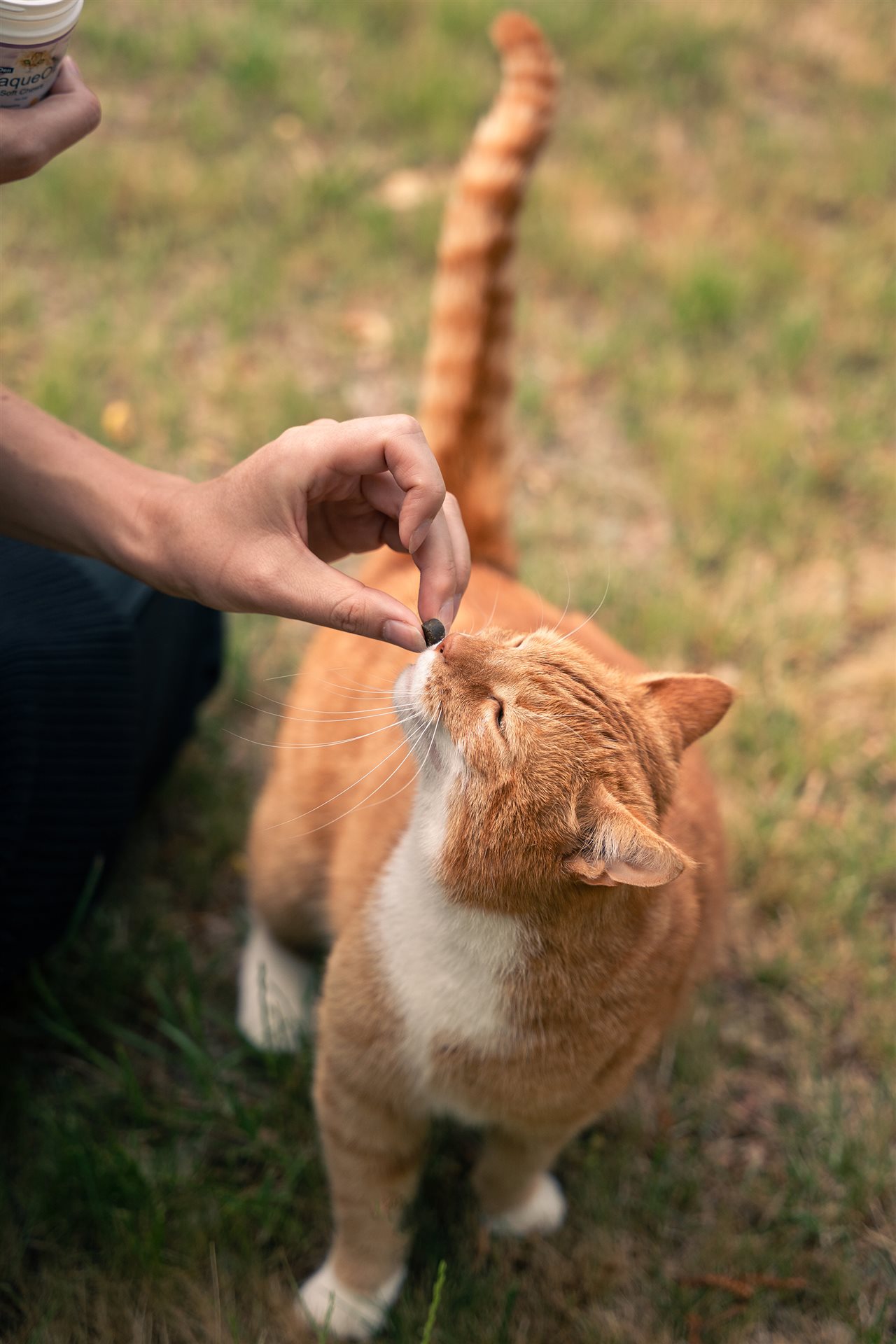
Available in powders, chews and bites, these oral health products are made with the 100% natural, clinically studied kelp ingredient A.N. ProDen®. This kelp ingredient can help control and improve plaque, tartar and bad breath when used as directed.
Consider starting with a bag of ProDen PlaqueOff® Crunchy Dental Bites, unique crunchy chews. It's a healthy treat your kitty will love and look forward to having every day. Or, for a seamless and economical addition to your cat's diet, add a scoop of ProDen PlaqueOff® Powder. For those looking for an easy-to-administer option that doubles as a reward, ProDen PlaqueOff® Soft Chews are the way to go, especially if you have older pets with missing teeth.
Consistent daily oral care isn't just good for your cat now. Brushing, treats and powders can help support lifelong oral health. It may also reduce the need for extensive dental procedures that require X-rays, anesthesia and other treatments. Not only can these procedures be expensive, but they can also be stressful for your pet.
Taking care of your cat's oral health for a lifetime of wellness
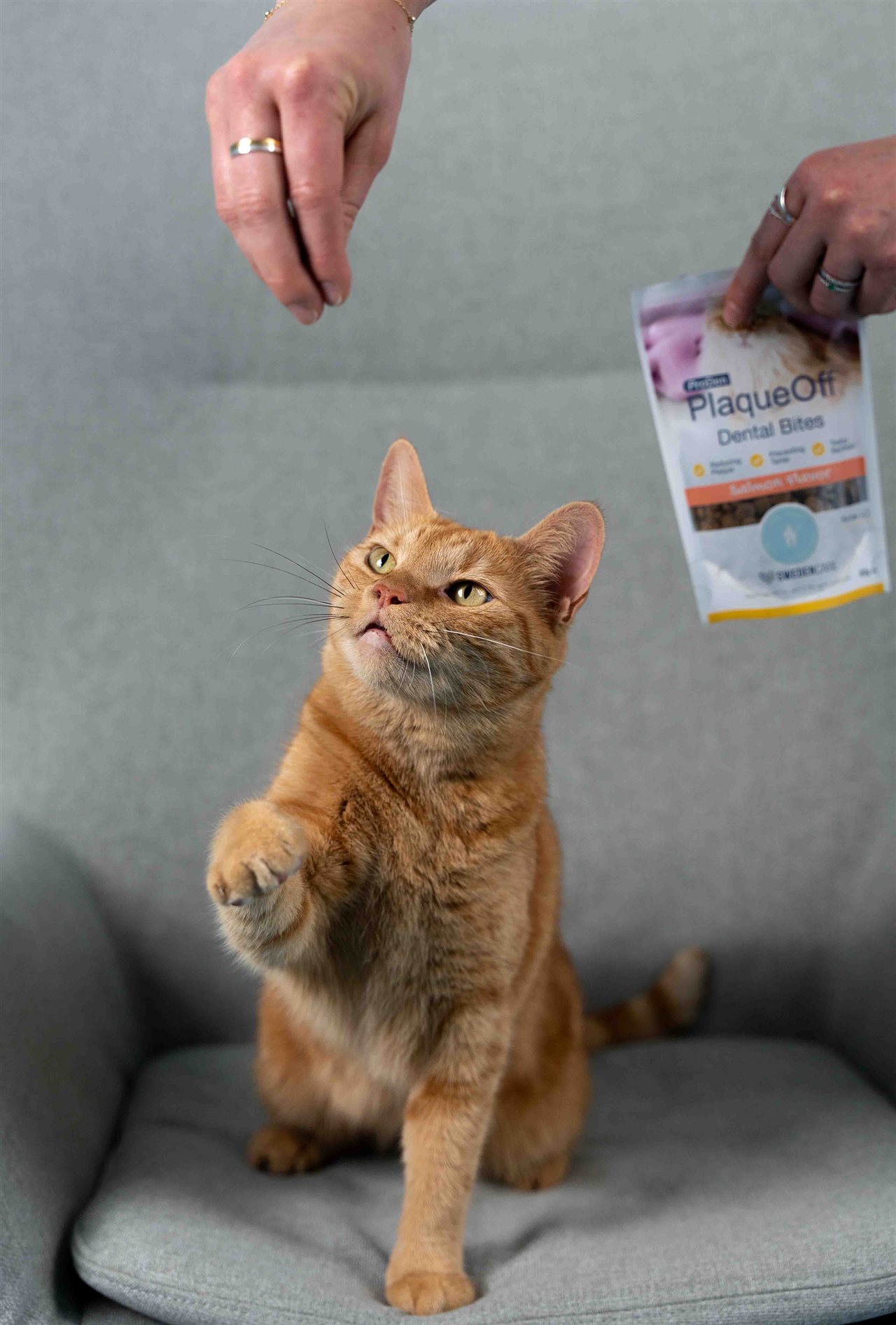
Oral health is key to overall health, and it's not just for humans. Your feline family member needs just as much dental care as you do to stay healthy and happy. To learn more about caring for your furry family member's oral hygiene, visit US.Swedencare.com.