Date: March 25, 2026
Introduction
The Chemours Company (NYSE: CC) is currently standing at one of the most pivotal crossroads in its decade-long history as an independent entity. As a global leader in performance chemicals, Chemours provides the foundational materials that power everything from air conditioning and semiconductor manufacturing to high-end automotive coatings and the nascent hydrogen economy. However, the company is also a lightning rod for the complexities of modern industrial capitalism, grappling with the multi-billion-dollar legacy of "forever chemicals" (PFAS) and a recent overhaul of its executive leadership following internal governance failures in early 2024. For investors, Chemours represents a classic high-stakes "sum-of-the-parts" calculation: weighing the explosive growth of its next-generation refrigerant business against the potentially open-ended liabilities of its past.
Historical Background
Chemours was born on July 1, 2015, as a spin-off from the industrial titan E. I. du Pont de Nemours and Company (DuPont). At its inception, the company was essentially a collection of DuPont’s "Performance Chemicals" assets, including iconic brands like Teflon and Ti-Pure. While the spin-off allowed DuPont to focus on higher-margin specialty products, it saddled Chemours with a significant debt load and, most controversially, the lion's share of DuPont's legacy environmental liabilities.
The most enduring part of the Chemours story has been its struggle to define itself outside of DuPont’s shadow. In its first three years, the company defied skeptics by riding a massive cyclical upswing in the titanium dioxide (TiO2) market, sending its stock from the single digits to over $50. However, the subsequent years have been a marathon of legal battles, regulatory pressure over PFAS emissions at its Fayetteville, NC and Dordrecht, Netherlands facilities, and a shifting global landscape for industrial chemicals.
Business Model
Chemours operates through a diversified portfolio of specialty chemicals, organized into three primary reporting segments:
- Titanium Technologies (TT): This segment is anchored by the Ti-Pure brand. Chemours is one of the world’s largest producers of titanium dioxide (TiO2), a white pigment used to provide whiteness, brightness, and opacity in architectural coatings, plastics, and high-quality paper. This business is highly cyclical and capital-intensive, closely tied to global GDP and construction cycles.
- Thermal & Specialized Solutions (TSS): Formerly known as Fluoroproducts, this segment produces refrigerants, propellants, and foaming agents. Its flagship brand, Opteon, consists of hydrofluoroolefins (HFOs) designed to replace high-global-warming-potential (GWP) hydrofluorocarbons (HFCs).
- Advanced Performance Materials (APM): This segment focuses on high-performance polymers and resins, including Teflon, Viton (fluoroelastomers), and Nafion (ion exchange membranes). These materials are essential for harsh environment applications in the semiconductor, aerospace, and renewable energy sectors.
Stock Performance Overview
The stock performance of The Chemours Company (NYSE: CC) has been a roller coaster for long-term shareholders:
- 1-Year Performance (2025–2026): Over the past 12 months, the stock has shown signs of stabilization, trading in a range between $16 and $22. After the 2024 accounting probe caused a precipitous drop, 2025 was a year of "base-building" as the market digested the New Jersey PFAS settlement and the leadership transition.
- 5-Year Performance (2021–2026): The five-year chart is characterized by a "triple-top" followed by a significant decline. The stock peaked near $45 in early 2022 during the post-pandemic commodity boom but has since lost nearly 50% of its value as litigation risks overshadowed operational gains.
- 10-Year Performance (2016–2026): From its post-spin-off lows of roughly $3 in early 2016, the stock represents a long-term gain, though it remains far below its 2018 all-time highs. Investors who entered during the 2016 trough have seen significant returns, while those who entered during the 2018–2021 period are likely underwater.
Financial Performance
Financial results for the fiscal year 2025 reflected a company in a state of expensive transformation. Chemours reported Net Sales of $5.8 billion, essentially flat compared to 2024. However, the company posted a Net Loss of $386 million for 2025, primarily due to a $250 million pre-tax charge related to the New Jersey environmental settlement and other remediation costs.
The Adjusted EBITDA for 2025 stood at $742 million, a slight decline from $786 million in 2024. This was largely due to a "tale of two segments":
- TSS saw a massive 56% revenue growth as the U.S. AIM Act accelerated the phase-out of older refrigerants.
- Titanium Technologies struggled with global overcapacity and price competition from Chinese producers, leading to a "Transformation Plan" that included the $360 million sale of its Taiwan production facility in early 2026.
As of March 2026, Chemours maintains a Net Leverage Ratio of approximately 4.7x, which remains a point of concern for credit rating agencies, although recent asset sales have provided a liquidity buffer.
Leadership and Management
The leadership narrative at Chemours was dramatically rewritten in 2024. Former CEO Mark Newman and CFO Jonathan Lock were ousted following an internal probe that revealed they had delayed vendor payments to artificially boost cash flow metrics to meet bonus targets.
Denise Dignam took the helm as CEO in March 2024. A 35-year industry veteran, Dignam has been praised by analysts for her "no-nonsense" approach and deep operational knowledge of the Titanium and APM segments. Under her leadership, the company has prioritized:
- De-leveraging: Using asset sales to pay down high-interest debt.
- Transparency: Restructuring financial reporting to regain investor trust after the 2024 scandal.
- Segment Optimization: Moving away from commoditized TiO2 markets to focus on high-margin "Performance Solutions."
Products, Services, and Innovations
Chemours is currently betting its future on two technological frontiers:
- The HFO Transition: The Opteon line is the gold standard for low-GWP refrigerants. As regulations like the Montreal Protocol’s Kigali Amendment and the U.S. AIM Act take effect, Chemours is positioned as a primary beneficiary of the global shift toward sustainable cooling.
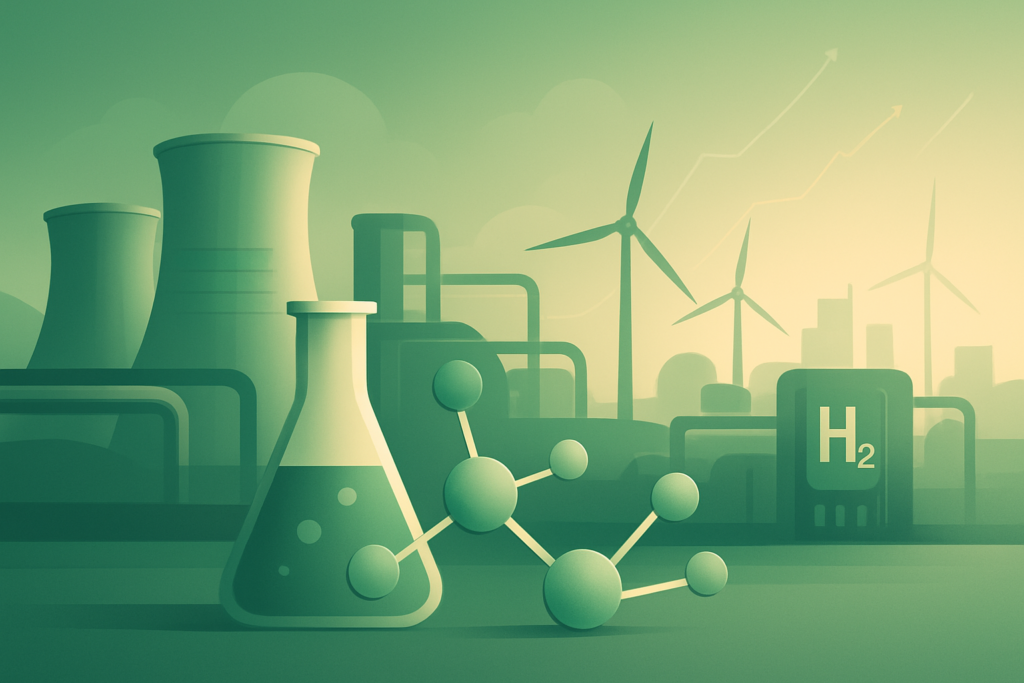
- The Hydrogen Economy: Chemours’ Nafion membranes are critical components in Proton Exchange Membrane (PEM) electrolyzers (which produce green hydrogen) and hydrogen fuel cells. Management has identified the hydrogen sector as a multi-billion dollar opportunity over the next decade.
- Semiconductor Materials: The APM segment produces ultra-high-purity fluoropolymers required for the "wet etching" process in advanced chip manufacturing, making Chemours an indirect play on the global semiconductor boom.
Competitive Landscape
Chemours faces a diverse set of rivals across its business lines:
- Titanium Technologies: Competes with global giants like Tronox (TROX), Kronos Worldwide (KRO), and low-cost Chinese producers like LB Group. Chemours maintains an edge through its proprietary chloride process, which generally produces higher-quality pigment than the sulfate process used by many competitors.
- Thermal & Specialized Solutions: Its primary rival is Honeywell (HON), which also holds significant patents in HFO technology. The two companies often alternate between litigation and licensing agreements regarding refrigerant IP.
- Advanced Performance Materials: Competes with 3M (MMM)—which is exiting the PFAS market entirely by the end of 2025—and Solvay. 3M’s exit provides a potential market share opportunity for Chemours, though it also signals the intense regulatory pressure on the sector.
Industry and Market Trends
The chemical industry in 2026 is defined by the "Green Transition."
- Decarbonization: There is immense pressure to reduce the carbon footprint of chemical manufacturing. Chemours has committed to a 60% reduction in greenhouse gas emissions by 2030.
- Circular Economy: Developing methods to recycle fluoropolymers is becoming a competitive necessity as customers in the automotive and electronics sectors demand "closed-loop" supply chains.
- De-globalization: In response to geopolitical tensions, Chemours is increasingly focusing on "regionalizing" its supply chains, particularly in its Titanium business, to reduce exposure to volatile shipping costs and trade tariffs.
Risks and Challenges
The "bear case" for Chemours is centered on three pillars:
- PFAS Litigation (The "Forever" Risk): Despite several major settlements, Chemours still faces thousands of personal injury lawsuits in the AFFF (Aqueous Film-Forming Foam) Multi-District Litigation. Bellwether trials scheduled for later in 2026 could result in unpredictable damages.
- Environmental Regulation: The European Chemicals Agency (ECHA) continues to weigh a broad ban on the entire class of PFAS chemicals. If a "universal ban" were enacted without significant exemptions, large portions of Chemours’ APM and TSS portfolios could be at risk.
- Cyclicality and Debt: With a high leverage ratio, a global recession that slows the construction and automotive sectors could squeeze the company’s ability to service its debt while simultaneously funding environmental remediation.
Opportunities and Catalysts
Conversely, the "bull case" identifies several near-term catalysts:
- 3M’s Exit: As 3M ceases all PFAS manufacturing by the end of 2025, Chemours stands to pick up significant market share in specialized fluoropolymers where it has safer, more modern manufacturing processes.
- Hydrogen Scaling: Any federal subsidies or large-scale green hydrogen project announcements in the U.S. or EU act as a tailwind for the Nafion business.
- Short Squeeze Potential: Given the high level of institutional skepticism and short interest due to legal fears, any "better than expected" litigation outcome or a surprise earnings beat in the TSS segment could trigger a rapid upward move in the stock.
Investor Sentiment and Analyst Coverage
Wall Street remains cautiously optimistic, with a consensus "Moderate Buy" rating as of March 2026.
- Price Targets: Analysts have set a median 12-month price target of $20.00, representing a modest upside from current levels.
- Institutional Sentiment: Large asset managers like Vanguard and BlackRock remain the largest shareholders, though several ESG-focused funds have divested in recent years due to the PFAS controversy.
- Retail Sentiment: On retail platforms, Chemours is often discussed as a "deep value" play or a "cigar butt" investment—a company with strong cash-generating assets that is being unfairly (or perhaps fairly) punished for its legal liabilities.
Regulatory, Policy, and Geopolitical Factors
Chemours is a "policy-heavy" stock. Its valuation is intrinsically tied to:
- The U.S. AIM Act: The EPA’s schedule for HFC phase-downs is the single most important driver for Opteon margins.
- The Inflation Reduction Act (IRA): Continued support for hydrogen and domestic semiconductor manufacturing provides a fundamental floor for the APM segment’s growth projections.
- Geopolitics: Trade tensions with China affect the TiO2 market; a flood of cheap Chinese exports can depress global prices, making Chemours’ higher-cost (but higher-quality) US and European production less competitive.
Conclusion
The Chemours Company (NYSE: CC) is a study in industrial resilience. Under the steadying hand of CEO Denise Dignam, the company is attempting to outrun its past by sprinting toward a high-tech, sustainable future. The growth in the Thermal & Specialized Solutions segment is undeniable, and the company's role in the semiconductor and hydrogen sectors makes it a critical piece of the modern industrial supply chain.
However, the shadow of PFAS is long and dark. Until the personal injury litigation reaches a definitive "global settlement" or a predictable payment schedule, the stock will likely continue to trade at a significant discount to its peers. For the enterprising investor, Chemours offers a high-yield, high-risk entry into the materials of tomorrow—provided they have the stomach for the legal volatility of today.
This content is intended for informational purposes only and is not financial advice. The author has no position in NYSE: CC at the time of writing.