The landscape of global artificial intelligence infrastructure shifted permanently in March 2026. Nebius Group N.V. (NASDAQ: NBIS), a company that only eighteen months ago was navigating the complex fallout of a geopolitical "corporate divorce," has emerged as the premier "neocloud" challenger to Silicon Valley’s dominance. Following the announcement of a staggering $27 billion multi-year infrastructure deal with Meta Platforms, Inc. (NASDAQ: META) and the unveiling of a massive new "AI Factory" in Lappeenranta, Finland, Nebius has transitioned from a restructuring story into a fundamental pillar of the generative AI economy. This article examines the company's meteoric rise, its strategic pivot, and the risks inherent in its ambitious $16 billion capital expenditure program.
Historical Background
The story of Nebius Group is one of the most remarkable corporate reinventions in tech history. Originally the Dutch parent company of Yandex—the Russian search giant often dubbed the "Google of Russia"—the firm found itself in a precarious position following the 2022 invasion of Ukraine. While the parent company, Yandex N.V., was not sanctioned, its Russian operations became increasingly isolated from global capital markets.
Between 2022 and 2024, the company’s leadership, spearheaded by founder Arkady Volozh, orchestrated a "corporate divorce." In July 2024, the group completed a $5.4 billion divestment of its Russian assets to a consortium of local investors. The remaining entity, rebranded as Nebius Group, retained approximately 1,300 world-class engineers, a valuable portfolio of AI patents, and international data center assets. After a lengthy suspension, trading of its shares resumed on the Nasdaq under the ticker NBIS in October 2024, marking the official birth of the company as a pure-play AI infrastructure provider headquartered in Amsterdam.
Business Model
Nebius operates as a "full-stack" AI infrastructure provider, a model often referred to as GPU-as-a-Service (GaaS). Unlike traditional hyperscalers such as Amazon.com, Inc. (NASDAQ: AMZN)’s AWS or Microsoft Corp. (NASDAQ: MSFT)’s Azure, which offer a broad range of general-purpose cloud services, Nebius is hyper-focused on high-density compute for training and inferencing Large Language Models (LLMs).
Revenue Sources:
- AI Cloud (85% of Revenue): The core segment, providing dedicated access to Nvidia H200, Blackwell, and the newly released Vera Rubin GPU clusters.
- Avride: An autonomous vehicle and delivery robotics unit that leverages the group's internal compute power to develop self-driving tech.
- TripleTen: An edtech platform focusing on high-end tech reskilling, providing a steady, albeit smaller, diversified revenue stream.
The company's primary customers include Tier-1 AI labs, hyperscalers seeking "off-balance-sheet" capacity, and large enterprises in Europe and North America requiring sovereign cloud solutions.
Stock Performance Overview
Since resuming trade in late 2024, NBIS has been a volatile but high-performing asset.
- 1-Year Performance: As of March 31, 2026, the stock has surged over 240% in the last 12 months. The rally was ignited by the late-2025 confirmation of its initial $3 billion Meta deal and accelerated sharply in mid-March 2026 following the $27 billion expansion.
- Post-Listing Horizon: From its post-restructuring "re-IPO" price in the mid-teens, the stock reached a peak of $84.50 in late March 2026, giving it a market capitalization of approximately $28.5 billion.
- Historical Context: Long-term charts are distorted by the pre-2024 Yandex history, but for new investors, the "real" performance history began in October 2024.
Financial Performance
Nebius’s financial trajectory reflects the "explosive" phase of AI infrastructure build-outs.
- Latest Earnings: For the full year 2025, Nebius reported revenue of approximately $550 million, a nearly fourfold increase from 2024.
- Forward Guidance: For 2026, the company has guided for revenue between $3.0 billion and $3.4 billion, driven by the activation of new clusters in Finland.
- Margins: Adjusted EBITDA turned positive in Q4 2025. While gross margins are healthy (est. 45-50%), the company is currently net-loss making due to heavy depreciation and interest costs associated with its massive hardware acquisitions.
- Valuation: Trading at approximately 8.5x 2026 estimated revenue, the stock is priced at a premium to traditional cloud providers but at a discount to peers like CoreWeave, reflecting its higher execution risk and European base.
Leadership and Management
The return of founder Arkady Volozh as CEO has been the defining narrative for leadership. After a period of self-imposed exile and the lifting of EU sanctions in early 2024, Volozh has successfully convinced the market of his vision for a European AI powerhouse.
The management team has been bolstered by significant Western tech veterans:
- Marc Boroditsky (CRO): A former Cloudflare executive tasked with building the global sales machine.
- Dan Lawrence (SVP, Americas): Hired in March 2026 from AWS to lead the company’s aggressive push into the US market.
- John Boynton (Chairman): Provides continuity and governance oversight as the company transitions into its new identity.
Products, Services, and Innovations
Nebius’s competitive edge lies in its "full-stack" engineering. Unlike many "GPU-rich" startups that simply rent space in third-party data centers, Nebius designs its own hardware architecture.
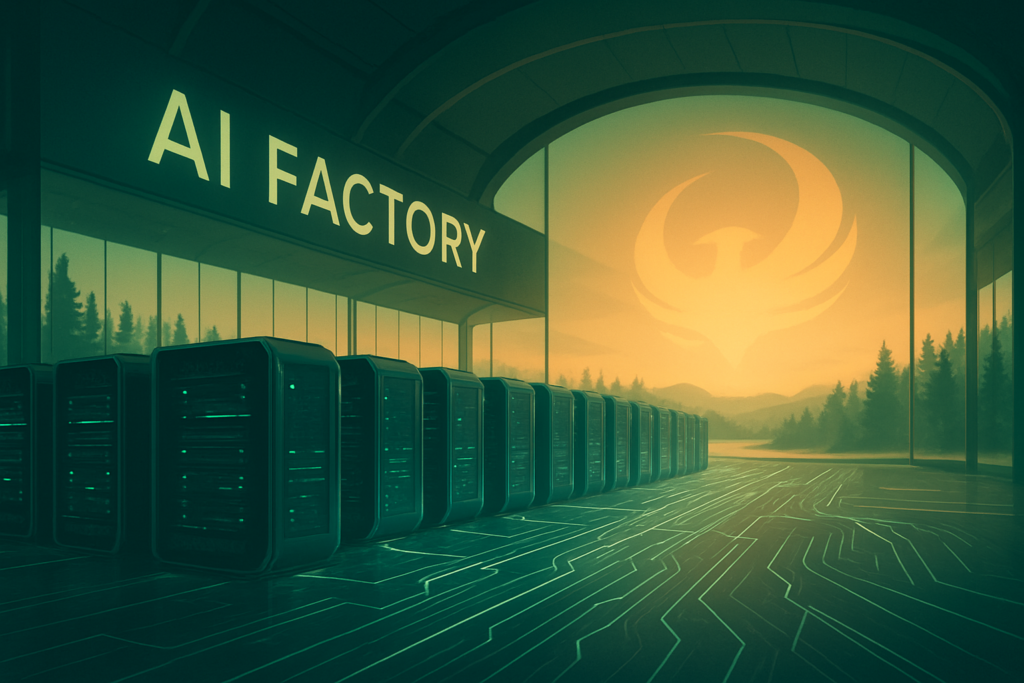
- The "AI Factory" Concept: Nebius builds specialized data centers designed specifically for liquid-cooled GPU clusters. Their proprietary software orchestration layer allows for higher GPU utilization rates (up to 90%) compared to standard cloud environments.
- Liquid Cooling & Heat Recovery: Their Finnish facilities utilize a closed-loop system that captures waste heat and pipes it into local district heating networks, significantly lowering the Total Cost of Ownership (TCO) and meeting strict EU ESG standards.
- Nvidia Vera Rubin Clusters: In early 2026, Nebius became one of the first providers globally to offer access to NVIDIA Corp. (NASDAQ: NVDA)’s Vera Rubin platform, thanks to a strategic $2 billion investment and priority allocation from Nvidia.
Competitive Landscape
The market for AI compute is currently an oligopoly with high barriers to entry.
- CoreWeave: The primary US competitor. While CoreWeave has a larger total GPU footprint, Nebius argues its engineering pedigree (born from a search engine's requirements) allows for better "cluster-wide" performance.
- Lambda Labs: Focuses more on the developer and research "on-demand" market, whereas Nebius targets long-term, multi-billion dollar enterprise commitments.
- Hyperscalers (AWS/Azure/Google): While these giants are competitors, they are also increasingly "co-opetitors." Meta’s $27 billion deal with Nebius proves that even the largest tech firms need external partners to satisfy their insatiable compute hunger.
Industry and Market Trends
The "Compute Supercycle" continues unabated in 2026. Three major trends favor Nebius:
- Sovereign AI: European governments and enterprises are increasingly wary of hosting sensitive AI models on US-based cloud infrastructure. Nebius’s European headquarters and data centers in Finland provide a "safe harbor" for regional data.
- GPU Scarcity: Despite increased production, the demand for next-generation chips (Blackwell/Vera Rubin) exceeds supply. Nebius’s "preferred partner" status with Nvidia is a critical moat.
- The Shift to Inference: As more AI models move from training to production, the demand for geographically distributed, high-performance inference clusters is growing, playing into Nebius's strengths.
Risks and Challenges
Despite the optimism, Nebius faces substantial risks:
- Execution Risk: Building a $16 billion infrastructure footprint in 24 months is a monumental task. Any delays in the Finnish data center construction could lead to missed revenue targets.
- Geopolitical Overhang: While the "divorce" from Russian assets is complete, the company still faces occasional scrutiny regarding its origins. Any shift in the European political landscape could impact its "sovereign cloud" status.
- Concentration Risk: The $27 billion Meta deal is a double-edged sword. While it guarantees revenue, it makes Nebius highly dependent on a single customer's capital expenditure whims.
- Capital Intensity: The company’s $16B-$20B Capex plan requires constant access to debt and equity markets. High interest rates or a cooling of the AI "hype" could squeeze liquidity.
Opportunities and Catalysts
- Lappeenranta AI Factory: The new 310 MW facility in Finland is expected to come online in phases starting late 2026. This will triple Nebius’s current capacity.
- US Expansion: With the hiring of Dan Lawrence, a major announcement regarding a US-based data center facility is rumored for the second half of 2026.
- M&A Potential: As smaller GaaS providers struggle with capital costs, Nebius is well-positioned to acquire smaller players to expand its geographic footprint in Asia and the Middle East.
Investor Sentiment and Analyst Coverage
Wall Street has turned overwhelmingly "Bullish" on NBIS in the first quarter of 2026.
- Analyst Ratings: Currently, the stock has 8 "Buy" ratings and 2 "Hold" ratings from major investment banks.
- Institutional Backing: Since the reorganization, major institutional investors like Fidelity and BlackRock have established significant positions, viewing Nebius as a high-beta play on the AI infrastructure theme.
- Retail Chatter: On platforms like X and Reddit, Nebius is often discussed as the "European CoreWeave," with a growing following among retail investors looking for AI plays outside of the "Magnificent Seven."
Regulatory, Policy, and Geopolitical Factors
Nebius operates at the intersection of technology and national security.
- EU AI Act: The company has leaned into compliance with the EU AI Act, positioning itself as the most "regulatory-friendly" cloud provider for European firms.
- Nvidia Relationship: The $2 billion strategic investment from Nvidia in March 2026 is a significant "seal of approval," suggesting that Nvidia views Nebius as a critical outlet for its chips outside the traditional US hyperscaler ecosystem.
- Export Controls: Any tightening of US or EU export controls on high-end AI chips could impact Nebius’s ability to source the hardware it needs for expansion.
Conclusion
Nebius Group N.V. has executed a corporate pivot that many thought impossible. By successfully shedding its past and leaning into the most capital-intensive, high-reward sector of the tech economy, the company has secured a seat at the table with the world’s most powerful tech entities. The $27 billion deal with Meta is a validation of Nebius’s technical prowess and its "AI Factory" vision.
However, investors should remain cognizant of the "all-in" nature of the company’s current strategy. Nebius is effectively betting its entire future on the continued, exponential growth of AI compute demand. If the "AI bubble" bursts or if execution in Finland falters, the company’s heavy debt load and high Capex could become liabilities. For now, Nebius is the undisputed leader of the European AI infrastructure landscape—a phoenix that has risen from corporate restructuring to become a global contender.
This content is intended for informational purposes only and is not financial advice.