For years, artificial intelligence in the workplace has been defined by its ability to assist. It drafts copy, summarizes information, and responds to prompts. These tools have improved speed, but they have not fundamentally changed how work gets finished. Execution still relies on humans stitching together outputs across tools, teams, and timelines.

Photo courtesy of Alex Mehr
A new shift is now taking shape—one that moves AI beyond suggestion and into action.
This shift is being driven by the rise of agentic AI, systems designed not only to respond to instructions but to carry work across stages until a finished outcome exists. Rather than stopping at guidance, these systems operate through AI agents capable of executing tasks end-to-end within real workflows.
At the center of this approach is Famous Labs, the parent company behind two execution-focused platforms: Famous.ai and Supercool. Together, they reflect a growing movement toward AI systems that deploy work, rather than describe it.
From Assistance to Execution
Most AI tools today operate as interfaces. They explain what a user might do next. They generate drafts, options, and recommendations. What follows; assembly, coordination, and deployment, still remains a human responsibility.
Agentic AI operates differently. Instead of handing work back to the user at each step, AI agents are designed to continue executing across stages. The system does not pause after producing a draft. It carries the task forward until the output is ready to be used. This distinction is subtle but consequential. Assistance accelerates activity. Execution removes friction.
In practical terms, this means fewer handoffs, fewer tools, and fewer moments where work stalls because responsibility shifts between systems or teams.
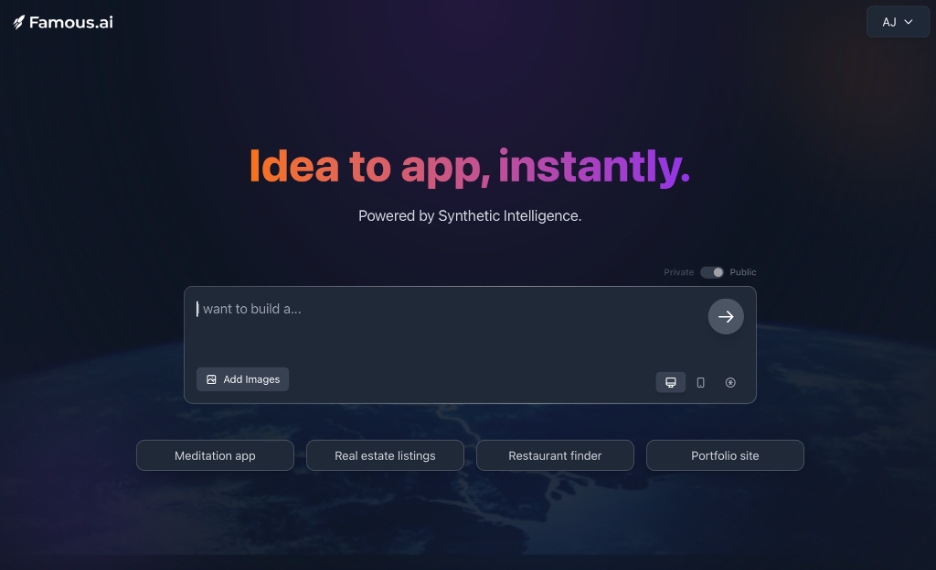
Photo courtesy of Alex Mehr
Famous.ai: Deploying Software Without the Workflow Overhead
Famous.ai applies this model to software creation. Rather than functioning as a brainstorming tool or design assistant, the platform translates high-level intent into deployed applications, websites, landing pages, and operational tools.
The system operates as an AI agent for software execution. It absorbs procedural and technical complexity that would typically require engineering teams, extended timelines, and layered coordination. Users provide direction and judgment. Execution proceeds autonomously.
The result is not a prototype waiting for development, but a finished asset ready for deployment.
This approach reflects a broader rethinking of how software is built. Instead of optimizing individual steps: design, development, and deployment—agentic AI collapses them into one.
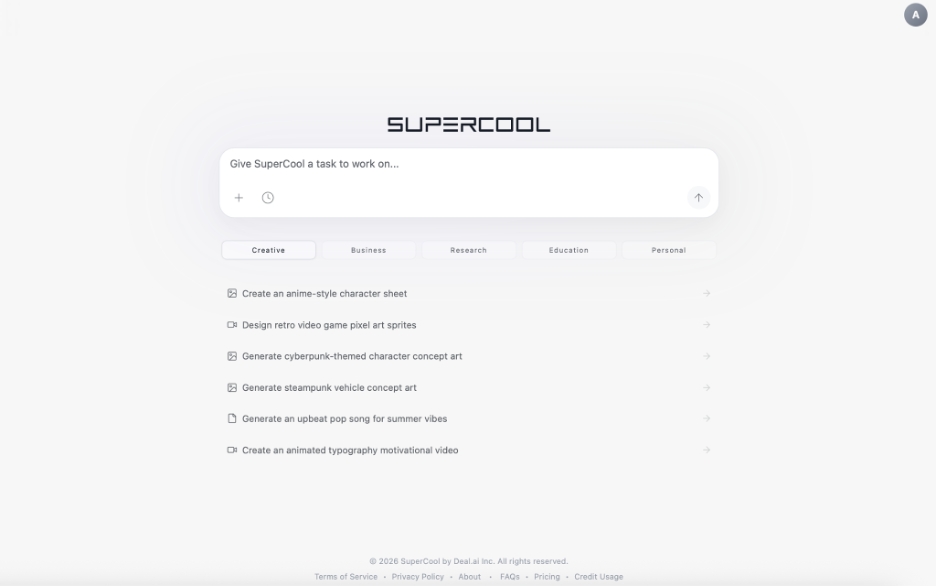
Photo courtesy of Alex Mehr
Supercool: Executing Creative Work in One Motion
Supercool applies the same execution-first logic to creative production. In an environment defined by constant demand for content, the bottleneck is no longer ideation. It is production.
Supercool operates as an AI agent for creative execution, producing complete outputs across formats including presentations, music, video, photography, documents, and visual assets. Rather than generating drafts that require further assembly, the system delivers finished creative materials that can be published or shared immediately.
Creative direction remains human. The system removes the logistical friction that slows production after decisions have already been made. By collapsing creation, formatting, and output into a single workflow, Supercool shifts human effort away from manual assembly and toward editorial judgment.
Why Agentic AI Matters Now
Organizations today face growing pressure to move faster with fewer resources. At the same time, tool sprawl has increased. Workflows are fragmented across platforms that do not share context. Accountability diffuses. Progress slows.
Agentic AI responds to this reality by reducing the number of seams where work can stall. AI agents carry tasks across systems instead of stopping at boundaries. Execution becomes continuous rather than episodic.
This shift also changes how intelligence is measured. Fluency becomes less important than follow-through. The value of a system is no longer determined by how convincingly it responds, but by whether something usable exists at the end of the process.
A Broader Signal in AI’s Evolution
The emergence of agentic AI does not eliminate human judgment, but by concentrating it. As execution becomes automated, humans are freed to focus on deciding what should be built, why it matters, and how it should be evaluated.
Platforms like Famous.ai and Supercool are not signaling the end of human work, but a rebalancing of it. In this model, intelligence is measured by finished outcomes rather than accumulated drafts.
As agentic AI moves from theory into real-world workflows, the distinction between assistance and execution is becoming clearer. The systems that matter most will not suggest what to do next. They will ensure the work gets done.
Media Contact
Company Name: Famous.ai
Contact Person: Aj
Email: Send Email
Country: United States
Website: http://Famous.ai