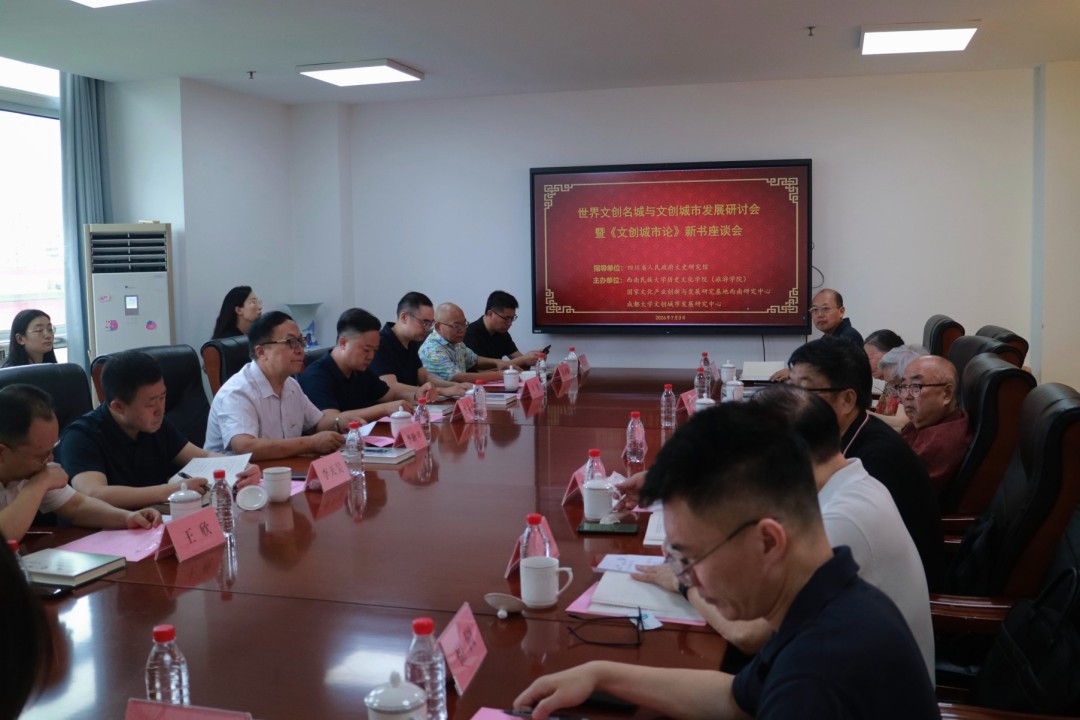
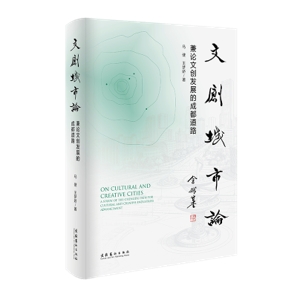
On July 3, 2026, scholars gathered at Southwest Minzu University in Chengdu for a seminar dedicated to "World Famous Cultural and Creative Cities and Urban Development." This event launched alongside the release of On Cultural and Creative Cities: A Study of the Chengdu Path for Cultural and Creative Industries Advancement (hereinafter Theory of Cultural and Creative Cities), a project completed over twelve years. Together, they address a pressing question in global academia: Why did a groundbreaking theory of urban development emerge from an inland city in southwest China?
From Practice to Theory: An Inland City's Academic Leap
Chengdu's evolution from a "Western Cultural and Creative Hub" to a "World Famous Cultural and Creative City " laid the groundwork for this new theory. The numbers tell a compelling story: between 2016 and 2021, the city's cultural and creative industry surged from 63.36 billion RMB to over 200 billion RMB. With an annual growth rate exceeding 30%, it became Chengdu's fastest-growing sector, accounting for 10.4% of the regional GDP. This rapid expansion signaled to researchers that existing international frameworks, such as the "Creative City" model, were no longer enough to explain what was happening in Chengdu. A new theory, rooted in local reality, was needed.
Zheng Xiaoxing, former Director General of the Sichuan Provincial Department of Culture, praised the book for moving beyond narrow economic metrics to return to "cultural roots." He argued that cultural creativity isn't just commercial packaging; it is a natural outgrowth of a city's historical and cultural veins. Tan Jihe, a Distinguished Researcher at Sichuan Academy of Social Sciences, echoed this sentiment, noting that the book's concept of a "Cultural-Creative City" and its academic framework "set a precedent and are of great significance."
A New Academic Voice: Beyond the "Creative City"
Authored by Professor Ma Jian and his team at Southwest Minzu University over a dozen years, Theory of Cultural and Creative Cities introduces the "Cultural-Creative City" concept and the CICEC analytical model. This approach distinguishes itself from the broader, less rigorously defined "Creative City" discourse common in international academia. While "Creative Cities" often focus on the clustering of creative classes or industry-driven growth, the "Cultural-Creative City" model is grounded in Chengdu's specific development patterns, combining qualitative insights with quantitative metrics.
At its core, the theory posits that cities should be built on culture, driven by creativity, and powered by institutional and technological innovation. The CICEC model breaks this down into five dimensions: creative vitality, innovation momentum, creative capability, entrepreneurial capacity, and creative charm. These elements reveal the internal logic of how a city transforms from one rich in cultural heritage to one driven by creative innovation.
Global Resonance
The theory has captured the attention of the global creative economy community. John Howkins, known as the "Father of the World Creative Economy" and a member of the Advisory Committee on Creative Economy of the United Nations Development Programme, wrote the book's preface. He noted that the work "does not merely celebrate a city's success but uncovers the inner workings of a thriving creative ecosystem."
Howkins sees Chengdu as a prime example of how his four pillars of creative ecology—diversity, change, learning, and adaptation—can yield tangible results. He highlighted Chengdu's unique ability to blend tradition with innovation and diversity with harmony. In a world facing economic headwinds and pandemic recovery challenges, he called this achievement particularly impressive. He also praised the CICEC model, noting it aligns with his own views on transforming creative value. He predicted that "Chengdu's experience will inspire cities worldwide to rethink their creative paths," with the book playing a key role in this global dialogue.
Looking Ahead
So, why Chengdu? The answer lies in two decades of accumulation: first, the high-quality growth of the local cultural and creative industry provided the practical groundwork; second, scholars like Professor Ma Jian spent years refining these experiences into a coherent theory.
As global competition among cities intensifies, Theory of Cultural and Creative Cities offers more than just a tool for Chinese urban planners; it contributes an original, China-derived academic perspective to the world. Future work will involve refining quantitative standards and testing the theory across different cities. If successfully developed, this framework could help Chinese cities play a larger role in the global cultural landscape, offering the world new theoretical wisdom born from Chinese practice.
Media Contact
Company Name: Chengdu University
Contact Person: Chunhang Zhou
Email: Send Email
Country: China
Website: https://www.cdu.edu.cn