A mobile number can be easy to remember, but the registration record behind it is less visible to ordinary users. People search for sim owner details when they want to review connections linked to their CNIC, investigate an unfamiliar SIM count, or understand what a mobile network can confirm about a particular number. These questions are often connected to personal security, SIM registration, and keeping mobile connections properly managed. The important first step is knowing which information is available to an ordinary customer and which records remain confidential. A responsible explanation of sim owner details should point readers towards authorised checks, explain the available verification options, and avoid promising access to private subscriber databases.
The phrase check sim owner details can describe several different searches, from checking the number of SIM connections registered against a CNIC to understanding caller identification services. Although these searches may appear similar, they do not provide the same type of information. Some methods help users review their own registration records, while others only provide basic information about a mobile number or its network.
For a personal registration check, use an authorised method provided through the relevant mobile operator or official verification channels. This helps ensure that the information comes from a reliable source and follows applicable privacy requirements. The phrase check sim owner details should lead to reliable guidance, explain legitimate verification options, and help users understand their own SIM registration status rather than create expectations of accessing confidential subscriber data.
What SIM owner details actually describe
A SIM is a subscriber identity module that allows a device to connect to a mobile network. During registration, the operator records the identity information required for the service. In everyday language, the SIM owner is usually understood as the person whose identity is associated with that connection. The more precise term is registered subscriber.
That record is not the same as a phone contact name, a caller ID label, or the name a user has saved in an address book. Those labels can be entered or changed by individuals and applications. They do not prove who registered a connection with the operator.
A mobile number can also be used by someone other than the registered subscriber. A family member may carry the phone, an employee may use a company connection, or a person may borrow a handset temporarily. Regular use does not by itself transfer the subscriber record. Formal changes must follow the operator's authorised process.
How to check SIM registrations through PTA
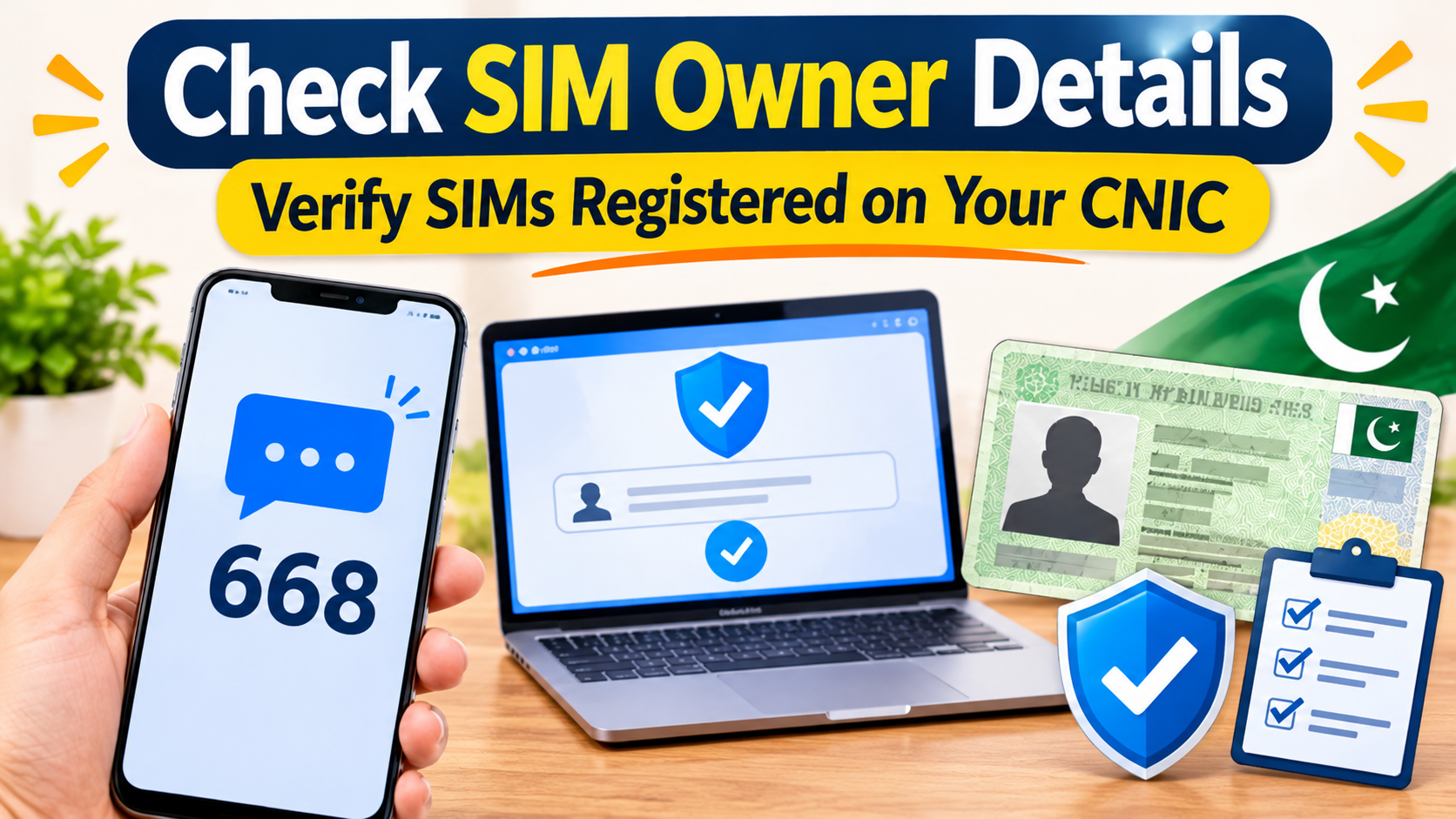
To check your own CNIC record online, open the official address cnic.sims.pk by typing it carefully into your browser. Confirm the spelling before entering any information. Select the relevant identity option, enter your own CNIC as requested, complete the displayed verification step, and submit the form. Review the operator-wise result.
For the SMS method, type your own 13-digit CNIC without spaces or dashes and send it to 668. Read the response and follow the current instructions. If the service does not reply, check that the number was entered correctly, confirm that your phone has network coverage, and try again later. You can use the online portal as an alternative.
Do not use a link sent by an unknown caller or social media account merely because it contains the words PTA, SIM, or CNIC. Open the official portal independently. Never enter your CNIC on a lookalike page that asks for payment, an OTP, a password, or an application download to reveal a supposedly complete database.
What the result can and cannot tell you
A CNIC-based result helps you understand how many SIM connections are associated with your identity in the system. It may help you notice a count you do not recognise. It does not necessarily explain which physical handset contains each SIM, who is currently carrying it, or why a particular record appears.
The count should therefore be treated as a starting point for follow-up, not as a complete investigation. If the number looks unfamiliar, contact the relevant operator and ask how it can verify the registration. Keep a note of the date, the network involved, and any complaint reference supplied by customer support.
What to do when a registration looks incorrect
Start by identifying the mobile operator shown in the result. Contact that operator through a verified customer service channel and explain that you do not recognise a registration associated with your CNIC. Ask what identity verification is required and how to request an investigation, blocking, or correction if the connection is unauthorised.
Visit an authorised franchise or customer service centre if the operator requires an in-person check. Take your original identity document when instructed, but do not leave it with an unknown agent. Ask for a complaint or reference number and keep it for follow-up.
If the operator does not resolve the issue, consult the current complaint process on PTA's official website. Provide accurate details and retain copies of relevant correspondence. Do not publish your complete CNIC, phone number, or identity documents in public comments while seeking help.
Why registration accuracy matters
A registered connection is linked to a customer record maintained by the mobile operator. PTA has reminded consumers to ensure that SIMs are registered in the user's own name and has warned that registration against another individual violates applicable procedures. The Authority has also stated that the registered user may remain responsible for use or misuse of a SIM.
SIM verification, ownership and privacy are different matters
The word verification can describe several procedures. A customer may verify how many SIMs are associated with a CNIC, complete biometric checks when obtaining a connection, or ask an operator to investigate a particular account. These processes have different purposes and provide different levels of information.
Confidential subscriber records are not the same as public telecom information. Ordinary users cannot use a mobile number to lawfully retrieve another person's private name, CNIC, residential address, call records, messages, or live location through a public lookup. Access to protected records is restricted and must follow applicable legal procedures.
Be careful with sites and social media sellers advertising complete SIM databases. Their information may be inaccurate, outdated, unlawfully obtained, or designed to collect visitors' CNIC details and payments. A polished design, logo, or claim of instant results does not prove official status. Do not provide biometric information, OTPs, or identity-document photographs to an unverified service.
Protect your mobile identity
Keep control of SIM cards registered under your identity. Buy connections only through authorised channels and complete the required verification yourself. Do not participate in offers that ask you to provide biometric verification for a free SIM on behalf of an unknown person.
Review your own registration count periodically, particularly after changing networks, replacing SIMs, or discovering that an old number is still active. Keep records of operator visits and complaint references. These small habits make it easier to resolve discrepancies and reduce the risk of someone misusing a connection registered under your identity.
Use official channels, not promises of private data
The safest way to check SIM owner details is to match the method to the task. Use PTA's SIM Information System or the 668 service to review registrations against your own CNIC. Contact the relevant mobile operator when you need account-specific confirmation, a correction, or help with an unfamiliar connection. Use official complaint channels if the issue remains unresolved.
A legitimate service should explain its limits clearly. It should not promise that any visitor can discover another subscriber's identity or private activity by entering a phone number. Treat those claims as a warning, protect your personal information, and rely on the regulator and licensed operator for matters that require access to subscriber records.