Most explanations of HashNet’s Alpha Engine describe what it does. Its founder, Ian Issa, has pointed to a more useful question: why does it work the way it does? Before any code was written, he set four rules.
Rule 1: Decide in milliseconds, not meetings
Network conditions change faster than any person can react. The Alpha Engine evaluates its options continuously and re-points hardware in roughly 12 milliseconds, according to the company. The decision comes from the system’s design rather than from whoever is watching a screen.

Rule 2: Only switch where switching makes sense
Mining hardware is built for specific algorithms. A SHA-256 machine cannot mine an Equihash coin. So the engine works within each algorithm group — SHA-256 machines choose among SHA-256 coins such as Bitcoin and Bitcoin Cash. Respecting the physics of the hardware keeps the system realistic and reliable.
Rule 3: Keep the result checkable
Issa does not believe in black-box operation for critical infrastructure. HashNet is precise about what can be verified: the money movement — mining-pool inflows and payouts to customer wallets — is on-chain and can be confirmed on a public explorer. The company does not claim the internal switching decisions live on a blockchain; what customers can check is that the Bitcoin arrives.
Rule 4: People set the boundaries, the system works within them
Automation, in Issa’s words, should never mean abdication. HashNet’s engineers define the limits the Alpha Engine operates within, monitor its behaviour through alerts and reviews, and can step in at any time.
How the rules fit together
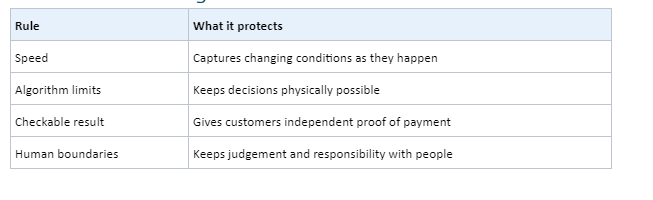
Why the rules matter to customers
Each rule answers a question a careful buyer might ask. Is it fast enough to matter? Is it realistic? Can the result be verified? Who is accountable? Together, the four rules describe a system designed to be both automated and trustworthy.