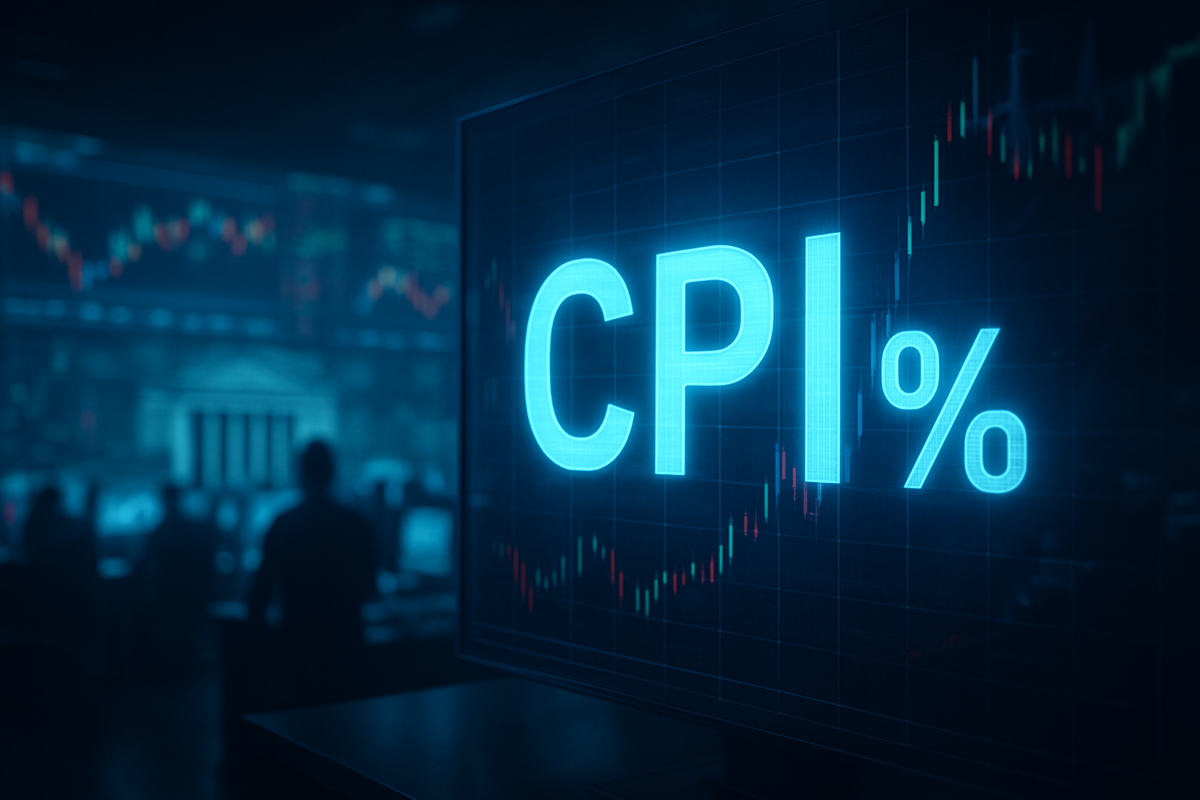
As the sun rises on January 12, 2026, Wall Street finds itself in a state of high-stakes anticipation. Investors are collectively holding their breath for tomorrow’s release of the December 2025 Consumer Price Index (CPI) report, a data point that is expected to serve as the definitive barometer for the Federal Reserve’s policy path in the new year. With the economy emerging from a turbulent 2025 marked by supply chain snarls and a significant federal government shutdown, this report is more than just a monthly statistic; it is a signal of whether the central bank’s recent "easing cycle" has successfully tamed the inflationary beast or if a "higher-for-longer" pause is the only remaining remedy.
The immediate implications are stark. Forecasts suggest a headline inflation rate of 2.7% year-over-year, a figure that remains stubbornly above the Federal Reserve's 2% target. Should the data come in hotter than expected, it could evaporate the remaining hopes for further interest rate cuts in the first half of 2026. Conversely, a cooler print could provide much-needed relief to a banking sector currently reeling from proposed legislative caps on credit card interest rates. As the 10-year Treasury yield hovers near 4.18%, the market is effectively pricing in a "wait-and-see" approach from Fed Chair Jerome Powell, whose leadership is facing unprecedented pressure from both economic data and political headwinds.
The Data Noise and the Path to the Pause
The road to this week’s CPI report has been anything but smooth. Economists are warning that the upcoming figures may be "noisier" than usual due to a 43-day federal government shutdown that occurred in late 2025. This shutdown disrupted data collection and artificially depressed certain goods and rental prices in the October and November reports. Consequently, the December data is expected to show a "payback" effect, with a month-over-month increase of 0.3% as prices "correct" back to their structural trends. This statistical distortion has made it difficult for the Federal Open Market Committee (FOMC) to discern the true underlying rate of inflation, leading to a deep division among its members.
Leading up to this moment, the Federal Reserve executed three consecutive 25-basis-point cuts in the latter half of 2025, bringing the federal funds rate to its current range of 3.50%–3.75%. However, the rhetoric from the central bank shifted abruptly in December as "hawks" within the committee pointed to a structural supply crunch in the semiconductor industry and rising goods prices fueled by new tariff regimes. The January 28 meeting is now widely expected to result in a pause, with the CME FedWatch tool indicating a 95% probability that rates will remain unchanged.
The tension is further amplified by a brewing constitutional showdown. Relations between the Federal Reserve and the Trump administration have reached a boiling point in early 2026. Reports of grand jury subpoenas involving Chair Jerome Powell and public calls from the White House for more aggressive rate cuts have introduced a "political risk premium" into the bond market. Investors are no longer just tracking the price of eggs and gasoline; they are monitoring the very independence of the institution tasked with maintaining price stability.
Winners and Losers in a K-Shaped Economy
The current inflationary environment has solidified a "K-shaped" recovery, creating clear winners and losers among public companies. In the retail sector, Walmart Inc. (NYSE: WMT) has emerged as a primary beneficiary. As middle-income consumers "trade down" to mitigate the impact of 2.7% inflation, Walmart’s dominant grocery and discount segments have captured significant market share. Similarly, Amazon.com, Inc. (NASDAQ: AMZN) continues to thrive as its logistics automation helps it absorb labor cost increases that are currently hampering smaller competitors.
On the other side of the ledger, the banking and credit sectors are facing a dual threat of sticky inflation and regulatory scrutiny. JPMorgan Chase & Co. (NYSE: JPM) and Capital One Financial Corp. (NYSE: COF) saw their stock prices under pressure in early January following a legislative proposal to cap credit card interest rates at 10%. If tomorrow’s CPI report shows that inflation is not cooling fast enough, these banks face the prospect of high funding costs (due to the Fed’s pause) while their revenue potential is simultaneously squeezed by populist-driven rate caps. American Express Co. (NYSE: AXP), while catering to a higher-end clientele, is also being watched closely for signs of a slowdown in discretionary travel and entertainment spending.
In the technology space, the narrative is driven by the insatiable demand for artificial intelligence. NVIDIA Corp. (NASDAQ: NVDA) and Taiwan Semiconductor Manufacturing Co. (NYSE: TSM) remain in a league of their own, with AI chip demand reportedly "booked through 2026." However, this boom is a double-edged sword for the broader market; the 20% projected rise in consumer electronics prices—driven by expensive AI hardware—is a major contributor to the "sticky" core CPI. This has put hardware manufacturers like Dell Technologies Inc. (NYSE: DELL) in a difficult position as they struggle to pass on these surging component costs to a price-sensitive public.
Wider Significance and Historical Precedents
The current situation bears a striking resemblance to the "stop-go" monetary policy of the 1970s, a period the Fed is desperate not to repeat. By pausing rate cuts now, the FOMC is signaling that it prioritizes the long-term goal of 2% inflation over short-term relief for the labor market, which has seen the unemployment rate tick up to 4.4%. This event fits into a broader global trend of "reshoring" and trade protectionism, where tariffs are increasingly used as a tool of foreign policy, inadvertently acting as a persistent inflationary force that central banks are poorly equipped to fight.
The ripple effects extend far beyond the U.S. borders. A "higher-for-longer" stance by the Fed strengthens the U.S. dollar, putting immense pressure on emerging markets that hold dollar-denominated debt. Furthermore, the conflict over Fed independence marks a significant shift in the regulatory landscape. If the executive branch successfully exerts more control over monetary policy, the historical precedent suggests that long-term inflation expectations could become unanchored, leading to higher volatility in the Treasury markets for years to come.
The Road Ahead: Scenarios and Strategic Pivots
Looking forward, the market is bracing for two primary scenarios following tomorrow’s report. In the "Soft Landing" scenario, a CPI print of 2.6% or lower would validate the Fed's previous cuts and potentially allow for a "mid-cycle adjustment" cut in June 2026. This would likely spark a massive rally in small-cap stocks and interest-rate-sensitive sectors like real estate. Investors would likely pivot back into growth-oriented equities, moving away from the defensive posture that has defined the start of the year.
However, the "Stagflationary" scenario—where CPI exceeds 2.8% while unemployment continues to climb—would require a painful strategic adaptation. In this case, the Federal Reserve might be forced to consider raising rates again, an almost unthinkable prospect just six months ago. Companies would be forced to focus on "margin over volume," leading to further layoffs and a contraction in capital expenditures. For the public, this would mean a continued squeeze on purchasing power and a potential cooling of the red-hot AI investment cycle as the cost of capital remains prohibitively high.
Summary and Investor Outlook
The December CPI report represents a defining moment for the 2026 economic narrative. It will determine whether the Federal Reserve can maintain its course toward a "neutral" rate or if it must dig in its heels against a resurgence of price pressures. The key takeaways for investors are the persistent strength of the discount retail and AI-chip sectors, contrasted against the regulatory and inflationary risks facing the financial industry.
As we move forward, the market will remain highly sensitive to any rhetoric regarding Fed independence and the "normalization" of the yield curve. For the coming months, the watchword is "quality." Investors should prioritize companies with strong balance sheets and the pricing power to navigate an environment where inflation remains a persistent shadow. Tomorrow’s data will not just be a number; it will be the first major test of the economy's resilience in a new and politically charged era of monetary policy.
This content is intended for informational purposes only and is not financial advice.