As of January 15, 2026, the Federal Reserve finds itself at a historic crossroads, caught between a stalling disinflation trend and an unprecedented legal assault from the executive branch. Chicago Fed President Austan Goolsbee, once considered the leading "dove" on the Federal Open Market Committee (FOMC), has officially completed a dramatic pivot toward hawkishness. In a series of high-stakes interviews this week, Goolsbee defended the Fed’s decision to pause interest rate cuts, citing a "low-hire, low-fire" labor market and a "festering" threat to central bank independence that he warned could send inflation "roaring back."
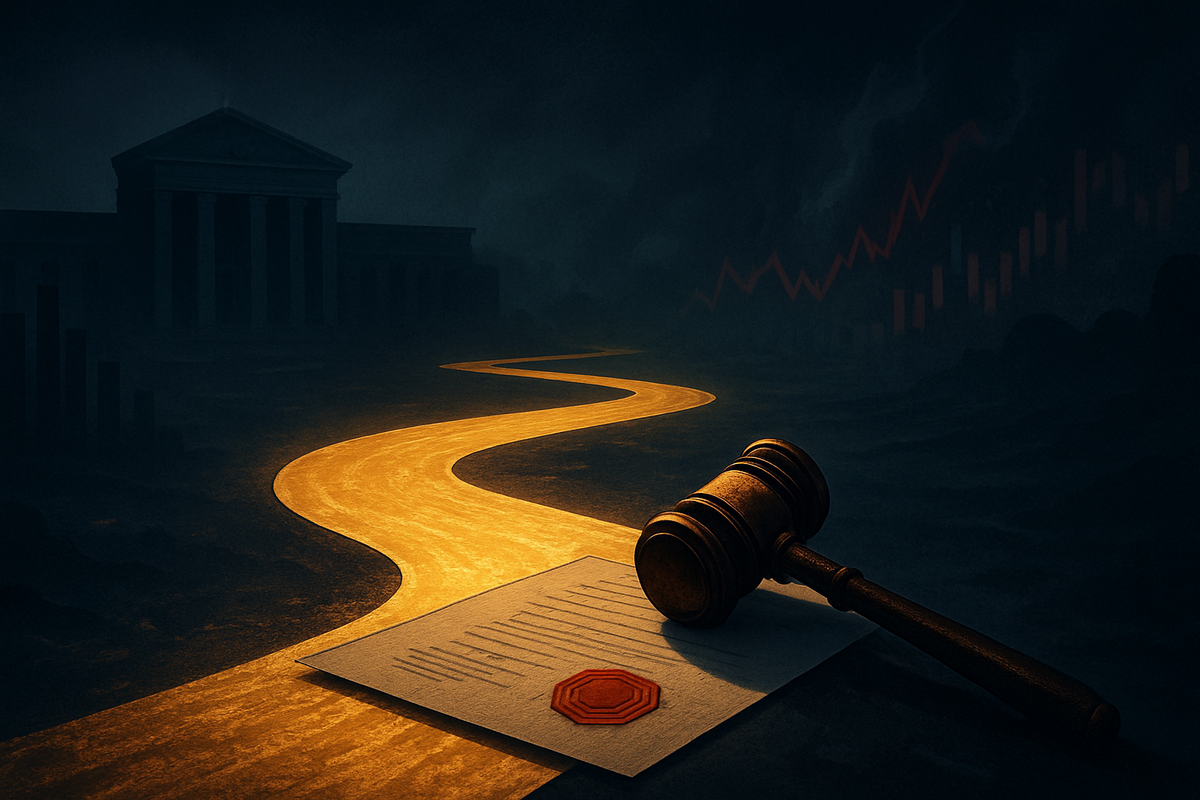
The implications of Goolsbee’s shift are immediate and profound for global markets. By breaking ranks with the more accommodative faction of the Fed and dissenting in the December 2025 meeting, Goolsbee has signaled that the "Golden Path"—his term for a soft landing—is now being obstructed by a "data fog" of tariffs and political interference. For investors, this marks the end of the "easy money" expectations that dominated late 2025, forcing a painful recalibration of asset prices as the reality of a "hawkish pause" sets in through the first half of 2026.
A Strategic Pivot: The ‘Hawkish Pause’ and the Dissent
The path to Goolsbee’s current stance began in late 2024, when he was a vocal advocate for aggressive rate cuts to prevent a labor market "crack." However, as the calendar turned to 2026, the narrative shifted. While inflation had cooled significantly from its post-pandemic peaks, progress in "non-housing services"—the final frontier of the inflation battle—hit a plateau in the fourth quarter of 2025. Goolsbee revealed that his December 2025 dissent was driven by a belief that the Fed was "declaring victory too early," especially as new trade tariffs began to exert a "stagflationary impulse" on the economy.
The labor market, which Goolsbee previously feared would collapse, has instead settled into what he calls a "low-hire, low-fire" landscape. Businesses, wary of the 43-day government shutdown that ended in November 2025, have slowed recruitment but are hoarding labor to avoid the costs of re-hiring. This stability, with unemployment hovering at 4.4%, has allowed Goolsbee to pivot his primary focus back to the price-stability mandate. "We are no longer worried about a soft landing failing because of the job market," Goolsbee remarked on January 14. "We are worried it will fail because we let the inflation fire smolder."
Adding to the complexity is the "constitutional crisis" currently engulfing the Federal Reserve. A Department of Justice (DOJ) subpoena issued to Chair Jerome Powell regarding administrative cost overruns has been widely interpreted by Fed officials as a "pretext" for political pressure to lower rates. Goolsbee has been the most outspoken critic of this move, famously labeling the attack on Fed autonomy as a "stink bug in the middle of the road." His staunch defense of Powell has unified the FOMC behind a "higher-for-longer" stance as a symbolic show of resistance against executive overreach.
Market Tremors: Winners and Losers in a Restrictive Environment
The hawkish turn from a key Fed moderate has sent shockwaves through the financial sector. JPMorgan Chase & Co. (NYSE: JPM) saw its shares under pressure this week after management warned that a "hawkish pause" would flatten the yield curve, squeezing Net Interest Margins (NIM) just as lending demand begins to soften. While the nation's largest bank remains highly profitable, Goolsbee’s refusal to support further cuts in early 2026 has dashed hopes for a "goldilocks" environment for bank earnings.
In the real estate sector, the impact has been even more volatile. D.R. Horton, Inc. (NYSE: DHI) and other major homebuilders had initially rallied on government-backed mortgage initiatives, but those gains were largely erased by Goolsbee’s comments. With mortgage rates stubbornly fixed above 6%, the "hawkish pause" ensures that the housing affordability crisis will remain a central theme of 2026. Analysts note that DHI and its peers are now facing a "margin squeeze" as they are forced to continue offering expensive rate buy-downs to lure buyers in a high-rate environment.
Conversely, the technology sector has shown a curious resilience, led by the "AI bellwether," NVIDIA Corporation (NASDAQ: NVDA). Despite the "duration risk" that typically hits high-growth tech stocks when rates stay elevated, NVDA managed a 1.4% bounce following a massive capital expenditure forecast from Taiwan Semiconductor Manufacturing Company (NYSE: TSM). However, market strategists warn that even the most robust tech giants are vulnerable to a "valuation reset" if Goolsbee’s pause extends into the third quarter of 2026, as the "discount rate" applied to future earnings remains higher than previously anticipated.
The Battle for Autonomy: A Historic Confrontation
Goolsbee’s rhetoric places him in the middle of a struggle that echoes the most famous battles for Fed independence in American history. By characterizing the DOJ probe as a political weapon, Goolsbee is drawing a line in the sand similar to that of William McChesney Martin, who famously stood his ground when President Lyndon B. Johnson took him to the "woodshed" at his Texas ranch in 1965 to demand lower rates. Goolsbee’s warnings that "inflation comes roaring back" when a central bank loses its independence are direct references to the Arthur Burns era of the 1970s, a cautionary tale often cited by modern central bankers.
The current conflict is arguably more severe than the 1951 Treasury-Fed Accord, which established the modern framework for Fed autonomy. Never before has a sitting Fed Chair faced a criminal inquiry from the DOJ that appears so transparently linked to monetary policy preferences. This has created what Goolsbee calls a "data fog," where the Fed must decide whether to act on economic signals or to intentionally maintain a restrictive stance to prove they cannot be bullied. The risk, as Goolsbee acknowledges, is that the "Golden Path" to a soft landing becomes collateral damage in this fight for institutional integrity.
This event also highlights a broader shift in global central banking. As the Fed resists executive pressure, it sets a precedent for other central banks, such as the European Central Bank and the Bank of England, which are also navigating post-inflationary environments under intense political scrutiny. Goolsbee’s insistence on "convincing evidence" of 2% inflation before cutting again is a signal to the world that the U.S. Federal Reserve intends to maintain its status as the "anchor" of global price stability, regardless of the domestic political cost.
Navigating the 'Data Fog': The Road to June 2026
Looking ahead, the market is now pricing in a prolonged stalemate. The Fed’s "wait-and-see" approach is likely to persist until at least June 2026, as officials wait for the "noise" from the recent government shutdown and tariff implementations to clear from the economic data. Short-term, this means continued volatility in interest-rate-sensitive assets. Long-term, the strategic pivot required by corporations will involve moving away from "cheap debt" refinancing models toward a focus on organic cash flow and operational efficiency.
The potential for a "strategic pivot" by the Fed remains, but it would likely require a significant deterioration in the "low-hire, low-fire" job market. If the unemployment rate were to spike above 5%, Goolsbee might return to his dovetish roots. However, in the current scenario, the Fed appears more likely to error on the side of caution. The primary challenge for the FOMC will be communicating this stance to a public—and a White House—that is increasingly impatient for relief from high borrowing costs.
Conclusion: The Fed’s Final Stand for Credibility
The comments from Chicago Fed President Austan Goolsbee on January 15, 2026, mark a defining moment for the current economic cycle. By shifting from a dove to a leading defender of a "hawkish pause," Goolsbee has underscored the Fed's commitment to its inflation mandate over all other considerations—including its own survival in its current institutional form. The "Golden Path" remains the goal, but the Fed has made it clear that it will not sacrifice its long-term credibility for short-term political or market ease.
For investors, the key takeaways are clear: the "Fed Put" is currently being held hostage by the fight for Fed independence. Moving forward, the market will be hyper-focused on service-sector inflation prints and any signs of "cracks" in the labor market. The battle between the Eccles Building and the White House is now a primary market driver, and as long as the "stink bug" of political pressure remains on the road, the path to lower rates will remain cluttered and uncertain.
This content is intended for informational purposes only and is not financial advice.