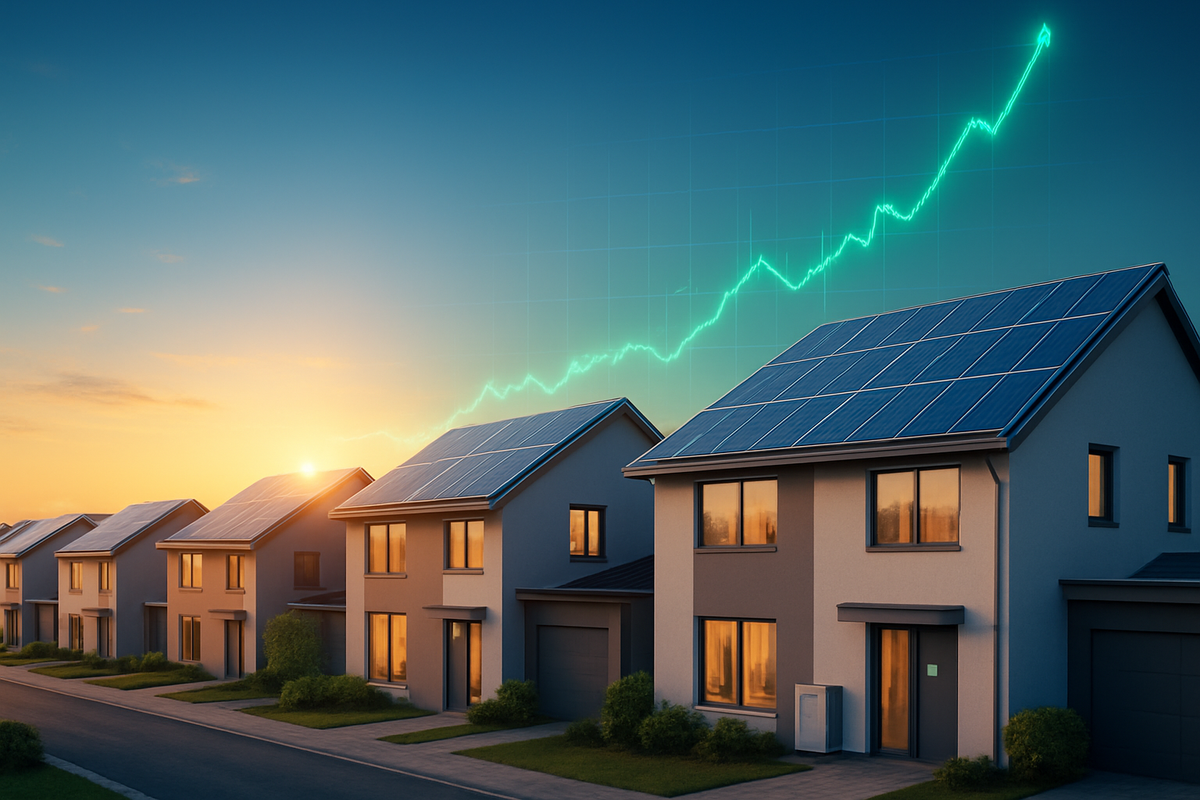
Just over a year ago, the future of SolarEdge Technologies (NASDAQ: SEDG) seemed eclipsed by a shadow of mounting debt, a massive inventory glut, and a plummeting stock price that had shed nearly 90% of its value from all-time highs. However, as of January 9, 2026, the narrative has shifted dramatically. SolarEdge shares have effectively doubled over the past twelve months, marking one of the most significant turnarounds in the renewable energy sector this decade. This resurgence is the result of a disciplined "clearing of the decks," a complete overhaul of the C-suite, and a strategic bet on U.S.-based manufacturing that successfully navigated a turbulent political landscape.
The immediate implications of this turnaround are far-reaching. For investors, it signals that the residential solar market has finally digested the "inventory hangover" of 2023–2024. For the industry, it proves that the Inflation Reduction Act (IRA) incentives are resilient enough to survive shifts in Washington, provided companies can pivot their supply chains quickly. SolarEdge’s recovery has not only restored billions in market capitalization but has also repositioned the company as a formidable challenger to its primary rivals, signaling a new era of competition in the smart energy space.
The Road to Recovery: A Timeline of the Turnaround
The catalyst for SolarEdge’s revival began in late 2024, following a disastrous third quarter where the company took a staggering $1.03 billion impairment and inventory write-down. This "kitchen sink" quarter was essential to clear out obsolete hardware that had been sitting in warehouses since interest rates first began to climb in 2023. Following this financial reset, the Board of Directors initiated a leadership transition, moving away from the founding era. In December 2024, Shuki Nir, the former Chief Marketing Officer with a track record of corporate turnarounds at SanDisk, was appointed as the permanent CEO. Alongside him, Asaf Alperovitz took the helm as CFO, tasked with a singular mission: restoring positive free cash flow.
Throughout 2025, the new leadership executed a "Single SKU" strategy. By simplifying their product architecture into a software-defined platform, SolarEdge reduced the number of physical hardware variations, which slashed manufacturing costs and streamlined the supply chain. This operational efficiency was paired with a aggressive expansion of U.S. manufacturing. By mid-2025, the company was producing inverters in Texas, optimizers in Florida, and batteries in Utah. This domestic footprint allowed SolarEdge to monetize Section 45X tax credits, providing a non-dilutive source of liquidity that kept the company afloat without needing to tap expensive debt markets.
Market reaction to these moves was initially skeptical, especially following the 2024 U.S. Presidential election. Shares of SEDG and other green energy stocks fell sharply in November 2024 on fears that the new administration would repeal the IRA. However, as it became clear that the vast majority of IRA-funded manufacturing projects were located in Republican-led districts, the political heat dissipated. By the time SolarEdge reported its Q3 2025 earnings—showing a 21% quarter-over-quarter revenue growth—the market had fully embraced the turnaround story, sending the stock to a 52-week high of $48.60 in October 2025.
Winners and Losers in the New Solar Landscape
The primary winner in this saga is undoubtedly SolarEdge itself, which has transitioned from a "distressed asset" to a growth story once again. However, the ripple effects have benefited several other players. NextEra Energy (NYSE: NEE) and other large-scale utilities have seen stabilized pricing in the distributed energy resource (DER) market as SolarEdge’s inventory normalized. Additionally, specialized U.S. manufacturing partners who helped SolarEdge onshore its production have seen a surge in order volumes, solidifying the domestic solar supply chain.
Conversely, the turnaround has placed renewed pressure on Enphase Energy (NASDAQ: ENPH). For much of 2024, Enphase enjoyed a perceived quality and reliability advantage, but SolarEdge’s late-2025 launch of the "Nexis" modular battery system has narrowed that gap. Nexis’s "simple-click" architecture, which eliminates the need for expensive main panel upgrades, has allowed SolarEdge to claw back market share in the premium residential segment. Smaller, less capitalized inverter manufacturers who lacked the resources to onshore manufacturing have also lost out, unable to compete with the 45X tax-subsidized pricing that SolarEdge and Enphase now offer.
Installers like SunRun (NASDAQ: RUN) have also emerged as winners. As SolarEdge stabilized its supply chain and lowered costs through its "Single SKU" initiative, installers benefited from more predictable hardware availability and reduced labor times. The increased competition between SEDG and ENPH has also led to better financing terms and hardware bundles for installers, who had been struggling with high customer acquisition costs throughout 2024.
Wider Significance and Industry Trends
SolarEdge’s recovery is a microcosm of the broader shift in the renewable energy industry toward "Solar 2.0." This new phase is defined by the integration of solar, storage, and electric vehicle (EV) charging into a single, software-managed ecosystem. The company’s ability to pivot from being a hardware manufacturer to an energy management firm is a trend now being mirrored across the sector. It highlights a historical precedent seen in the technology sector: once a hardware market matures, the value migrates to the software layer that manages that hardware.
The event also underscores the "stickiness" of the Inflation Reduction Act. Despite the political rhetoric of late 2024, the economic reality of domestic job creation proved more powerful than partisan ideology. SolarEdge’s successful navigation of these political headwinds provides a blueprint for other multinational firms: tie your corporate success to domestic industrial policy. This has created a "new normal" where regulatory expertise is just as important as engineering prowess for public companies in the energy space.
Furthermore, the impact of the Federal Reserve’s interest rate pivot in 2025 cannot be overstated. As rates began to decline, the monthly cost of a solar loan for the average homeowner dropped significantly, reigniting demand that had been dormant for two years. SolarEdge was perfectly positioned to catch this wave with a clean balance sheet and a refreshed product lineup. This suggests that the solar industry remains highly sensitive to the cost of capital, making it a "leveraged bet" on the broader macroeconomic environment.
What Comes Next: The Future of SolarEdge
Looking ahead to the remainder of 2026, SolarEdge is expected to focus on the commercial and industrial (C&I) sector, which has lagged behind the residential recovery. With the residential turnaround now largely complete, management has hinted at a new line of high-capacity inverters designed for small-to-medium businesses. Strategic pivots may also include deeper integration with artificial intelligence to optimize energy arbitrage—selling stored battery power back to the grid when prices are highest—a move that could create a recurring revenue stream for the company.
However, challenges remain. While U.S. manufacturing is a current strength, any potential changes to international trade tariffs could disrupt the global supply of raw materials like lithium and silicon. SolarEdge will need to remain agile, potentially seeking further vertical integration or long-term supply agreements to hedge against geopolitical volatility. Investors should also watch for potential M&A activity; with a revitalized stock price, SolarEdge may look to acquire software startups in the "virtual power plant" (VPP) space to further distance itself from its hardware-centric past.
Summary and Investor Outlook
The SolarEdge turnaround of 2025 is a testament to the power of disciplined corporate restructuring. By addressing leadership failures, clearing a massive inventory backlog, and aggressively pursuing U.S. tax credits, the company has transformed from a cautionary tale into a market leader once again. The doubling of the stock price over the past year reflects a market that has regained confidence in the company’s ability to innovate and execute in a high-interest-rate environment.
Moving forward, the solar market appears more stable than it has been in years. The "inventory crisis" of the mid-2020s is now firmly in the rearview mirror, and the industry is focused on the next frontier: total home energy management. For investors, the key metrics to watch in the coming months will be the adoption rate of the Nexis battery system and the company’s ability to maintain its improved gross margins as 45X tax credits become a standard part of the balance sheet. While the easy gains from the turnaround may have been realized, SolarEdge’s long-term trajectory now looks brighter than it has in years.
This content is intended for informational purposes only and is not financial advice.