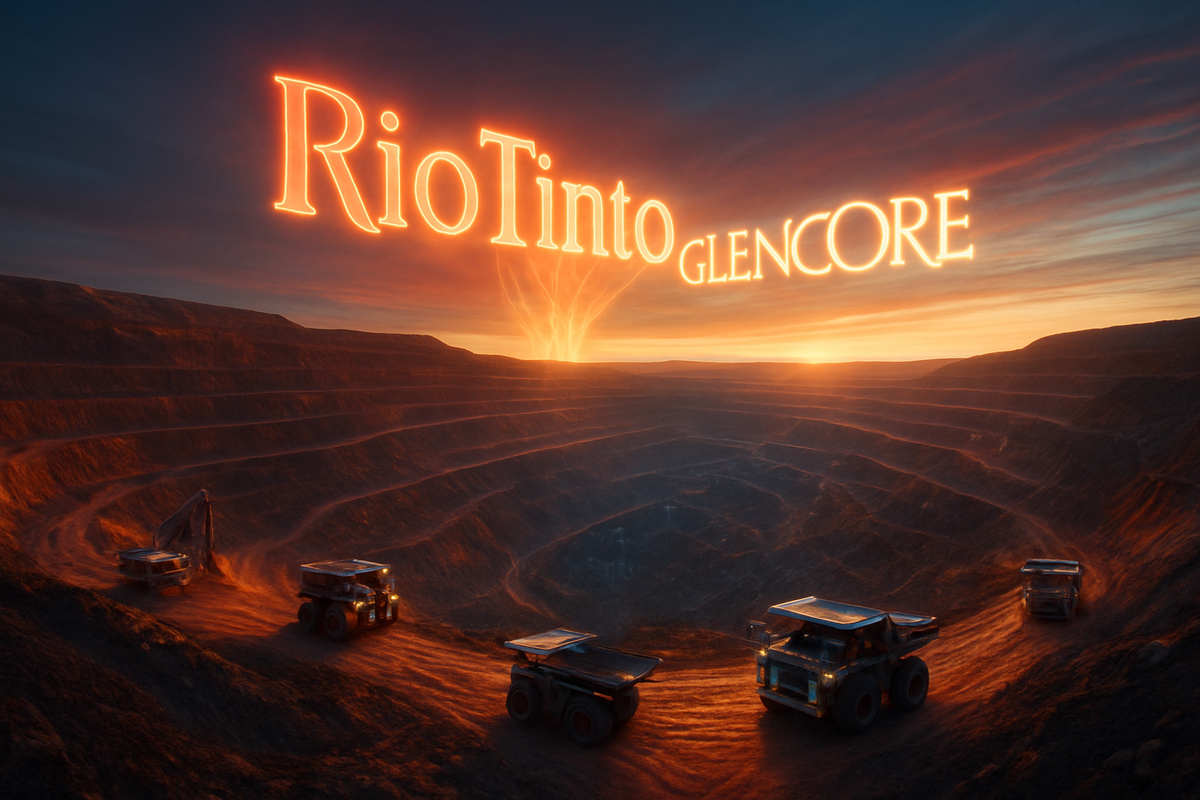
In a move that has sent shockwaves through global commodity markets, mining giants Rio Tinto (NYSE: RIO) and Glencore (OTC: GLNCY) officially confirmed on January 9, 2026, that they have entered preliminary discussions regarding a potential mega-merger. The proposed tie-up, framed as an all-share merger, would create a diversified natural resources behemoth with a market capitalization exceeding $200 billion. If successful, the deal would represent the largest consolidation in the history of the mining industry, fundamentally reshaping the supply chains for the minerals essential to the global energy transition and artificial intelligence infrastructure.
The immediate implications of this announcement were felt across the globe, with shares of both companies seeing significant volatility in early trading. For Rio Tinto, the deal represents a strategic pivot to dilute its heavy reliance on iron ore by absorbing Glencore’s world-class copper and cobalt portfolios. For Glencore, the merger offers a "grand exit" or integration for its massive industrial assets while leveraging Rio Tinto’s balance sheet to fund future growth. Analysts suggest that the timing—driven by record-high copper prices exceeding $13,300 per tonne—indicates a desperate race among the "Big Miners" to secure dominant positions in the "future-facing" metals market.
The Path to a Mining Behemoth: How We Got Here
The confirmation of these talks follows months of industry speculation and a series of high-stakes maneuvers in late 2025. According to insiders, the current negotiations were catalyzed by the successful $53 billion merger between Anglo American (OTC: NGLOY) and Teck Resources (NYSE: TECK) in September 2025, which proved that large-scale consolidation is once again palatable to institutional investors. Under the leadership of Rio Tinto’s CEO Simon Trott and Glencore’s Gary Nagle, the two companies have spent the last quarter of 2025 streamlining their respective portfolios to make a combination more feasible. Specifically, Glencore’s move in November 2025 to centralize its Australian assets was widely seen as a precursor to this week's announcement.
This is not the first time these two titans have flirted with a merger. A 2024 attempt collapsed due to disagreements over the valuation of Glencore’s thermal coal business and concerns from Rio Tinto’s ESG-focused shareholders. However, the landscape has shifted. Rio Tinto’s acquisition of Arcadium Lithium in March 2025 and the commencement of first shipments from the massive Simandou iron ore project in Guinea in late 2025 have given Rio the leverage it needed to approach Glencore from a position of strength. The "put up or shut up" deadline is now set for February 5, 2026, under the UK Takeover Code, leaving less than a month for the firms to finalize a firm offer.
The key players in this drama include not just the corporate executives but also major sovereign wealth funds and institutional investors who have grown weary of the sector's historical volatility. Initial market reactions have been cautiously optimistic, though many analysts warn that the "cultural chasm" between Rio Tinto’s disciplined, operationally-focused culture and Glencore’s aggressive, trading-centric DNA remains a significant hurdle. Nevertheless, the prospect of a single entity controlling nearly 15% of the world's seaborne copper supply has forced every major player in the sector to re-evaluate their long-term strategies.
Winners and Losers in the New Commodity Order
The primary winners in this potential merger are likely to be the shareholders of Glencore, who stand to receive a significant premium and the stability of Rio Tinto’s blue-chip balance sheet. Furthermore, "copper bulls" are cheering the news, as the merged entity would have the capital to accelerate massive projects like the Oyu Tolgoi underground expansion and Glencore’s Mutanda mine in the DRC. This concentration of supply could lead to more stable, albeit higher, pricing for the red metal, benefiting long-term investors in the materials sector.
Conversely, the "losers" could include major industrial consumers, particularly in the automotive and technology sectors. A combined Rio-Glencore would possess unprecedented pricing power in copper, cobalt, and high-grade iron ore. Manufacturers who rely on these materials for electric vehicle (EV) batteries and data center cooling systems may find themselves with fewer suppliers and less bargaining power. Additionally, competitors like BHP (NYSE: BHP) and Vale (NYSE: VALE) now face the prospect of being eclipsed. BHP, formerly the world’s largest miner by market cap, may be forced into its own "defensive acquisition" to maintain its competitive standing, potentially targeting mid-tier players like Freeport-McMoRan (NYSE: FCX) to bolster its own copper reserves.
Regional economies that depend on mining royalties may also see a mixed bag of results. While a more stable, well-capitalized owner could ensure the longevity of mining operations in Western Australia and the African Copperbelt, the inevitable "synergies"—a corporate euphemism for layoffs and site closures—could lead to economic friction in mining-dependent communities. Regulatory bodies in China and the European Union are already signaling that they will closely monitor the deal to ensure that the merged titan does not stifle competition in the critical minerals market.
A Seismic Shift in Global Industry Trends
The Rio-Glencore talks are a symptom of a much larger trend: the "Great Consolidation" of the 2020s. As the world transitions away from fossil fuels, the mining industry is no longer just about extracting raw materials; it is about securing the strategic assets required for national security and technological dominance. This event fits into a broader pattern where "Big Mining" is attempting to mirror the vertical integration seen in the oil and gas industry of the 20th century. By combining Rio's extraction expertise with Glencore's massive marketing and trading arm, the new entity would control the entire value chain from the pit to the factory floor.
The ripple effects on competitors and partners will be profound. We are likely to see a flurry of M&A activity among mid-tier miners as they seek to gain scale before they are squeezed out by the emerging "Super-Majors." Furthermore, the deal highlights a growing divide in the industry regarding coal. While Rio Tinto exited coal years ago, Glencore remains a major producer. The resolution of this "coal conundrum"—whether to spin it off or keep it as a cash cow—will set a precedent for how other diversified miners handle their legacy carbon assets in an increasingly ESG-conscious market.
Regulatory and policy implications are perhaps the biggest wildcard. In the United States, the current administration’s focus on domestic mineral security may favor a deal that stabilizes supply chains, but antitrust regulators in China (SAMR) will likely be far more skeptical. Historically, mergers of this scale, such as the failed BHP-Rio Tinto tie-up in 2008, have been blocked by Chinese regulators who feared the creation of an "iron ore monopoly." The 2026 version of this battle will likely center on copper and lithium, the "new oil" of the 21st century.
The Road Ahead: What to Watch in 2026
In the short term, the market will be laser-focused on the February 5 deadline. Expect a "war of words" between the two boards as they haggle over the exchange ratio and the leadership structure of the combined company. A key pivot to watch for is whether Glencore agrees to a full demerger of its coal assets prior to the closing of the deal. Such a move would likely clear the path for Rio Tinto’s institutional investors to greenlight the merger, but it would also strip the new company of a significant source of immediate cash flow.
Long-term, the success of a Rio-Glencore merger will depend on integration. Merging two companies with such distinct corporate identities is notoriously difficult. If the deal goes through, the strategic pivot will be toward "Green Growth." The combined company will likely divest non-core assets in aluminum or smaller-scale zinc operations to focus almost exclusively on the "Big Three": Copper, Lithium, and High-Grade Iron Ore. This would create a streamlined, high-margin vehicle that is perfectly positioned to capitalize on the multi-decade demand surge from the energy transition.
Investors should also keep a close eye on the "BHP Response." Historically, when one of the Big Three makes a move, the others follow. If BHP attempts a counter-bid for Glencore or moves to acquire another large-scale copper producer, we could see a bidding war that inflates valuations across the entire sector. Market participants should prepare for a period of heightened volatility and look for opportunities in the "service and supply" companies that support these mega-miners, as increased capital expenditure is almost certain to follow such a massive consolidation.
Final Assessment: A New Era for Mining
The potential merger of Rio Tinto and Glencore is more than just a corporate transaction; it is a signal that the mining industry has entered a new, more aggressive era of competition. The key takeaway for the market is that scale is now the ultimate competitive advantage. In a world of geopolitical instability and tightening supply, the ability to control vast, multi-commodity portfolios across different continents is what will define the winners of the next decade.
Moving forward, the market will be characterized by a "scarcity premium" for high-quality mining assets. Investors should watch for the regulatory filings in the coming months, as they will provide the first real look at the combined entity’s pro-forma financials and its plan for the energy transition. While the path to completion is fraught with regulatory and cultural obstacles, the strategic logic of the deal is undeniable.
As we look toward the remainder of 2026, the mining sector will remain the epicenter of market activity. Whether this merger creates a "Super-Titan" or collapses under its own weight, the landscape of the materials sector has been permanently altered. Investors must stay vigilant, as the decisions made in the boardrooms of London and Melbourne over the next few weeks will dictate the flow of critical minerals for years to come.
This content is intended for informational purposes only and is not financial advice.