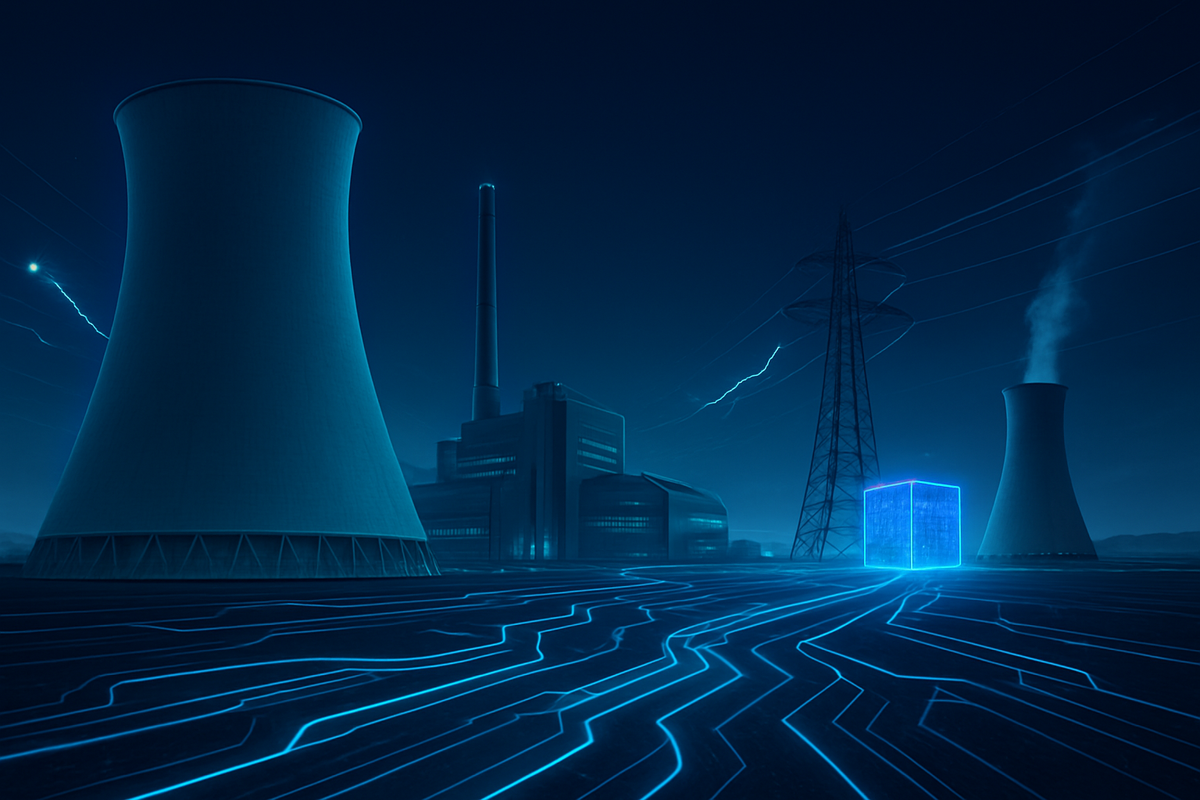
As the artificial intelligence revolution shifts from speculative software to massive physical infrastructure, the hunger for stable, carbon-free electricity has become the primary bottleneck for the world’s largest technology firms. In a transformative move that closed earlier this year, Constellation Energy (NASDAQ: CEG) finalized its $16.4 billion acquisition of Calpine Corporation, creating a 60-gigawatt "Clean Energy Titan" specifically engineered to fuel the digital age. This merger represents a fundamental pivot in the American energy sector, moving away from traditional utility models toward a high-stakes partnership with the hyperscale data center industry.
The immediate implications are profound: Constellation now controls approximately 10% of the United States’ clean energy output, combining the nation’s largest nuclear fleet with Calpine’s premier natural gas and geothermal assets. For the broader market, this deal signals that the "Energy-AI Nexus" is no longer a future concept but the current driver of energy valuations. By securing firm, 24/7 power—the "holy grail" for data center operators—Constellation has positioned itself as the indispensable utility for the next generation of industrial growth, effectively trading at a valuation premium more typical of a high-growth technology stock than a regulated power producer.
Consolidating a Carbon-Free Future
The journey to this $16.4 billion milestone began in January 2025, when Constellation Energy first announced its intention to take over Calpine in a bid to merge "clean baseload" with "flexible dispatchable" power. Over the 14-month regulatory review that followed, the deal faced intense scrutiny from the Department of Justice and the Federal Energy Regulatory Commission (FERC) regarding market concentration. To appease these concerns, Constellation successfully completed a $5 billion divestiture of 4.4 GW of assets to LS Power earlier this month, clearing the final hurdle for the combined entity.
The financial architecture of the deal underscores the high value currently placed on reliable generation capacity. The $16.4 billion equity price tag—comprising $4.5 billion in cash and 50 million shares of CEG stock—was paired with the assumption of roughly $12.7 billion in Calpine’s net debt, bringing the total enterprise value to a staggering $26.6 billion. Key stakeholders, including Calpine’s former private equity owners, Energy Capital Partners, and the Canada Pension Plan Investment Board, have transitioned into significant positions within the new Constellation framework, betting on the long-term synergy of nuclear and geothermal power.
Market reaction has been a rollercoaster of high-stakes volatility. Following the final closure on January 7, 2026, CEG shares initially dipped as investors questioned the high acquisition multiple. However, sentiment shifted dramatically in February 2026 after the company announced a massive 380-megawatt power agreement with CyrusOne to supply dedicated carbon-free energy to its newest AI cluster. This validated the strategic rationale: that the tech industry is willing to pay a significant premium for "firm" power that doesn't rely on the unpredictability of wind or solar.
Winners and Losers in the AI Power Grab
In the wake of this consolidation, the clear winners are the large-scale independent power producers (IPPs) that can mirror Constellation’s vertically integrated, carbon-free strategy. Vistra Corp (NYSE: VST) has seen its valuation swell as investors look for the "next Constellation," recognizing Vistra’s own nuclear and gas synergy in the lucrative Texas (ERCOT) market. Tech giants like Microsoft (NASDAQ: MSFT), Alphabet (NASDAQ: GOOGL), and Meta Platforms (NASDAQ: META) also emerge as winners; while they face higher costs, the merger provides the operational certainty required to scale their generative AI models without the risk of grid-induced downtime.
Conversely, traditional regulated utilities that have been slow to transition away from coal or move toward advanced nuclear options may find themselves at a disadvantage. These companies often struggle with the speed and scale required by data center developers, who are increasingly bypassing traditional grids in favor of "behind-the-meter" deals like those pioneered by Constellation. Smaller, independent renewable energy firms may also feel the squeeze, as the market’s focus shifts from "intermittent green energy" to "24/7 carbon-free firm power," favoring companies with baseload nuclear or geothermal assets over pure-play wind and solar developers.
The acquisition also places significant pressure on regional grid operators, particularly the PJM Interconnection. As Constellation locks up vast swaths of its generation for private contracts with data center operators, the "available" power for residential and small-business consumers could tighten, potentially leading to higher retail electricity prices. This creates a regulatory "lose" scenario where local governments may have to choose between fostering AI economic development and protecting the utility bills of their constituents.
Analyzing the Energy-AI Nexus
This merger is the clearest sign yet of a broader industry trend known as the "AI Power Supercycle." For decades, U.S. electricity demand remained relatively flat; however, the explosion of data center construction has created a steep upward curve that traditional infrastructure is struggling to meet. By acquiring Calpine’s geothermal assets—specifically the Geysers complex in California, the largest of its kind—Constellation is bridging the gap between fossil fuels and total decarbonization. This strategic use of "flexible" gas assets from Calpine to backstop nuclear maintenance periods allows for a level of reliability that was previously impossible.
Historically, this event parallels the massive utility consolidations of the early 2000s, but with a critical modern twist: the driver is not just scale, but the type of electron being produced. Regulatory policy is currently scrambling to keep up. The "Crane Clean Energy Center" (the rebranded Three Mile Island Unit 1) and its dedicated contract with Microsoft have set a precedent for "Nuclear-AI" pairings that this Calpine deal scales to a national level. This shift suggests that the U.S. energy policy is moving toward a "reliability first" stance, where natural gas is accepted as a necessary bridge when paired with carbon-free nuclear and geothermal.
The ripple effects are already being felt across the Atlantic and in Asia, as global energy firms look to the Constellation-Calpine model as a blueprint for fueling their own domestic AI ambitions. The deal effectively ends the era of the "commodity power price" for high-tech users, replacing it with a "bespoke infrastructure price" where the proximity and reliability of the power source are more valuable than the electricity itself.
Future Outlook: Beyond the 60 Gigawatts
Looking ahead, the next 12 to 24 months will be a period of intense operational integration for Constellation. Management has projected that the deal will be 20% accretive to earnings per share by the end of 2026, a target that will require flawless execution of its new "matched" power products. Investors should expect a flurry of further "behind-the-meter" announcements as Constellation seeks to colocate new AI data centers directly at its newly acquired Calpine gas sites and existing nuclear plants.
In the long term, this acquisition likely serves as a precursor to a massive rollout of Small Modular Reactors (SMRs). With the infrastructure and land assets of Calpine now under its belt, Constellation has the physical footprint to deploy next-generation nuclear technology as it becomes commercially viable toward 2030. The primary challenge will be navigating the "power-hungry" public sentiment; as more energy is diverted to AI, Constellation will need to lead the conversation on how this infrastructure actually benefits the broader grid through increased investment and stability.
Market participants should also watch for potential strategic pivots toward hydrogen production. By using excess carbon-free power during low-demand periods, the combined company could become a leader in the nascent green hydrogen market, further diversifying its revenue streams beyond the data center sector. The "Clean Energy Titan" is no longer just a power company; it is a diversified energy-tech infrastructure platform.
Summary and Investor Outlook
The Constellation-Calpine merger marks the definitive end of the "business as usual" era for the American power grid. By spending $16.4 billion to secure the assets necessary for the AI revolution, Constellation Energy has signaled that the future of the energy market lies at the intersection of carbon-free baseload and high-tech demand. The key takeaway for the market is clear: energy is no longer a utility to be managed, but a strategic asset to be secured.
As we move forward into mid-2026, the market will continue to reward companies that can provide the "firm" power required by the digital economy. Investors should maintain a close watch on Constellation's quarterly EPS reports to ensure the projected synergies are being realized, and keep a sharp eye on any new regulatory hurdles that may arise from their dominant market position. The era of the "Energy-AI Nexus" has arrived, and Constellation Energy is currently sitting at its very center.
This content is intended for informational purposes only and is not financial advice