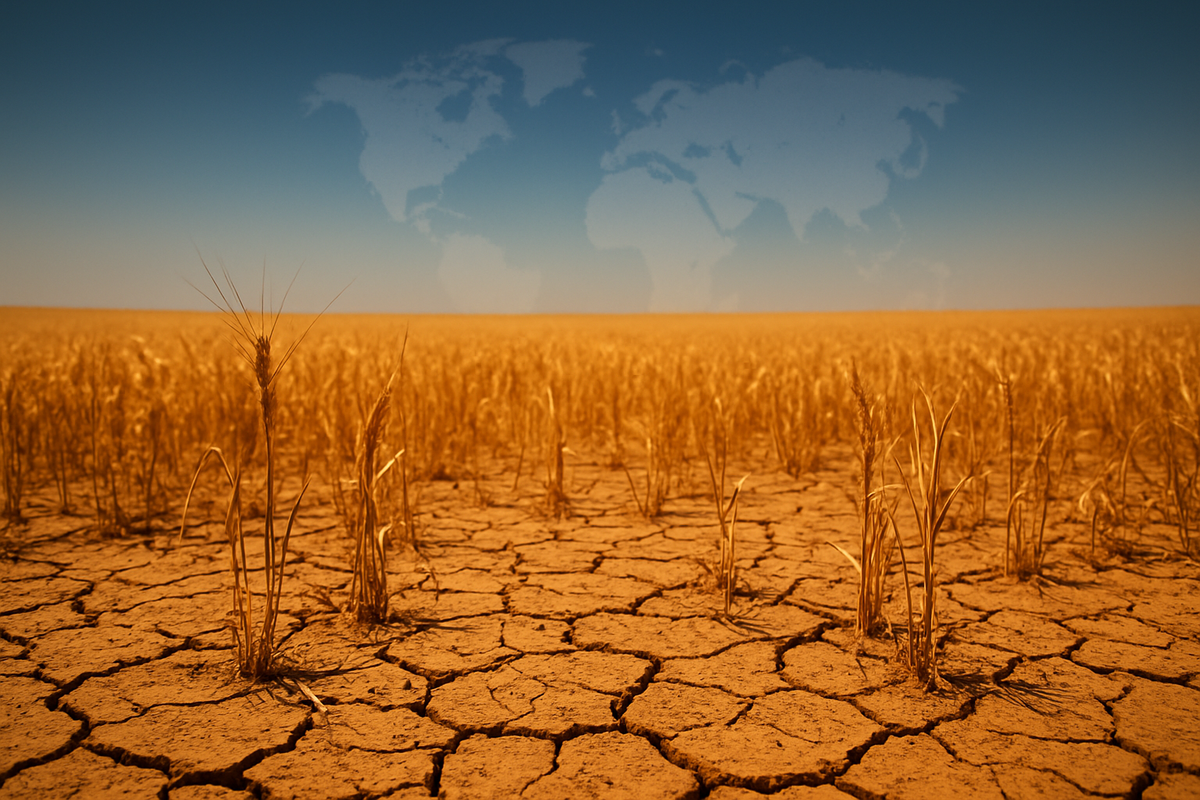
As of March 27, 2026, the global agricultural market is grappling with a supply shock of historic proportions. New data from leading risk intelligence firms and agricultural monitoring bodies indicates that the global wheat harvest is currently forecast to sit a staggering 18% below its early annual average. This precipitous decline, primarily attributed to a relentless wave of extreme weather and geopolitical instability, has sent shockwaves through commodities markets and raised the specter of a worldwide food security crisis.
The immediate implications are already being felt in the form of soaring futures prices and tightening inventories. With the "breadbasket" regions of the Northern Hemisphere entering a critical growing phase, the realization that nearly a fifth of the expected global supply has vanished is forcing a rapid repricing of everything from bulk grain to consumer staples. Analysts warn that this 18% shortfall is not merely a statistical anomaly but a structural break in the global food supply chain that could persist for years.
A Perfect Storm of Aridity and Conflict
The primary driver of this 18% shortfall is a series of "compound weather events" that have decimated yields across major producing nations. Most notably, the United Kingdom is reeling from its driest and hottest spring and summer in over 100 years. This record-breaking heatwave has pushed UK wheat production onto a "knife edge," with regional yield losses reported as high as 40% in some areas of England. The lack of soil moisture, a carry-over from the extreme 2025 season, has made the early 2026 planting cycle exceptionally difficult for British farmers.
The crisis is not confined to the UK. In the United States, more than 55% of the winter wheat area is currently under severe drought stress. In states like Oklahoma, only 18% of the crop is rated as "good-to-excellent," while Kansas has seen topsoil moisture deteriorate rapidly in the face of wind-driven wildfires. Compounding these environmental factors is a massive disruption in the fertilizer market. Following the closure of the Strait of Hormuz in late February 2026—an event dubbed "Operation Epic Fury" by regional analysts—one-third of the global fertilizer trade has been halted. This has caused urea prices to spike by 28% in less than a month, leaving many farmers unable to afford the nutrients required to salvage their parched crops.
Winners and Losers in the Agribusiness Sector
The volatility in the wheat market is creating a stark divide among major public companies. Bunge Global SA (NYSE: BG), following its strategic merger with Viterra in 2025, has emerged as a dominant force in the global grain trade. While the supply shortage is a challenge, Bunge’s expanded logistical footprint has allowed it to capitalize on regional price spreads, reporting a significant year-over-year revenue increase in early 2026. Conversely, Archer-Daniels-Midland (NYSE: ADM) has faced a more turbulent start to the year. The company reported a 13.7% revenue decline as it struggled with hedging misalignments during the initial price spikes in February, though it is now pivoting heavily toward the Sustainable Aviation Fuel (SAF) market to diversify its revenue streams.
The machinery and consumer sectors are also feeling the heat. Deere & Co (NYSE: DE) has signaled that 2026 may be the "bottom of the large ag cycle." As farmers face ballooning fertilizer costs and shrinking yields, they are increasingly scaling back on high-end equipment purchases and precision-agriculture technology. On the consumer side, packaged goods giants like Mondelēz International (NASDAQ: MDLZ) are facing significant margin compression. With wheat being a core ingredient for its global biscuit and snack portfolio, the 18% supply deficit translates directly into higher input costs, likely leading to further price hikes for consumers at the grocery store.
The Wider Significance: Food Security in a Fragmenting World
This 18% harvest decline fits into a broader trend of "climate-driven inflation," where extreme weather is no longer an occasional risk but a permanent feature of the market. The current situation draws parallels to the 2010 Russian heatwave, which caused a 60% spike in wheat prices and led to global export bans. However, the 2026 crisis is arguably more complex due to the "supply-cost divergence." Unlike previous spikes driven solely by crop failure, the current crisis is being amplified by the physical blockade of fertilizer supplies in the Middle East.
Regulatory and policy implications are already emerging as nations move to protect their domestic supplies. We are seeing a resurgence of "food nationalism," with several exporting nations in Eastern Europe considering export quotas to ensure domestic stability. This trend threatens to further disrupt the global supply chain, particularly for import-dependent regions in North Africa and the Middle East, where the 18% shortfall could trigger widespread social unrest similar to the conditions that led to the 2008 food riots.
The Road Ahead: Adaptation or Scarcity?
In the short term, the market will likely remain in a state of high volatility as investors await the final harvest tallies from the Northern Hemisphere in the summer of 2026. If the drought conditions in the U.S. and UK do not break by May, the 18% forecast could even be revised downward. Strategic pivots are already underway; many agribusinesses are accelerating investments in "climate-resilient" wheat varieties and regenerative farming practices that can better withstand soil moisture deficits.
Long-term, this crisis may serve as a catalyst for a massive shift in agricultural trade. The reliance on a few "breadbasket" regions is being questioned, leading to a potential decentralization of wheat production. We may also see an accelerated adoption of genetically modified (GM) wheat in regions that have previously been resistant, such as the EU, as the need for drought-resistant crops becomes a matter of national security rather than just commercial preference.
Wrapping Up the Wheat Crisis
The 18% decline in the global wheat harvest forecast is a watershed moment for the 2026 economy. It highlights the fragile intersection of climate change, geopolitics, and global trade. The key takeaway for the market is that the era of cheap, abundant grain may be coming to an end, replaced by a "new normal" of high volatility and supply-side constraints.
Moving forward, investors should closely monitor the "Soil Moisture Index" in the U.S. Great Plains and any diplomatic developments regarding the Strait of Hormuz. The ability of companies like Bunge (NYSE: BG) to navigate these choppy waters will be a bellwether for the sector. Ultimately, the 2026 wheat crisis is a stark reminder that while the digital economy is booming, the world’s most fundamental supply chain remains at the mercy of the weather and the soil.
This content is intended for informational purposes only and is not financial advice