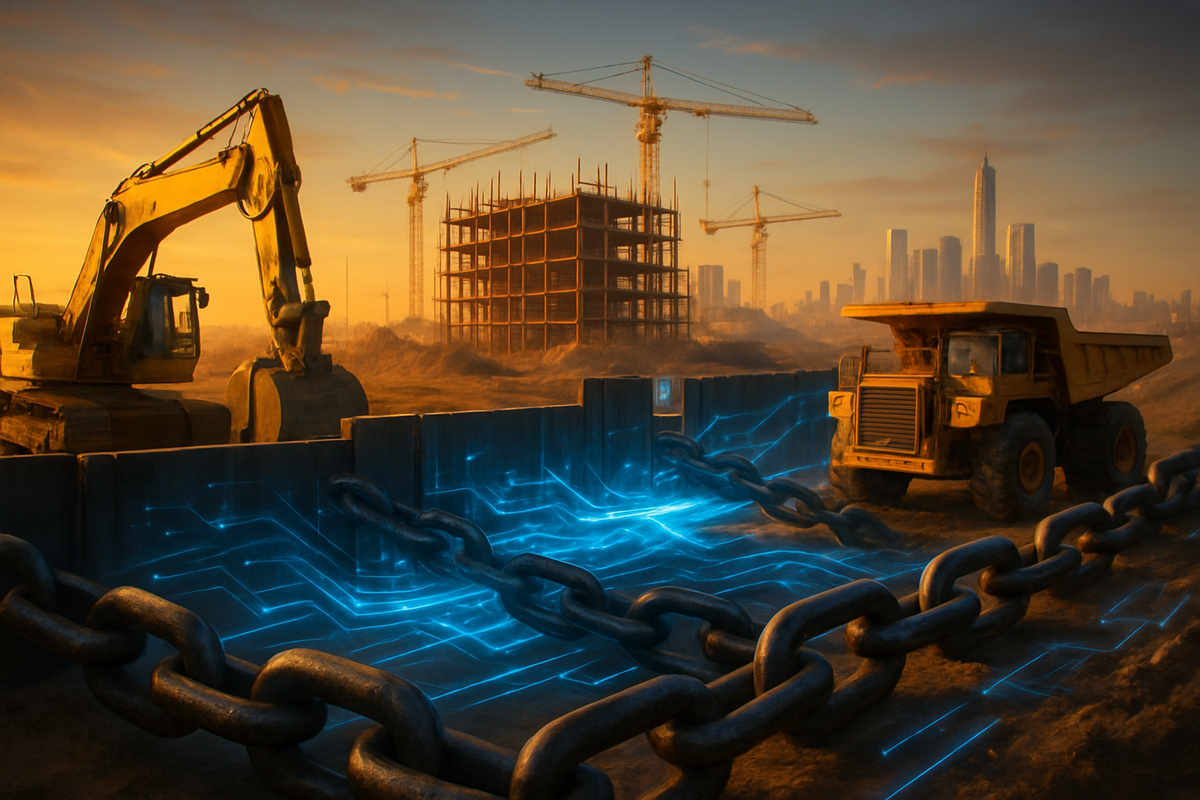
IRVING, TX — As the first quarter of 2026 draws to a close, the American industrial sector is locked in a high-stakes tug-of-war between surging protectionist costs and an insatiable appetite for heavy machinery. Industry bellwether Caterpillar Inc. (NYSE: CAT) has sent shockwaves through the market this month, warning that escalating trade duties could slice billions from its bottom line this year. Yet, despite these headwinds, a historic backlog driven by the "AI data center gold rush" and North American infrastructure "mega-projects" is currently keeping margins from a total freefall.
The situation marks a pivotal moment for "Made in America" manufacturing. While the current administration’s trade policies were designed to bolster domestic production, the immediate reality for global equipment manufacturers is a staggering increase in the cost of raw materials and specialized components. As of March 30, 2026, the industrial landscape is defined by a "tale of two sectors": those struggling under the weight of imported steel and those finding a haven in the unprecedented demand for power generation and mining equipment.
The $2.6 Billion Price Tag: A Timeline of Escalation
The current margin squeeze can be traced back to June 2025, when Section 232 tariffs on imported steel and aluminum were hiked to a restrictive 50%. While a February 2026 Supreme Court ruling recently limited certain emergency executive trade powers, the core industrial tariffs remain firmly in place. This has kept U.S. Hot-Rolled Coil (HRC) prices hovering at a staggering $1,175 per short ton, a significant premium over global benchmarks.
Caterpillar Inc. (NYSE: CAT) has been the most vocal regarding the impact, projecting a total tariff hit of $2.6 billion for fiscal year 2026. To put that in perspective, the company recorded roughly $800 million in trade-related costs in the first quarter of 2026 alone. Executives noted during a mid-quarter update that while manufacturing efficiency has improved, the sheer volume of duties on engines, hydraulic components, and raw steel has dragged adjusted operating margins toward the lower end of their 15% to 19% target range.
The industry’s reaction has been one of forced adaptation. Throughout 2025, most firms attempted to pass these costs onto consumers through aggressive price hikes. However, as we enter the second quarter of 2026, analysts are beginning to question how much further "pricing power" can be pushed before demand starts to buckle under the weight of $1 million excavators and multi-million dollar power grids.
Winners and Losers: The Domestic Divide
The impact of these tariffs is not felt equally across the industrial landscape. The diverging fortunes of heavy equipment manufacturers depend largely on their supply chain footprint and the specific end-markets they serve.
- The Squeezed: Deere & Company (NYSE: DE) is facing a particularly difficult 2026. The agriculture giant has projected $1.2 billion in tariff costs, but unlike Caterpillar, it lacks a high-growth buffer. Retaliatory tariffs from overseas markets have depressed U.S. agricultural exports, leaving farmers with less capital to upgrade equipment. With net income guidance falling to the $4 billion–$5 billion range, Deere is currently navigating the "bottom" of a punishing agricultural cycle.
- The Strategic Outlier: PACCAR Inc (NASDAQ: PCAR) has emerged as a surprising winner in this high-tariff environment. In early 2026, the maker of Kenworth and Peterbilt trucks made the bold move to drop its tariff surcharges. Because PACCAR manufactures over 90% of its U.S.-sold trucks domestically, it has avoided the brunt of the import duties that are hampering its more globalized competitors. This "local-for-local" strategy has allowed PACCAR to gain market share while rivals are forced to keep prices elevated.
- the Balanced: Cummins Inc. (NYSE: CMI) continues to see a modest 50-basis-point drag on its EBITDA margins due to tariffs. However, much like Caterpillar, its Power Systems segment is seeing record-breaking demand for backup generators, which is effectively masking the pain in its heavy-truck engine business.
AI and Infrastructure: The Multi-Billion Dollar Offset
The only reason the industrial sector hasn't entered a full-blown recession is the sheer scale of current demand. We are witnessing a fundamental shift in where industrial capital is being deployed. The most significant driver is the artificial intelligence infrastructure boom. Caterpillar has reported a 350% surge in demand for large-scale backup power generators—the massive units required to keep AI data centers running 24/7.
Furthermore, the "mega-project" era is in full swing. North American infrastructure projects, funded by multi-year government spending bills, have created a record $51.2 billion order backlog for Caterpillar. This demand is bolstered by a resurgence in the mining sector; the global transition to renewable energy has created an insatiable need for copper, lithium, and rare earth minerals, all of which require the high-margin, heavy-duty mining trucks that CAT and its peers produce.
Historically, such high tariff environments have led to industrial slowdowns, similar to the 2018-2019 trade frictions. However, the current period is unique because the "energy transition" and "AI revolution" are providing a secular tailwind that is currently stronger than the cyclical headwind of trade policy. The premium valuation of these stocks reflects a market that believes these "mega-trends" will outlast the current geopolitical volatility.
The Road Ahead: Strategic Pivots and Scenarios
As we look toward the remainder of 2026, the primary challenge for industrial firms will be supply chain "reshoring" at scale. In the short term, companies like Caterpillar and Cummins are expected to continue diversifying their component sourcing to move away from high-tariff regions. We may see an increase in domestic mergers and acquisitions as these giants look to acquire smaller, domestic component manufacturers to shield themselves from future trade volatility.
The long-term scenario hinges on whether demand can stay at these levels. If the build-out of AI data centers begins to plateau or if government infrastructure spending cools, the "tariff cliff" will become much more dangerous. Investors should watch for any signs of backlog depletion; a falling backlog in a high-cost environment is the ultimate "red flag" for industrial margins.
Furthermore, the possibility of a "local-for-local" manufacturing mandate is becoming the new industry standard. Companies that can build where they sell—avoiding the crossing of borders for critical parts—will likely see the highest margin expansion over the next three to five years.
Investor Takeaway: Watching the Backlog
The key takeaway for the market on March 30, 2026, is that while tariffs are a multi-billion dollar reality, they are currently being treated as a manageable "cost of doing business" rather than a terminal threat. The resilience of the American industrial sector is being tested, but for now, it is being saved by a historical surge in specialized demand.
Moving forward, investors must keep a close eye on U.S. steel prices and the quarterly "Backlog-to-Sales" ratios of companies like Caterpillar and Deere. Any cooling in the data center or mining sectors could quickly transform these tariff costs from a "manageable headwind" into a "margin catastrophe." For now, the industrial giants are walking a tightrope, but as long as the AI and infrastructure booms continue, they appear to have enough of a safety net to stay balanced.
This content is intended for informational purposes only and is not financial advice.