In a move that signals a decisive shift in the treatment of chronic autoimmune conditions, Gilead Sciences (NASDAQ: GILD) announced on March 23, 2026, its definitive agreement to acquire Ouro Medicines for approximately $2.175 billion. The deal marks Gilead’s second massive investment in the immunology sector within a single month, following its $7.8 billion acquisition of Arcellx, Inc. (NASDAQ: ACLX). By securing Ouro's lead candidate, gamgertamig, Gilead is positioning itself at the forefront of the "immune reset" revolution—a therapeutic frontier that aims to offer functional cures rather than lifetime symptom management.
The immediate implications for the market are significant. With this acquisition, Gilead is not only diversifying its revenue streams away from its foundational HIV business but is also leveraging a unique co-development partnership with long-term ally Galapagos NV (NASDAQ: GLPG). This strategic framework allows Gilead to mitigate the high risks associated with early-stage clinical trials while ensuring it maintains global commercialization rights for what could be a cornerstone therapy in the multi-billion-dollar inflammation and immunology (I&I) market.
The Science of Deletion: Gamgertamig and the Deal Mechanics
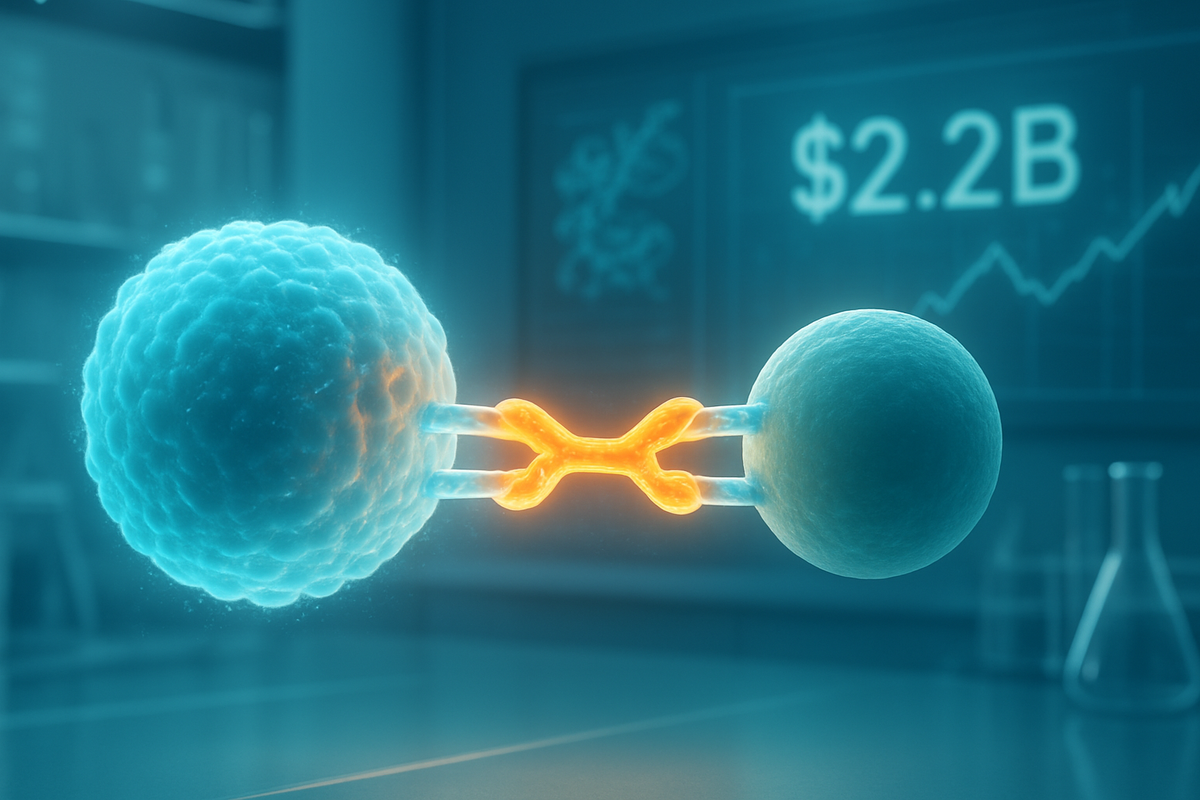
At the heart of the acquisition is gamgertamig (OM336), a bispecific T-cell engager (TCE) that targets both BCMA (B-cell maturation antigen) and CD3. Unlike traditional immunosuppressants that merely dampen the immune response, gamgertamig is designed to physically redirect a patient's own T cells to hunt down and eliminate the specific B cells and plasma cells responsible for producing harmful autoantibodies. This "deep depletion" strategy is intended to provide a "durable immune reset," potentially allowing patients with severe diseases like Autoimmune Hemolytic Anemia (AIHA) and Immune Thrombocytopenia (ITP) to achieve long-term, drug-free remission.
The deal's structure is as notable as the science behind it. Gilead will pay $1.675 billion upfront in cash, with another $500 million tied to future regulatory and clinical milestones. In an unusual twist, Galapagos NV has agreed to shoulder 50% of these costs. In return, Galapagos will absorb Ouro’s operating assets and personnel, leading the research and development through the start of registrational studies. This partnership underscores a "capital-efficient" approach to M&A, where Gilead provides the financial muscle and commercial infrastructure, while Galapagos handles the specialized clinical execution.
Market reaction has been cautiously optimistic. As of March 31, 2026, Gilead’s stock rose 3.62% to $137.34, as analysts from firms like Bernstein SocGen praised the deal for its strategic fit. The acquisition comes after a multi-year period of quiet R&D at Ouro, which had previously secured Fast Track and Orphan Drug Designations from the FDA for its lead program, setting the stage for a rapid transition into late-stage trials by 2027.
Winners and Losers in the Fight for Autoimmune Supremacy
The clear winner in this transaction is Gilead Sciences, which has successfully transformed its pipeline into a powerhouse of advanced modalities, including CAR-T and bispecifics. By acquiring Ouro, Gilead secures a "subcutaneous-first" asset—a vital competitive advantage over intravenous treatments that often require complex hospital infrastructure. Galapagos NV also emerges as a winner, deepening its symbiotic relationship with Gilead and securing a royalty stream of 20% to 23% on future net sales, which could prove transformative for the European biotech's balance sheet.
However, the acquisition places immense pressure on traditional pharmaceutical giants that rely on older, chronic-use biologics. Companies like AbbVie (NYSE: ABBV) and Amgen (NASDAQ: AMGN), which have long dominated the autoimmune space with blockbuster drugs like Humira and Enbrel, now face a future where "one-and-done" or short-course "reset" therapies could erode their market share. While AbbVie is pivoting toward its own trispecific programs, the speed of Gilead’s entry into the BCMA-TCE space through Ouro puts competitors on the defensive.
Conversely, some smaller biotech players may find themselves in the "losing" column if they cannot keep pace with Gilead's consolidation of the sector. As Gilead and Sanofi (NASDAQ: SNY)—which recently licensed a rival trispecific for $1.2 billion—snap up the most promising assets, the cost of entry for other mid-cap firms is skyrocketing. Investors are now looking at the remaining independent players in the BCMA space, such as Candid Therapeutics, as the next potential targets in an increasingly expensive bidding war.
A Broader Shift: From Suppression to Cure
The acquisition of Ouro Medicines reflects a tectonic shift in the pharmaceutical industry’s philosophy regarding inflammation. For decades, the standard of care has been chronic immunosuppression—treating patients for life with pills or injections that merely manage disease flares. Gilead’s focus on "immune reset" via gamgertamig aligns with a broader industry trend toward "curative intent" therapies. This mirrors the transformation seen in oncology a decade ago with the advent of immunotherapy, where the goal shifted from extending life by months to providing decades of cancer-free survival.
This event also highlights the increasing importance of bispecific and trispecific antibodies as alternatives to CAR-T cell therapy. While CAR-T has shown miraculous results in early autoimmune trials, it is notoriously expensive and difficult to scale. Bispecific TCEs like gamgertamig offer a "ready-to-use" (off-the-shelf) alternative that can be administered in a doctor’s office, potentially democratizing access to high-end genomic and proteomic medicine. Regulatory bodies like the FDA are already signaling a willingness to expedite these therapies, as evidenced by the Fast Track status granted to Ouro's program.
Historically, this deal is reminiscent of Gilead’s $11 billion acquisition of Pharmasset in 2011, which brought the world a cure for Hepatitis C. While the Ouro deal is smaller in scale, the strategic intent is identical: to dominate a therapeutic area by introducing a therapy that fundamentally changes the trajectory of a disease. If gamgertamig succeeds, it could render many existing treatments for AIHA and ITP obsolete.
The Road to 2027: Trials, Triumphs, and Thresholds
Looking ahead, the next 18 to 24 months will be critical for the Gilead-Galapagos-Ouro triad. The primary focus will be on the Phase 1/2 data readouts for AIHA and ITP. Investors will be watching closely for two key metrics: the depth of B-cell depletion and the incidence of cytokine release syndrome (CRS). If gamgertamig can prove it delivers a deep "immune reset" without the severe side effects often seen in oncology-grade TCEs, its valuation—and Gilead’s market cap—could see substantial upward revisions.
Strategic pivots may also be on the horizon. While Ouro focused on orphan blood disorders, Gilead has the resources to expand gamgertamig into much larger indications, such as Systemic Lupus Erythematosus (SLE) or Myasthenia Gravis. The challenge will be navigating a crowded field where J&J and Sanofi are also racing toward the same goal. Gilead will likely need to initiate large-scale "basket trials" to test the asset across multiple autoimmune conditions simultaneously to maintain its lead.
In the long term, the success of this acquisition will be measured by whether "immune reset" becomes the new standard of care. If Gilead can successfully transition from an HIV-centric company to an Immunology leader, it will have executed one of the most significant corporate transformations in biotech history.
Wrap-up: A Defining Moment for Gilead
The $2.175 billion acquisition of Ouro Medicines is more than just a line item in an annual report; it is a declaration of intent. By targeting the "immune reset" through gamgertamig, Gilead is betting that the future of medicine lies not in managing disease, but in erasing it. The collaboration with Galapagos NV adds a layer of operational sophistication that may serve as a blueprint for future biotech M&A in an era of high interest rates and rigorous clinical scrutiny.
For the market, the message is clear: the autoimmune sector is entering a period of hyper-innovation and aggressive consolidation. Gilead has moved early and decisively to claim its territory. Moving forward, investors should watch for the integration of Ouro’s team into the Galapagos infrastructure and the preliminary Phase 2 data expected in early 2027. If the "reset" holds, Gilead may once again find itself holding the keys to a medical revolution.
This content is intended for informational purposes only and is not financial advice.