The global energy landscape shifted violently this week following a series of coordinated U.S. and Israeli military strikes against Iranian nuclear and military infrastructure. In what has been codenamed "Operation Epic Fury" by Washington and "Operation Roaring Lion" by Jerusalem, the strikes targeted key enrichment facilities and Islamic Revolutionary Guard Corps (IRGC) command centers, prompting an immediate and aggressive Iranian response. Within hours of the initial reports, the IRGC declared the Strait of Hormuz—the world’s most critical maritime oil chokepoint—closed to international shipping, effectively severing a vein that carries 20% of the world’s daily petroleum supply.
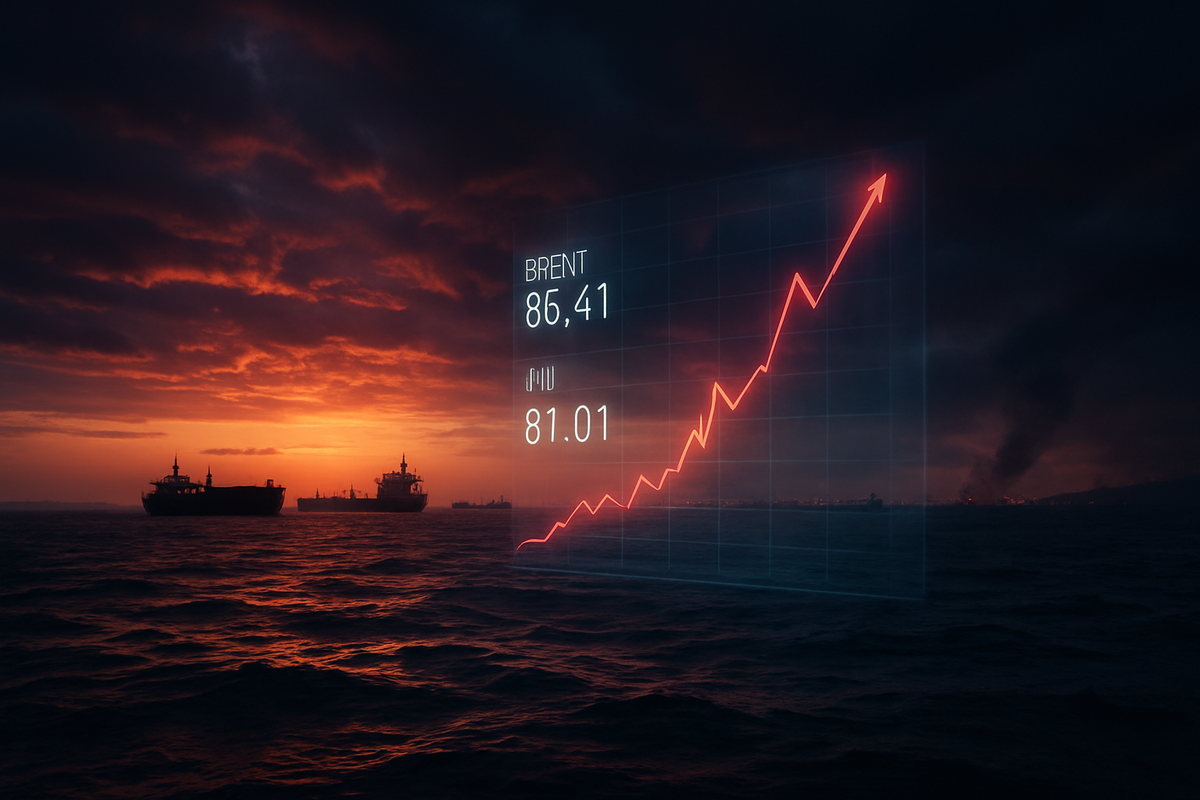
The financial fallout was instantaneous and severe. As of March 6, 2026, Brent Crude has surged to $85.41 per barrel, while West Texas Intermediate (WTI) climbed to $81.01, representing a jump of approximately 8% to 10% in a matter of days. This "geopolitical risk premium" is being driven by fears of a protracted regional war and the reality of hundreds of tankers currently stranded or rerouting around the Cape of Good Hope. Market analysts warn that if the blockade of the Strait persists for more than 30 days, triple-digit oil prices could become the new baseline for the global economy.
A Timeline of Escalation: From Diplomacy to "Epic Fury"
The military operations began in the final hours of February 2026, following the collapse of high-stakes nuclear negotiations in Geneva. On February 28, a wave of roughly 200 fighter jets and Tomahawk missiles targeted Iranian air defense systems and naval assets in the Persian Gulf. By March 1, Israeli forces confirmed they had struck the Natanz enrichment facility, aiming to dismantle Iran’s nuclear breakout capability. Reports also surfaced regarding the death of high-ranking Iranian officials in Tehran, which triggered a massive retaliatory missile barrage from Iran toward U.S. bases in Qatar and the United Arab Emirates, as well as targets within Israel.
The situation intensified on March 2, when the IRGC officially declared a blockade of the Strait of Hormuz. Satellite imagery quickly confirmed a collapse in maritime traffic; daily tanker transits dropped from an average of 24 to just four within 48 hours. Insurance providers, including major marine underwriters at Lloyd’s of London, responded by canceling war-risk coverage for the Persian Gulf, effectively halting commercial shipping even for vessels not directly targeted. This "de facto" closure has left approximately 300 tankers anchored outside the Gulf, waiting for security guarantees that have yet to materialize.
By March 4, the conflict transitioned into a broader effort to degrade Iran’s industrial and missile infrastructure. Strikes hit the Abbas Abad and Shenzar industrial zones near Tehran, while U.S. naval forces engaged Iranian "swarm" boats attempting to harass regional shipping. The International Atomic Energy Agency (IAEA) reported significant structural damage to the Isfahan nuclear complex, although the full extent of the environmental impact remains under assessment. As of today, March 6, military operations continue to focus on neutralizing ballistic missile launchers across western Iran to prevent further strikes on neighboring oil-producing states.
Winners and Losers: Defense Rallies as Airlines Plunge
The volatility in the energy and security sectors has created a stark divide in the equity markets. Defense contractors have been the primary beneficiaries of the escalation, with RTX Corporation (NYSE: RTX), formerly Raytheon, leading the charge with a 6.2% surge. Investors are betting on a prolonged need for missile defense systems like the Patriot and THAAD, as well as the munitions used in the strikes. Lockheed Martin (NYSE: LMT) and Northrop Grumman (NYSE: NOC) also hit record highs this week, as the conflict underscored the continued demand for high-end stealth and precision-strike platforms.
In the maritime sector, oil tanker companies saw an unprecedented spike in charter rates. As the Strait of Hormuz closed, the scramble for "tonnage" drove shipping rates for Very Large Crude Carriers (VLCCs) to over $400,000 per day. Nordic American Tankers (NYSE: NAT) saw its shares surge 20% in a single trading session, while Frontline PLC (NYSE: FRO) and DHT Holdings (NYSE: DHT) posted gains of over 7%. These companies are positioned to profit from the significantly longer voyages required to bypass the Middle East, as crude must now be moved across more expensive, circuitous routes.
Conversely, the "losers" of this crisis are found in the consumer and transportation sectors. Major airlines like United Airlines (NASDAQ: UAL) have seen their stocks plummet as jet fuel prices track the surge in crude. Furthermore, the closure of Iranian and regional airspace has forced costly reroutings for long-haul flights between Europe and Asia. For integrated oil majors like ExxonMobil (NYSE: XOM), Chevron (NYSE: CVX), and Shell (LSE:SHEL), the impact is more nuanced. While they benefit from higher prices for their non-Middle Eastern production, the suspension of operations by Saudi Aramco (TADAWUL:2222) at its Ras Tanura refinery and the declaration of force majeure by QatarEnergy on LNG shipments have disrupted global supply chains, increasing refining costs and operational risks worldwide.
A Return to the "Tanker War" Paradigm
The current crisis bears a haunting resemblance to the "Tanker War" of the 1980s, but with significantly higher stakes for a hyper-globalized 21st-century economy. The closure of the Strait of Hormuz is not merely a regional issue; it is a systemic threat to global energy security. For decades, the "Hormuz Dilemma" was treated as a tail-risk—a low-probability, high-impact event. The events of early March 2026 have moved this threat into the immediate foreground, forcing a radical reassessment of energy dependencies in Europe and Asia.
This event fits into a broader trend of "weaponized interdependence," where critical trade chokepoints are used as leverage in geopolitical disputes. The immediate ripple effects are already being felt in the liquefied natural gas (LNG) market. With QatarEnergy halting all gas liquefaction activities, approximately 20% of the world’s LNG supply has vanished overnight. This is particularly devastating for European nations that had transitioned to LNG to replace Russian pipeline gas. The sudden shortage has caused European natural gas prices to nearly double, threatening to reignite the inflationary pressures that plagued the continent in the early 2020s.
Historically, such price shocks have led to mandatory energy rationing and a pivot toward emergency strategic reserves. We are already seeing the U.S. and its IEA partners discuss a massive coordinated release from Strategic Petroleum Reserves (SPR). However, unlike previous releases, the current market faces a physical blockade rather than a mere production cut. This means that even if extra barrels are released, the logistics of getting them to refineries in Asia—which are heavily dependent on Middle Eastern sour crude—remains a daunting challenge that may require military convoys, further escalating the risk of a wider regional war.
The Road Ahead: Escalation or Stalemate?
In the short term, the market's focus remains on the "Escalation Ladder." If Iran continues to target desalination plants and oil infrastructure in Saudi Arabia and the UAE, the world could see an oil price spike toward $120 per barrel. Conversely, if the U.S. Navy can successfully establish "Blue Water" corridors to escort tankers through the Gulf of Oman and eventually the Strait, the risk premium may begin to deflate. However, such an operation would require a level of naval commitment not seen since World War II, involving significant risks to personnel and vessels.
Long-term, this conflict will likely accelerate the global push for energy "near-shoring" and the diversification of energy sources. We may see a strategic pivot by major players like BP (LSE:BP) and TotalEnergies (EPA:TTE) to double down on investments in the Atlantic Basin, specifically in places like Guyana, Brazil, and the U.S. Gulf Coast. Additionally, the fragility of the Strait of Hormuz will likely provide a renewed impetus for nuclear and renewable energy investments as matters of national security, rather than just environmental policy.
Final Assessment: A Precarious New Normal
The strikes in early March 2026 have shattered the fragile stability of the Middle East and sent shockwaves through the global financial system. The 8% to 10% jump in oil prices is likely just the beginning of a period of intense volatility. For investors, the takeaway is clear: the era of "cheap security" for global trade routes is over. The "Hormuz Premium" is no longer a theoretical concept but a daily reality that will dictate inflation rates, central bank policies, and corporate earnings for the foreseeable future.
Moving forward, the market will be hyper-fixated on two metrics: the daily volume of tanker transits and the status of regional oil infrastructure. Any sign of damage to Saudi or Emirati production facilities will be met with severe selling in the broader equities market and a rush into safe havens like gold and the U.S. dollar. For now, the world waits to see if diplomacy can find a foothold or if "Operation Epic Fury" is the opening salvo of a much larger, more destructive conflict.
This content is intended for informational purposes only and is not financial advice