By: MarketMinute
WASHINGTON D.C. — In a historic move to prevent a global economic meltdown, finance ministers from the Group of Seven (G7) and leadership from the International Energy Agency (IEA) convened an emergency meeting on the morning of March 9, 2026. The summit was called to authorize a coordinated release of 300 million to 400 million barrels of oil from global Strategic Petroleum Reserves (SPR). This intervention, the largest in the IEA’s 52-year history, represents a staggering 25% to 30% of the world’s 1.2 billion barrels of emergency stockpiles.
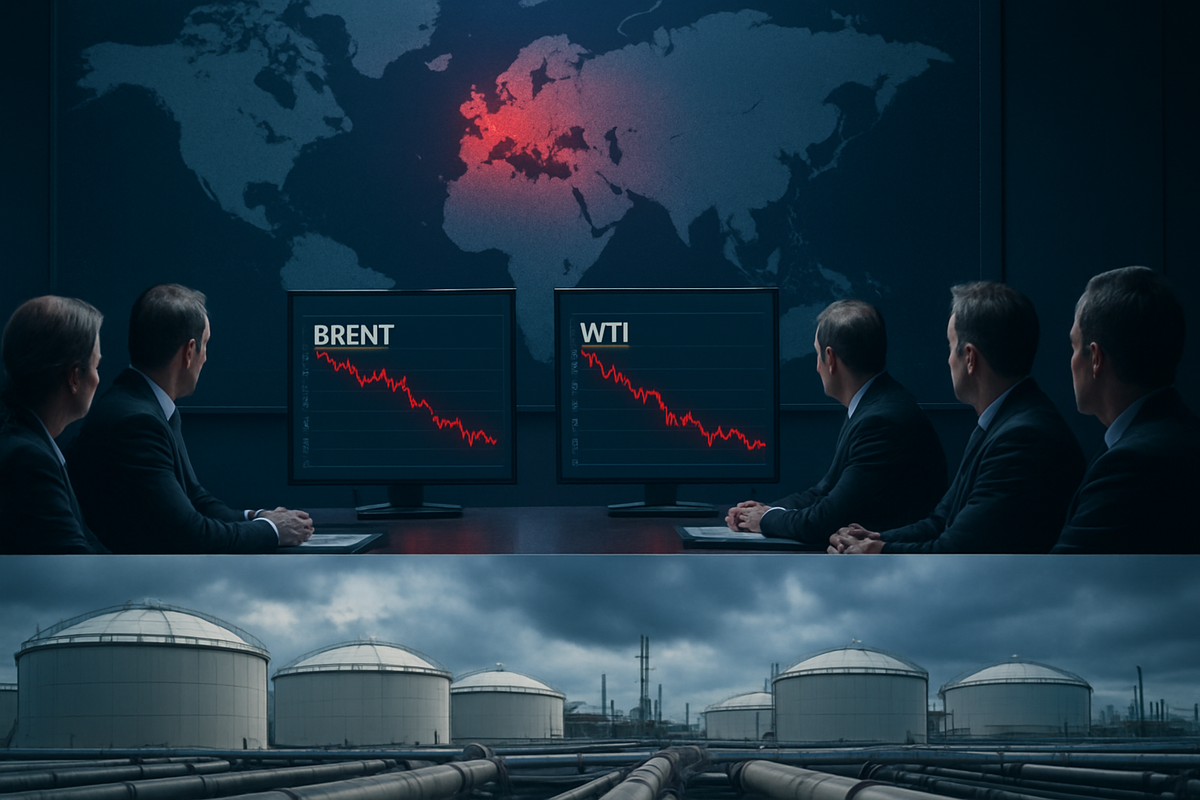
The announcement immediately sent shockwaves through the energy markets. Brent crude, which had reached a terrifying peak of $119 per barrel earlier in the day, pared its record gains, falling to $106 per barrel as news of the massive supply injection broke. While the relief was palpable on trading floors, the underlying cause—a rapidly escalating military conflict with Iran—continues to cast a long shadow over the global energy landscape.
The March 9 emergency meeting was the culmination of a ten-day spiral into geopolitical chaos. The crisis began on February 28, 2026, when a series of U.S. and Israeli precision strikes targeted Iranian nuclear and energy infrastructure, including the critical Shahran oil depot. Iran’s retaliation was swift and devastating, targeting regional energy hubs such as Bahrain’s Bapco refinery and the Shaybah oil field in Saudi Arabia. However, the "nuclear option" for the oil markets occurred when Iranian naval forces effectively shuttered the Strait of Hormuz, a narrow chokepoint through which 20 million barrels of oil—roughly 20% of global daily consumption—passes.
With the Strait closed, producers like Iraq, Kuwait, and the United Arab Emirates found themselves unable to export their crude, creating an immediate physical deficit in the market. IEA Executive Director Fatih Birol and G7 finance ministers met at 8:30 a.m. ET via a secure video conference to finalize the "2026 Emergency Stabilization Plan." The scale of the 300-400 million barrel release dwarfs the 180-million-barrel release during the 2022 Russia-Ukraine crisis, signaling the severity of the current supply shock. Markets responded with extreme volatility; after the initial $13 drop in Brent crude, traders are now weighing the reality of a 400-million-barrel "bandage" against a 20-million-barrel-per-day "wound."
The fallout from this energy shock has created a sharp divide between market winners and losers. Large-scale domestic producers with minimal exposure to the Middle East have seen a surge in investor interest. ExxonMobil (NYSE: XOM) and Chevron (NYSE: CVX) both saw their shares rise as the market placed a premium on North American production and "energy dominance" assets in the Permian Basin. ExxonMobil, in particular, has been viewed as a safe haven due to its diversified global footprint that remains insulated from the immediate Hormuz blockade.
Conversely, the airline and logistics sectors are reeling. Delta Air Lines (NYSE: DAL) and United Airlines (NASDAQ: UAL) saw their stock prices tumble by more than 4% in early trading as jet fuel costs skyrocketed. The aviation industry, already grappling with thin margins, now faces the dual threat of surging operational costs and the closure of critical Middle Eastern airspace. Beyond the U.S., regional markets took a massive hit; Japan’s Nikkei 225 fell 5%, reflecting the vulnerability of energy-import-dependent economies in Asia to a prolonged Persian Gulf shutdown.
The IEA intervention marks a significant policy pivot for the Trump administration. Since taking office in 2025, President Donald Trump and Energy Secretary Chris Wright had prioritized refilling the SPR, which had been depleted to a 40-year low by the previous administration. By February 2026, the administration had successfully boosted reserves to approximately 415 million barrels. However, the sheer magnitude of the $115/bbl price spike forced the administration to abandon its "refill-only" stance in favor of a massive liquidity injection to prevent a stagflationary spiral.
Historically, IEA-coordinated releases have been used sparingly: during the 1991 Gulf War, following Hurricane Katrina in 2005, during the 2011 Libyan Civil War, and the 2022 invasion of Ukraine. None of those events, however, involved the total closure of the Strait of Hormuz. While the 2022 release was designed to offset a potential loss of Russian oil, the 2026 release is a response to an actual, physical blockage of the world’s most vital energy artery. This unprecedented scale highlights a shift in global strategy where strategic reserves are no longer just a "buffer" but a frontline weapon in economic warfare.
The critical question remains: can a release of this magnitude provide long-term stability? In the short term, 400 million barrels can bridge the gap for approximately 20 to 40 days of a total Hormuz closure. However, if the military conflict in the Middle East persists for months, the IEA will find its "ammunition" dangerously low. The market may soon pivot from relief over the release to anxiety over what happens when the strategic reserves are exhausted.
Investors and policymakers must now watch for strategic adaptations in the shipping industry and potential "land-bridge" alternatives for oil transport. There is also a risk of operational constraints; the SPR infrastructure has been used heavily over the last four years, and some analysts express concern over whether the physical pumps and salt caverns can handle a release of this velocity without mechanical failure. If the Strait of Hormuz remains closed beyond the 60-day mark, the global economy may face a structural shift toward permanently higher energy costs and a forced acceleration of alternative energy adoption.
The G7 and IEA have played their largest card in a high-stakes game of global energy security. By releasing up to 300-400 million barrels, they have successfully blunted the initial price spike from $119 to $106, providing a temporary lifeline to the global economy. Yet, the underlying geopolitical tension remains unresolved, and the "energy dominance" narrative of the current administration is being tested by the harsh reality of global supply chain interconnectedness.
For investors, the coming months will require a focus on "geopolitical resilience." Watch for whether the Strait of Hormuz reopens and if the G7 can maintain unity if the crisis drags into the summer. The lasting impact of this event may be a redefined understanding of the SPR—not as a rainy-day fund for domestic use, but as a critical tool of international diplomacy and a primary defense against the weaponization of energy chokepoints.
This content is intended for informational purposes only and is not financial advice