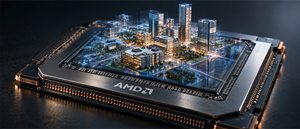
As we approach the end of 2025, the semiconductor landscape has undergone a tectonic shift, with Advanced Micro Devices (NASDAQ: AMD) emerging as the primary challenger to the generative AI status quo. Today, December 18, 2025, AMD stands at a critical juncture. No longer just the "scrappy underdog" to Intel or the "second-best" to NVIDIA, the company has successfully transitioned into a full-stack high-performance computing powerhouse.
In the last twelve months, AMD has navigated a complex macro environment defined by the "AI arms race," tightening geopolitical export controls, and a fundamental restructuring of data center architecture. With its market capitalization hovering near record highs and a product roadmap that now matches its rivals beat-for-beat, AMD is the focal point for institutional investors seeking to capitalize on the "Second Wave" of AI infrastructure. This deep-dive examines whether AMD can maintain its momentum or if the high valuation reflects a ceiling in a maturing market.
Historical Background
The story of AMD is one of the most remarkable corporate turnarounds in American history. Founded in 1969 by Jerry Sanders, the company spent decades in the shadow of Intel, often surviving as a "second-source" manufacturer. For much of the early 2010s, AMD teetered on the brink of bankruptcy, its stock price languishing below $2 as it struggled with uncompetitive products and crushing debt.
The turning point came in 2014 with the appointment of Dr. Lisa Su as CEO. Under her "horizon" strategy, AMD pivoted away from low-margin consumer segments to focus on high-performance computing and the modular "chiplet" architecture. The launch of the Zen architecture in 2017 marked the beginning of a multi-year resurgence, allowing AMD to claw back significant market share in the desktop, laptop, and—most crucially—the server market. The 2022 acquisition of Xilinx for nearly $50 billion and the 2025 integration of ZT Systems have further transformed AMD into a diversified leader in adaptive and AI computing.
Business Model
AMD operates through four primary segments, each contributing to a diversified revenue stream that mitigates the cyclicality of the semiconductor industry:
- Data Center (The Growth Engine): This segment includes EPYC server processors, Instinct AI accelerators (like the MI325X and MI350), and Pensando DPUs. It is now AMD’s largest and most profitable unit, serving hyperscalers like Microsoft Azure, AWS, and Google Cloud.
- Client (PC & Notebook): Centered on the Ryzen processor family, this segment benefits from the "AI PC" replacement cycle that gained significant steam throughout 2025.
- Gaming: This includes Radeon GPUs and semi-custom chips for consoles (PlayStation 5 and Xbox Series). While this segment faced headwinds in 2025 due to the aging console cycle, it remains a vital cash-flow contributor.
- Embedded: Following the Xilinx acquisition, AMD dominates this high-margin space, providing adaptive SoCs for industrial, automotive, and telecommunications sectors.
Stock Performance Overview
Over the past decade, AMD has been one of the top-performing stocks in the S&P 500.
- 10-Year Horizon: Investors who bought AMD in December 2015 have seen returns exceeding 5,000%, as the stock climbed from the $2 range to its current levels.
- 5-Year Horizon: Since late 2020, the stock has grown by over 180%, outperforming the broader Philadelphia Semiconductor Index (SOX).
- 1-Year Horizon (2025): The stock has had a volatile but rewarding year. Entering 2025 at approximately $150, the share price rallied significantly following the successful rollout of the MI350 series and the finalized integration of ZT Systems. As of December 18, 2025, AMD is trading in the $260–$280 range, reflecting a Year-to-Date (YTD) gain of roughly 75%, largely fueled by the company’s ability to prove its "AI credentials" beyond mere speculation.
Financial Performance
AMD’s 2025 fiscal year has been defined by record-breaking margins and a shift toward Data Center dominance.
- Revenue: Estimated full-year 2025 revenue is projected to reach $32.5 billion, a significant jump from 2024’s $25.8 billion.
- Data Center Growth: The segment saw a staggering 55% year-over-year growth in 2025, now accounting for nearly 50% of total company revenue.
- Margins: Non-GAAP gross margins have expanded to 54%, driven by the higher-margin mix of EPYC and Instinct products.
- Cash Flow & Debt: AMD maintains a pristine balance sheet with over $12 billion in cash and short-term investments. The $4.9 billion acquisition of ZT Systems was partially offset by the $3 billion sale of its manufacturing business to Sanmina, keeping AMD’s net debt position exceptionally healthy.
- Valuation: Trading at approximately 38x forward earnings, AMD remains "expensive" compared to legacy peers but trades at a discount to NVIDIA’s historical AI-peak multiples, suggesting room for expansion if AI growth persists.
Leadership and Management
Dr. Lisa Su remains at the helm, widely regarded as the "Steady Hand" of the semiconductor industry. Her leadership style—characterized by engineering rigor and conservative guidance followed by consistent over-delivery—has earned the unwavering trust of Wall Street.
The executive team has been strengthened in 2025 by the full integration of the ZT Systems engineering team, led by Frank Zhang. This addition of 1,000+ infrastructure engineers has allowed AMD to move from selling "chips" to selling "rack-scale solutions." The Board of Directors continues to emphasize strong governance, with a focus on supply chain resilience and ESG initiatives, particularly in reducing the energy intensity of their high-performance chips.
Products, Services, and Innovations
The 2025 product portfolio is the most robust in AMD’s history:
- Instinct MI350 Series: Launched in late 2025, the MI350 uses a 3nm process and the CDNA 4 architecture. It has narrowed the performance gap with NVIDIA’s Blackwell architecture, specifically in large-scale inference tasks.
- 5th Gen EPYC "Turin": Released in late 2024 and reaching peak adoption in 2025, Turin has become the gold standard for cloud efficiency, offering significantly better performance-per-watt than Intel’s Granite Rapids.
- Ryzen AI 300 Series: These "AI PCs" feature integrated NPUs (Neural Processing Units) that allow users to run complex AI models locally, driving a significant refresh cycle in the laptop market.
- Software (ROCm): Perhaps the most critical innovation isn't hardware. AMD’s ROCm software stack has reached version 7.0 in 2025, offering a much-needed open-source alternative to NVIDIA’s CUDA, making it easier for developers to port code to AMD hardware.
Competitive Landscape
AMD finds itself in a "war on two fronts":
- Against NVIDIA (NASDAQ: NVDA): AMD is the clear #2 in AI accelerators. While NVIDIA maintains a lead in market share and its proprietary CUDA ecosystem, AMD is successfully capturing "non-captive" demand from hyperscalers who want to avoid vendor lock-in.
- Against Intel (NASDAQ: INTC): AMD continues to gain ground in the data center. While Intel has shown signs of a manufacturing recovery with its 18A node, AMD’s architectural advantages and partnership with TSMC have allowed it to maintain a performance-per-watt lead throughout 2025.
- Against ARM-based Rivals: The rise of custom silicon (e.g., AWS Graviton, Google Axion) remains a threat. AMD's response has been the "Bergamo" line of cloud-native processors, designed to compete directly with ARM’s efficiency.
Industry and Market Trends
The semiconductor industry in 2025 is dominated by the Transition to Inference. While 2023 and 2024 were about "training" massive models, 2025 is the year of "inference"—the actual application of AI. This favors AMD, as its hardware often excels in the memory-bandwidth-heavy workloads required for efficient inference at scale.
Additionally, the "Sovereign AI" trend—where nations build their own domestic data centers—has expanded the market beyond the "Big Four" US hyperscalers. AMD has aggressively pursued these international contracts, positioning itself as a flexible partner.
Risks and Challenges
Despite its success, AMD faces formidable risks:
- TSMC Dependence: AMD remains 100% dependent on Taiwan Semiconductor Manufacturing Company (TSMC) for its leading-edge chips. Any disruption in the Taiwan Strait would be catastrophic.
- Software Moat: While ROCm has improved, NVIDIA’s CUDA remains the industry standard. Overcoming this "developer inertia" is a multi-year, multi-billion dollar challenge.
- Cyclicality: The gaming and embedded markets are currently in a "trough." If the AI boom slows before these legacy segments recover, AMD could see a revenue gap.
- Integration Risk: Managing the massive headcount growth from Xilinx and ZT Systems requires cultural alignment that can often distract from core engineering goals.
Opportunities and Catalysts
- AI PC Refresh: As Windows 11 and its successors integrate more AI features, the hundreds of millions of PCs nearing their end-of-life represent a massive tailwind for the Ryzen segment in 2026.
- MI350 Adoption: If early benchmarks for the MI350 hold true, 2026 could see a significant market share shift in the AI accelerator space.
- M&A Potential: With a strong cash position, AMD is rumored to be looking at specialized AI software startups to further bolster its software ecosystem.
Investor Sentiment and Analyst Coverage
Wall Street sentiment remains "Overweight" on AMD. As of December 2025, roughly 85% of analysts covering the stock have a "Buy" or "Strong Buy" rating.
- Institutional Moves: Major hedge funds and institutional players like BlackRock and Vanguard have increased their positions throughout 2025, viewing AMD as the most viable "diversification play" away from NVIDIA.
- Retail Chatter: On platforms like Reddit's r/AMD_Stock, sentiment is highly positive, though some long-term retail investors are beginning to trim positions after the 2025 rally, citing "valuation fatigue."
Regulatory, Policy, and Geopolitical Factors
Geopolitics is AMD’s most unpredictable variable. The tightening of US export controls has effectively shut AMD out of the high-end AI market in China, a loss estimated at roughly $1.5 billion for 2025. However, this has been partially offset by the CHIPS Act incentives, which are funding the expansion of AMD-partnered TSMC facilities in Arizona.
Regulatory scrutiny on big tech "monopolies" has also indirectly helped AMD. Regulators in the EU and US are keen to see a competitive market for AI chips, making them "root for" AMD as the primary competitor to NVIDIA's dominance.
Conclusion
As we look toward 2026, AMD is no longer a company defined by its past struggles, but by its future potential. Under Dr. Lisa Su, it has executed a near-flawless strategy of incremental gains and bold acquisitions.
The bull case for AMD rests on its ability to capture a 20-25% share of the AI accelerator market and continue its steady erosion of Intel’s server share. The bear case warns of a cooling AI market and the massive logistical risks of its supply chain. For investors, AMD represents a high-conviction bet on the democratization of AI infrastructure. While the stock’s 2025 run-up has priced in a lot of perfection, AMD’s history suggests that betting against Lisa Su’s roadmap is a dangerous game.
This content is intended for informational purposes only and is not financial advice. Today's date: 12/18/2025.