Shoe and apparel company Steven Madden (NASDAQ: SHOO) met Wall Street’s revenue expectations in Q3 2026, with revenue up 15.7% year on year to $772.6 million. Its non-GAAP profit of $0.79 per share was 5.1% above analysts’ consensus estimates.
For more on Steven Madden, read our free full research report.
Steven Madden (SHOO) Q3 2026 highlights:
- Revenue $772.6 million vs S&P analysts’ consensus estimates of $774.6 million (15.7% year-on-year growth, in line)
- Adjusted EPS $0.79 vs S&P analysts’ consensus estimates of $0.75 (5.1% beat)
- Operating margin 9.5%, up from 4.7% in the same quarter last year
- Free cash flow -$10.94 million compared to -$6.46 million in the same quarter last year
- Market capitalization $3.44 billion
“Based on our strong year-to-date results and the continued momentum we see in the business, we are raising our revenue and Adjusted diluted earnings per share outlook for the year. Looking further ahead, the strength of our brands and the multiple growth opportunities across our diversified portfolio give us confidence in our ability to drive sustainable growth and create long-term value for our stockholders.”
Revenue growth
A company’s long-term revenue performance is one signal of its overall quality. Any business can report a good quarter or two, but many enduring ones grow for years. Over the last five years, Steven Madden grew its revenue at an 11.6% annual rate. Though this growth is acceptable on an absolute basis, revenue growth alone is not enough for the consumer discretionary sector, which can display significant earnings volatility. This means the bar for the sector is particularly high, reflecting the non-essential and hit-driven nature of the products and services offered. Additionally, the five-year compound annual growth rate starts around Covid, when revenue was depressed before rebounding.
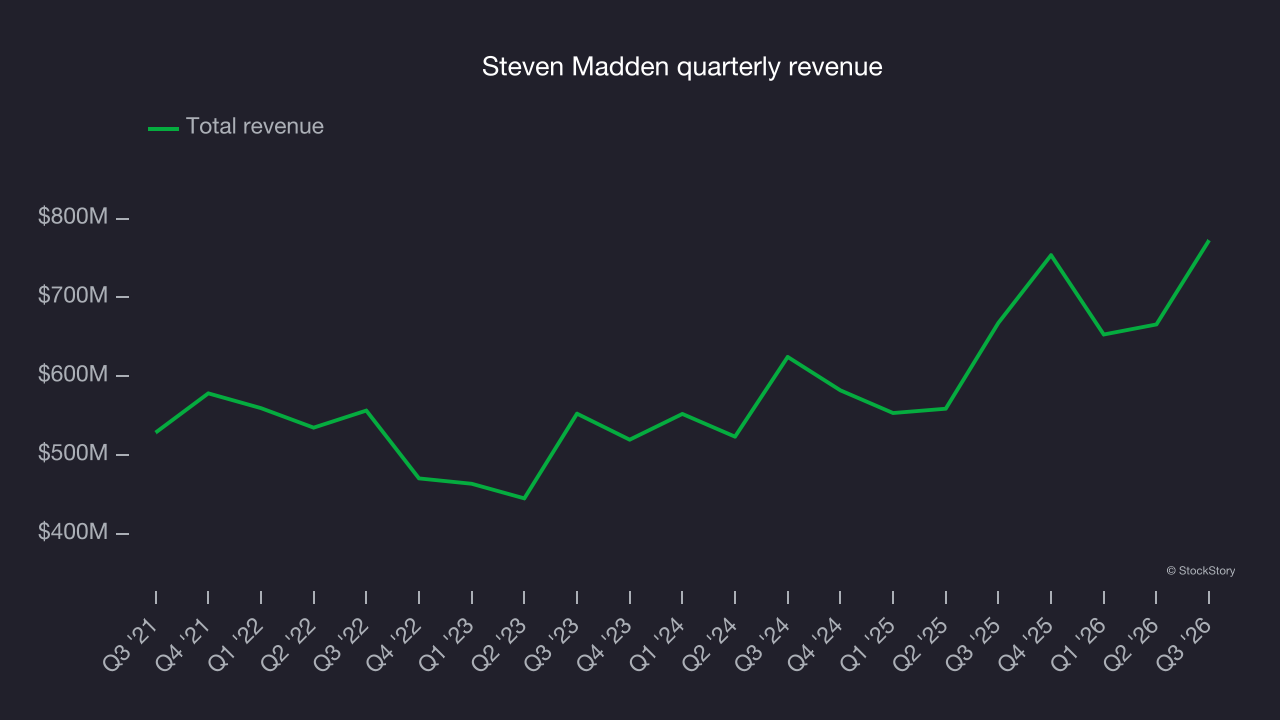
Long-term growth is the most important, but within consumer discretionary, product cycles are short and revenue can be hit-driven due to rapidly changing trends and consumer preferences. Steven Madden’s annualized revenue growth of 13.2% over the last two years is above its five-year trend, a positive sign. 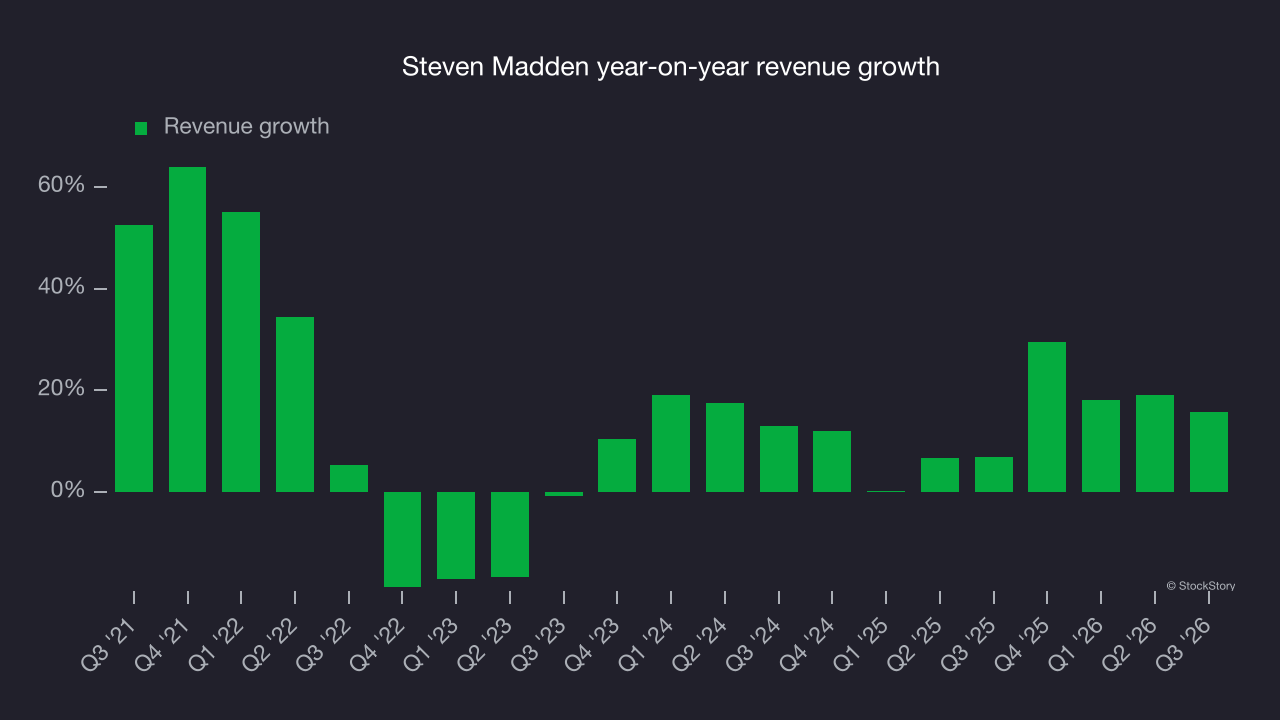
A closer look at the company’s revenue dynamics centers on its most important segments, Wholesale and Retail, which account for 68.4% and 31% of revenue. Over the last two years, Steven Madden’s Wholesale revenue (sales to retailers) averaged 4.7% year-on-year growth while its Retail revenue (direct sales to consumers) averaged 41.3% growth. 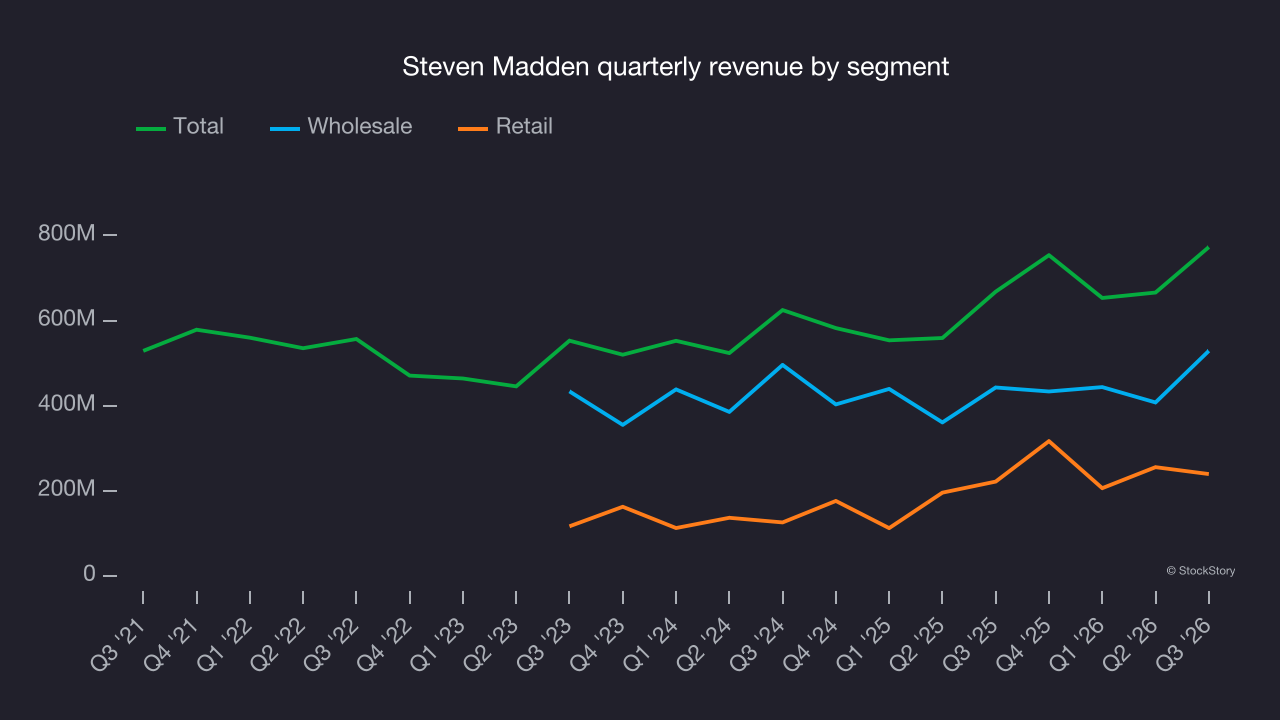
This quarter, Steven Madden’s year-on-year revenue growth was 15.7%, and its $772.6 million of revenue was in line with Wall Street’s consensus estimates.
Looking ahead, sell-side analysts expect revenue to grow 6.5% over the next 12 months, according to S&P, a deceleration versus the last two years. This projection is underwhelming and suggests its products and services will face some demand challenges.
Operating margin
Steven Madden’s operating margin has risen over the last 12 months and averaged 6.5% over the last two years. The company’s improved efficiency is a positive, but its suboptimal cost structure means its profitability remains inadequate for a consumer discretionary business.
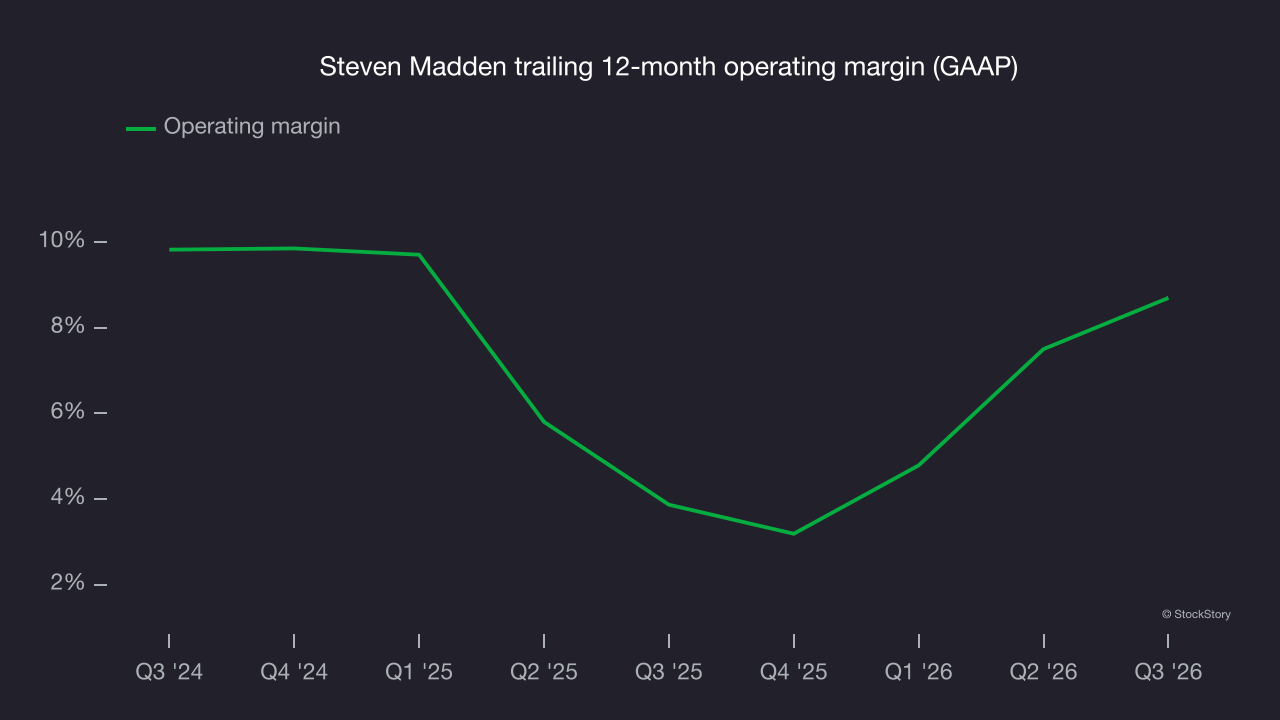
In Q3, Steven Madden generated an operating margin of 9.5%, up 4.8 percentage points year on year. This increase was a positive development and shows it was more efficient.
Earnings per share
Revenue trends explain a company’s historical growth, but the long-term change in earnings per share (EPS) points to the profitability of that growth. For example, a company could inflate its revenue through excessive spending on advertising and promotions.
Steven Madden’s EPS grew at a weak 2.6% compounded annual growth rate over the last five years, lower than its 11.6% annualized revenue growth. This indicates the company became less profitable on a per-share basis as it expanded due to non-fundamental factors such as interest expenses and taxes.
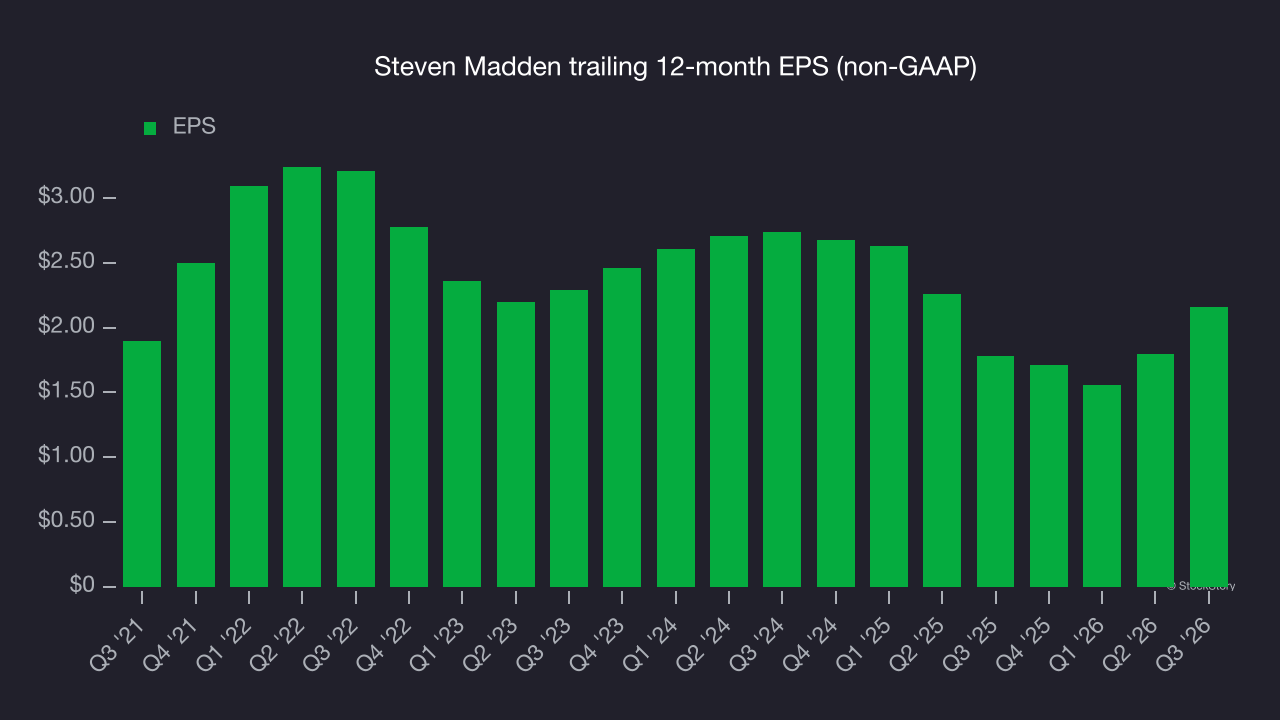
In Q3, Steven Madden reported adjusted EPS of $0.79, up from $0.43 in the same quarter last year. This result beat analysts’ consensus estimates by 5.1%. Over the next 12 months, Wall Street expects Steven Madden’s full-year EPS to grow 15.2% from $2.16 to $2.49, according to S&P.
Key takeaways from Steven Madden’s Q3 results
Steven Madden delivered a decent Q3, with EPS coming in above analysts’ consensus estimates. Shares remained flat at $46.99 immediately after the release.
When assessing Steven Madden as an investment, consider its valuation, business qualities and latest quarterly results. Read the full research report here (it’s free).