EV charging solutions provider ChargePoint Holdings (NYSE: CHPT) reported Q1 CY2026 results beating Wall Street’s revenue expectations, with sales up 4.3% year on year to $101.8 million. Guidance for next quarter’s revenue was better than expected at $105 million at the midpoint, 1.9% above analysts’ estimates. Its GAAP loss of $1.75 per share was 5.8% above analysts’ consensus estimates.
Is now the time to buy ChargePoint? Find out by accessing our full research report, it’s free.
ChargePoint (CHPT) Q1 CY2026 Highlights:
- Revenue: $101.8 million vs analyst estimates of $96.09 million (4.3% year-on-year growth, 6% beat)
- EPS (GAAP): -$1.75 vs analyst estimates of -$1.86 (5.8% beat)
- Adjusted EBITDA: -$19.18 million (-18.8% margin, 15.9% year-on-year growth)
- Revenue Guidance for Q2 CY2026 is $105 million at the midpoint, above analyst estimates of $103 million
- Adjusted EBITDA Margin: -18.8%, up from -23.3% in the same quarter last year
- Free Cash Flow was -$37.7 million compared to -$34.03 million in the same quarter last year
- Market Capitalization: $199.5 million
Company Overview
The most prominent EV charging company during the COVID bull market, ChargePoint (NYSE: CHPT) is a provider of electric vehicle charging technology solutions in North America and Europe.
Revenue Growth
A company’s long-term sales performance is one signal of its overall quality. Any business can put up a good quarter or two, but many enduring ones grow for years. Over the last five years, ChargePoint grew its sales at an incredible 21.9% compounded annual growth rate. Its growth beat the average industrials company and shows its offerings resonate with customers.
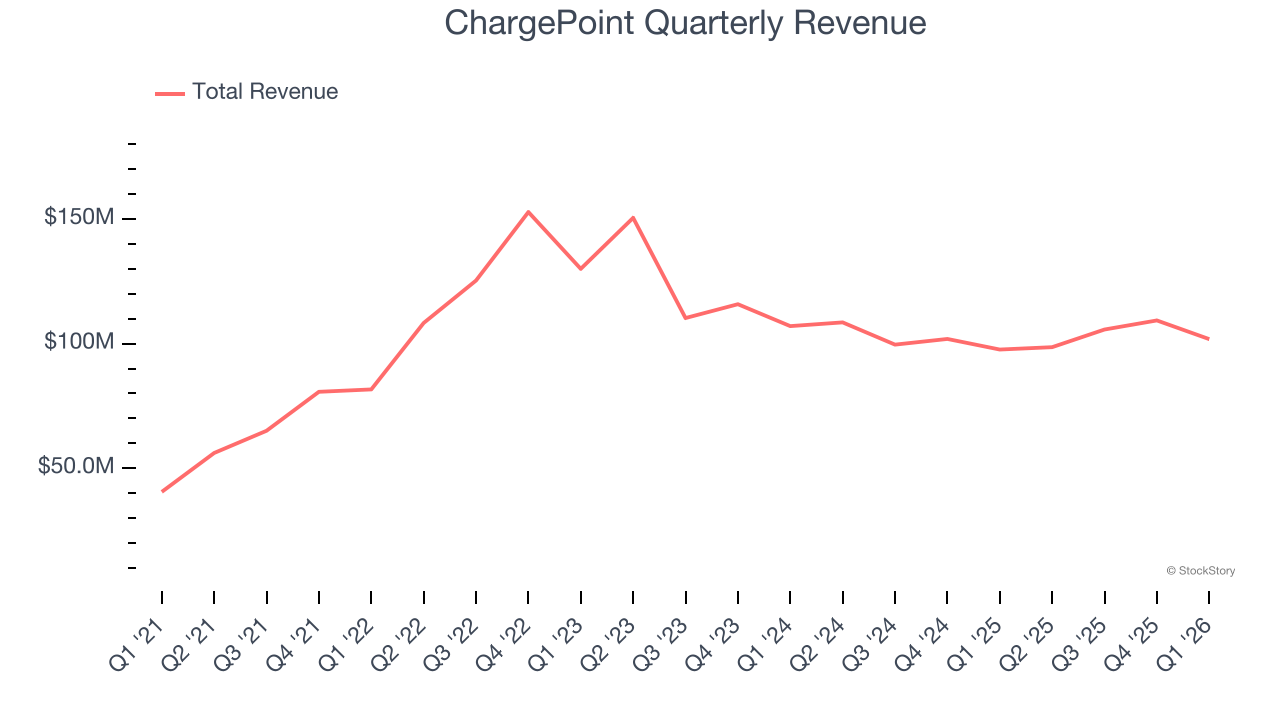
Long-term growth is the most important, but within industrials, a half-decade historical view may miss new industry trends or demand cycles. ChargePoint’s recent performance marks a sharp pivot from its five-year trend as its revenue has shown annualized declines of 7.3% over the last two years. 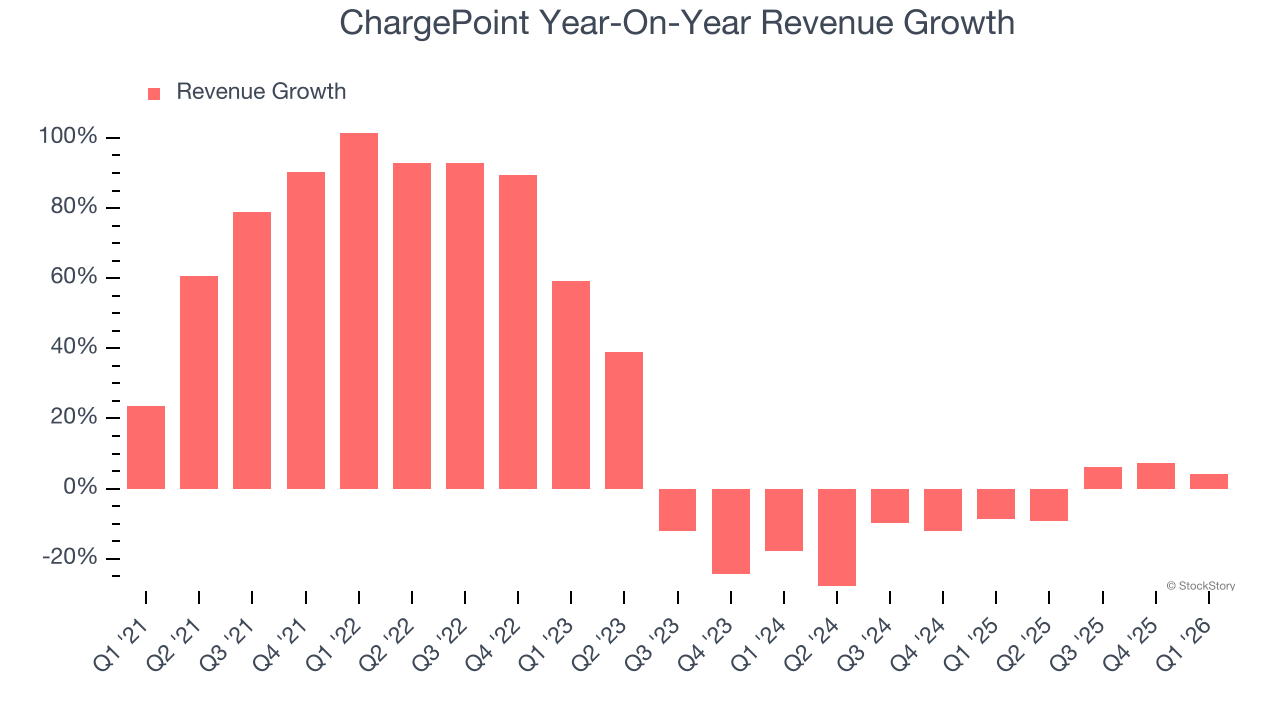
We can dig further into the company’s revenue dynamics by analyzing its most important segments, Networked Charging Systems and Subscriptions, which are 52.4% and 40% of revenue. Over the last two years, ChargePoint’s Networked Charging Systems revenue (hardware) averaged 8.6% year-on-year declines. On the other hand, its Subscriptions revenue (software) averaged 11.9% growth. 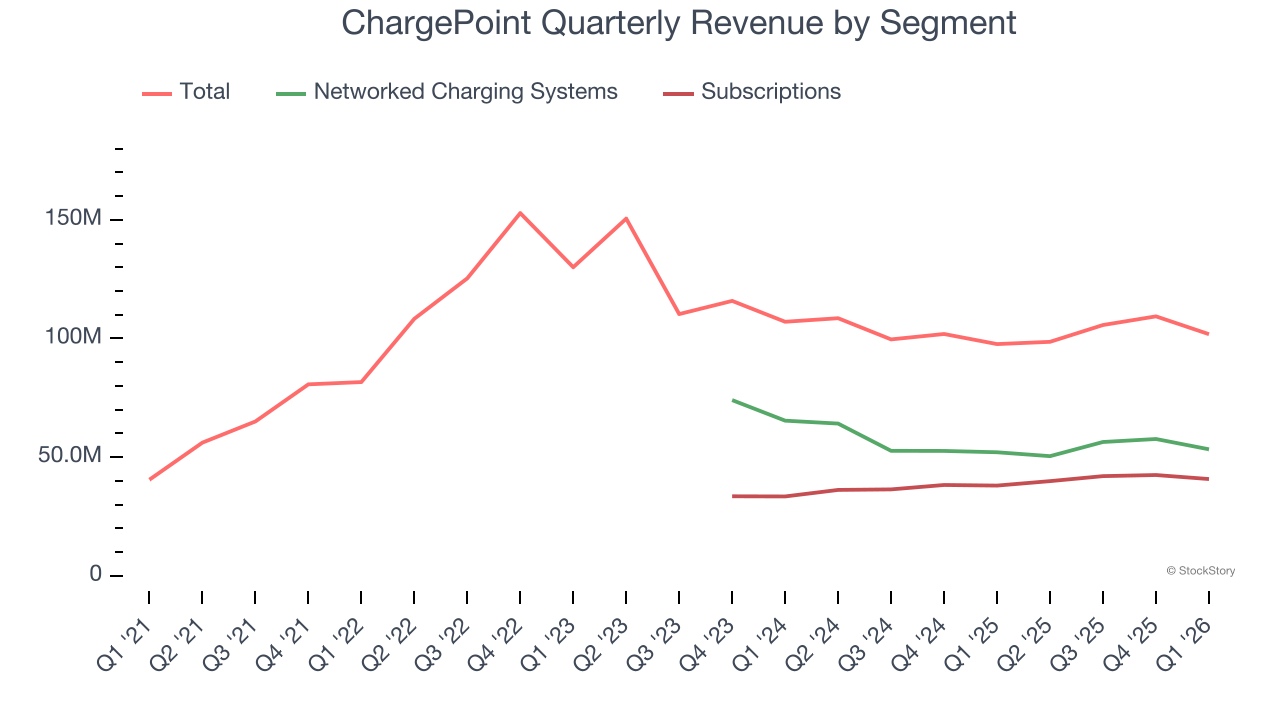
This quarter, ChargePoint reported modest year-on-year revenue growth of 4.3% but beat Wall Street’s estimates by 6%. Company management is currently guiding for a 6.5% year-on-year increase in sales next quarter.
Looking further ahead, sell-side analysts expect revenue to grow 5.3% over the next 12 months. Although this projection indicates its newer products and services will fuel better top-line performance, it is still below average for the sector.
ONE MORE THING: The $21 AI Application Stock Wall Street Forgot. While Wall Street obsesses over who’s building AI, one company is already using it to print money. And nobody’s paying attention.
AI chip stocks trade at ridiculous valuations. This company processes a trillion consumer signals monthly using AI and trades at a third of the price. The gap won’t last. The institutions will figure it out. You need to see this first. Read the FREE Report Before They Notice.
Operating Margin
Operating margin is a key measure of profitability. Think of it as net income - the bottom line - excluding the impact of taxes and interest on debt, which are less connected to business fundamentals.
ChargePoint’s high expenses have contributed to an average operating margin of negative 72.2% over the last five years. Unprofitable industrials companies require extra attention because they could get caught swimming naked when the tide goes out. It’s hard to trust that the business can endure a full cycle.
On the plus side, ChargePoint’s operating margin rose by 60.2 percentage points over the last five years, as its sales growth gave it operating leverage. Still, it will take much more for the company to reach long-term profitability.
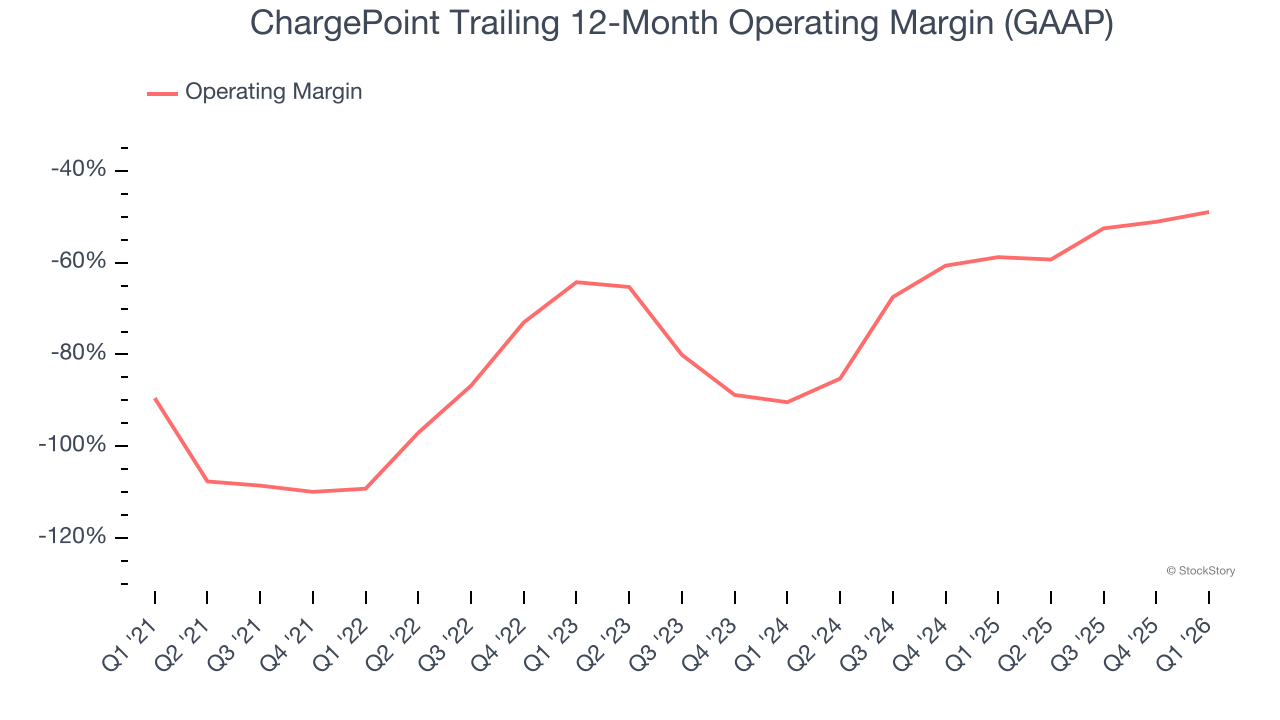
In Q1, ChargePoint generated a negative 46.3% operating margin.
Earnings Per Share
We track the long-term change in earnings per share (EPS) for the same reason as long-term revenue growth. Compared to revenue, however, EPS highlights whether a company’s growth is profitable.
Although ChargePoint’s full-year earnings are still negative, it reduced its losses and improved its EPS by 51.3% annually over the last five years. The next few quarters will be critical for assessing its long-term profitability. We hope to see an inflection point soon.
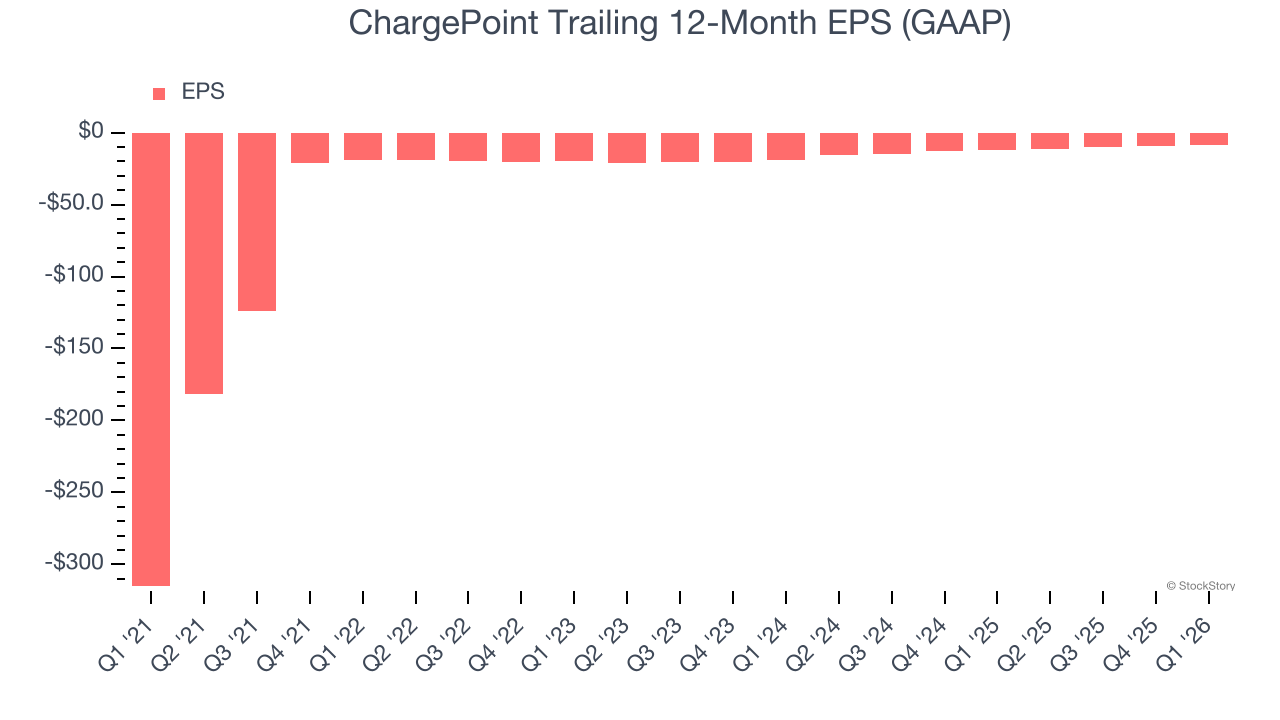
Like with revenue, we analyze EPS over a more recent period because it can provide insight into an emerging theme or development for the business.
For ChargePoint, its two-year annual EPS growth of 33.1% was lower than its five-year trend. We still think its growth was good and hope it can accelerate in the future.
In Q1, ChargePoint reported EPS of negative $1.75, up from negative $2.49 in the same quarter last year. This print beat analysts’ estimates by 5.8%. Over the next 12 months, Wall Street expects ChargePoint to improve its earnings losses. Analysts forecast its full-year EPS will improve from negative $8.68 to negative $6.03.
Key Takeaways from ChargePoint’s Q1 Results
We were impressed by how significantly ChargePoint blew past analysts’ adjusted operating income expectations this quarter. We were also excited its revenue outperformed Wall Street’s estimates by a wide margin. On the other hand, its EBITDA missed. Overall, we think this was a decent quarter with some key metrics above expectations. The stock remained flat at $7.81 immediately following the results.
ChargePoint had an encouraging quarter, but one earnings result doesn’t necessarily make the stock a buy. Let’s see if this is a good investment. If you’re making that decision, you should consider the bigger picture of valuation, business qualities, as well as the latest earnings. We cover that in our actionable full research report which you can read here (it’s free).