What a time it’s been for Applied Materials. In the past six months alone, the company’s stock price has increased by a massive 89.7%, reaching $605.26 per share. This was partly thanks to its solid quarterly results, and the run-up might have investors contemplating their next move.
Is now still a good time to buy AMAT? Or are investors being too optimistic? Find out in our full research report, it’s free.
Why Does AMAT Stock Spark Debate?
Founded in 1967 as the first company to develop tools for other businesses in the semiconductor industry, Applied Materials (NASDAQ: AMAT) is the largest provider of semiconductor wafer fabrication equipment.
Two Positive Attributes:
1. Operating Margin Reveals a Well-Run Organization
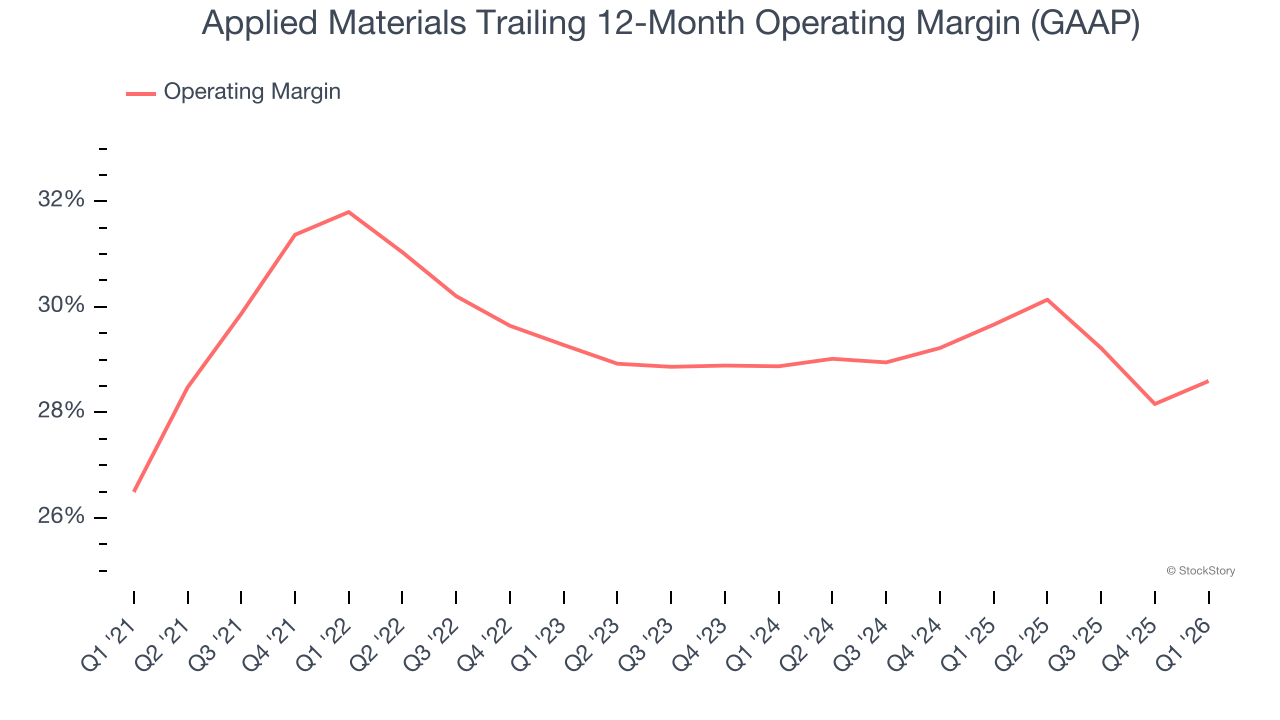
Operating margin is one of the best measures of profitability because it tells us how much money a company takes home after procuring and manufacturing its products, marketing and selling those products, and most importantly, keeping them relevant through research and development.
Applied Materials has been an efficient company over the last two years. It was one of the more profitable businesses in the semiconductor sector, boasting an average operating margin of 29.1%. This result was particularly impressive because of its low gross margin, which is mostly a factor of what it sells and takes huge shifts to move meaningfully. Companies have more control over their operating margins, and it’s a show of well-managed operations if they’re high when gross margins are low.
2. Stellar ROIC Showcases Lucrative Growth Opportunities
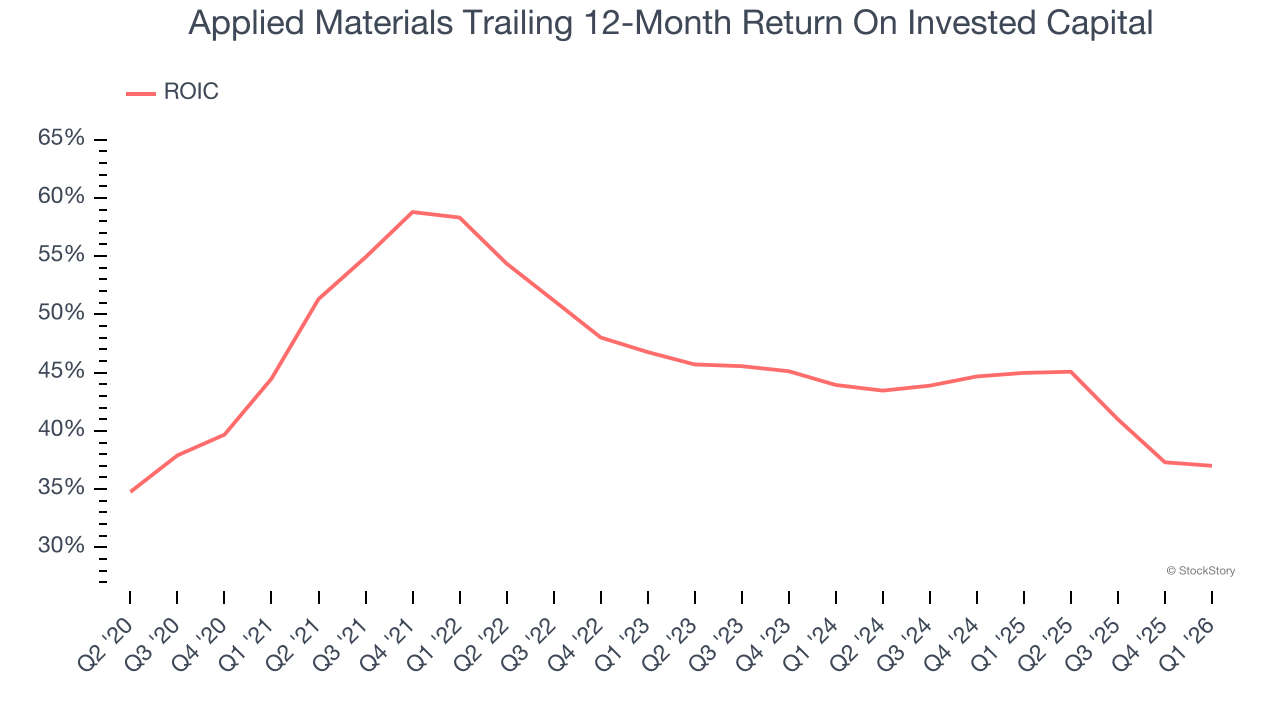
Growth gives us insight into a company’s long-term potential, but how capital-efficient was that growth? A company’s ROIC explains this by showing how much operating profit it makes compared to the money it has raised (debt and equity).
Applied Materials’s five-year average ROIC was 46.2%, placing it among the best semiconductor companies. This illustrates its management team’s ability to invest in highly profitable ventures and produce tangible results for shareholders.
One Reason to Be Careful:
Low Gross Margin Hinders Flexibility
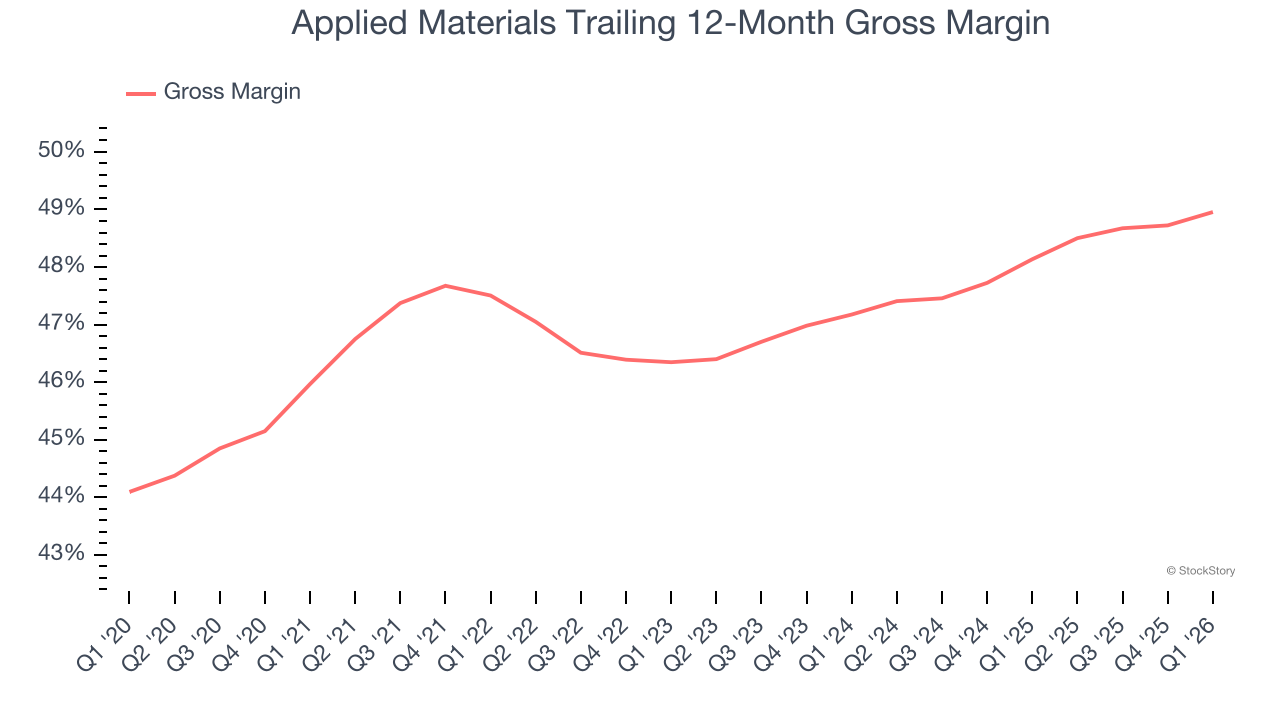
Gross profit margin is a key metric to track because it shows how much money a semiconductor company gets to keep after paying for its raw materials, manufacturing, and other input costs.
Applied Materials’s gross margin is slightly below the average semiconductor company, indicating its products aren’t as mission-critical as its competitors. As you can see below, it averaged a 48.6% gross margin over the last two years. Said differently, Applied Materials had to pay a chunky $51.45 to its suppliers for every $100 in revenue.
Final Judgment
Applied Materials’s merits more than compensate for its flaws, and with the recent surge, the stock trades at 38.5× forward P/E (or $605.26 per share). Is now a good time to buy despite the apparent froth? See for yourself in our comprehensive research report, it’s free.
Stocks We Like Even More Than Applied Materials
ONE MORE THING: Top 6 Stocks for This Week. This market is separating quality stocks from expensive ones fast. AI is taking down whole sectors with no warning. In a rotation this fast, you need more than a list of good companies.
Our AI system flagged Palantir before it ran 1,662% between October 2022 and February 2026. AppLovin before it ran 753% between February 2024 and February 2026. Nvidia before it ran 1,178% between January 2023 and February 2026. Each week it produces 6 new names that pass the same tests. Get Our Top 6 Stocks for Free HERE.
Stocks that have made our list include now familiar names such as Nvidia (+1,460% between June 2020 and June 2025) as well as under-the-radar businesses like the once-micro-cap company Kadant (+214% between June 2020 and June 2025). Find your next big winner with StockStory today.