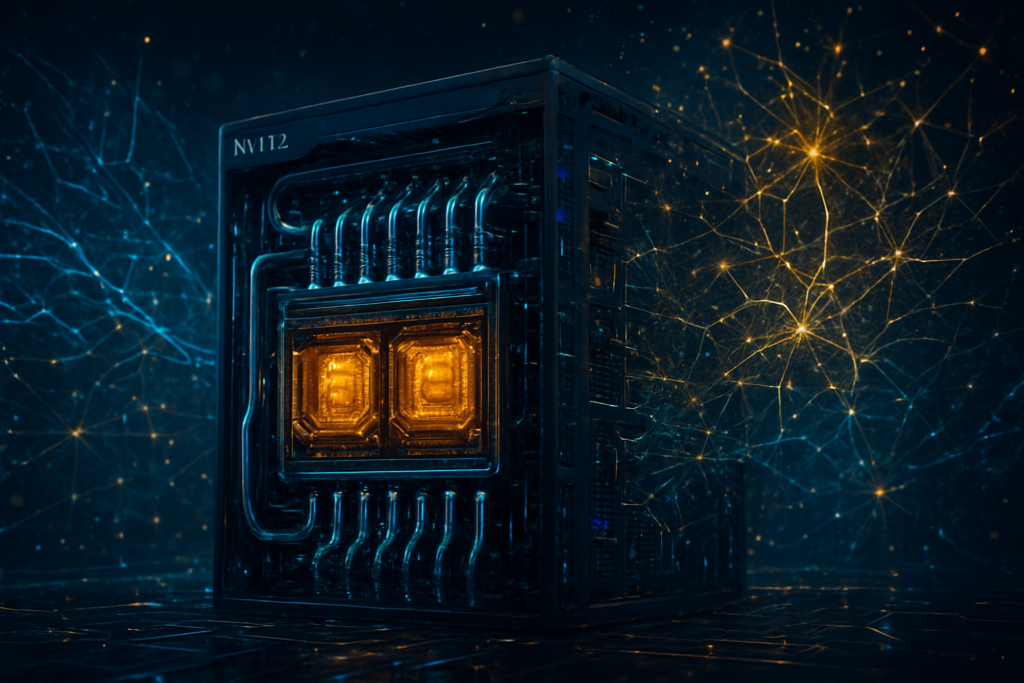
In a landmark keynote at CES 2026, NVIDIA (NASDAQ: NVDA) CEO Jensen Huang officially introduced the "Vera Rubin" AI platform, a comprehensive architectural overhaul designed to power the next generation of reasoning-capable, autonomous AI agents. Named after the pioneering astronomer who provided evidence for dark matter, the Rubin architecture succeeds the Blackwell generation, moving beyond individual chips to a "six-chip" unified system-on-a-rack designed to eliminate the data bottlenecks currently stifling trillion-parameter models.
The announcement marks a pivotal moment for the industry, as NVIDIA transitions from being a supplier of high-performance accelerators to a provider of "AI Factories." By integrating the new Vera CPU, Rubin GPU, and HBM4 memory into a single, liquid-cooled rack-scale entity, NVIDIA is positioning itself as the indispensable backbone for "Sovereign AI" initiatives and frontier research labs. However, this leap forward comes at a cost to the consumer market; NVIDIA confirmed that a global memory shortage is forcing a significant production pivot, prioritizing enterprise AI systems over the newly launched GeForce RTX 50 series.
Technical Specifications: The Rubin GPU and Vera CPU
The technical specifications of the Rubin GPU are nothing short of staggering, representing a 1.6x increase in transistor density over Blackwell with a total of 336 billion transistors. Each Rubin GPU is capable of delivering 50 petaflops of NVFP4 inference performance—a five-fold increase over the previous generation. This is achieved through a third-generation Transformer Engine that utilizes hardware-accelerated adaptive compression, allowing the system to dynamically adjust precision across transformer layers to maximize throughput without compromising the "reasoning" accuracy required by modern LLMs.
Central to this performance jump is the integration of HBM4 memory, sourced from partners like Micron (NASDAQ: MU) and SK Hynix (KRX:000660). The Rubin GPU features 288GB of HBM4, providing an unprecedented 22 TB/s of memory bandwidth. To manage this massive data flow, NVIDIA introduced the Vera CPU, an Arm-based (NASDAQ: ARM) processor featuring 88 custom "Olympus" cores. The Vera CPU and Rubin GPU are linked via NVLink-C2C, a coherent interconnect that allows the CPU’s 1.5 TB of LPDDR5X memory and the GPU’s HBM4 to function as a single, unified memory pool. This "Superchip" configuration is specifically optimized for Agentic AI, where the system must maintain vast "Inference Context Memory" to reason through complex, multi-step tasks.
Industry experts have reacted with a mix of awe and strategic concern. Researchers at frontier labs like Anthropic and OpenAI have noted that the Rubin architecture could allow for the training of Mixture-of-Experts (MoE) models with four times fewer GPUs than the Blackwell generation. However, the move toward a proprietary, tightly integrated "six-chip" stack—including the ConnectX-9 SuperNIC and BlueField-4 DPU—has raised questions about hardware lock-in, as the platform is increasingly designed to function only as a complete, NVIDIA-validated ecosystem.
Strategic Pivot: The Rise of the AI Factory
The strategic implications of the Vera Rubin launch are felt most acutely in the competitive landscape of data center infrastructure. By shifting the "unit of sale" from a single GPU to the NVL72 rack—a system combining 72 Rubin GPUs and 36 Vera CPUs—NVIDIA is effectively raising the barrier to entry for competitors. This "rack-scale" approach allows NVIDIA to capture the entire value chain of the AI data center, from the silicon and networking to the cooling and software orchestration.
This move directly challenges AMD (NASDAQ: AMD), which recently unveiled its Instinct MI400 series and the "Helios" rack. While AMD’s MI400 offers higher raw HBM4 capacity (432GB), NVIDIA’s advantage lies in its vertical integration and the "Inference Context Memory" feature, which allows different GPUs in a rack to share and reuse Key-Value (KV) cache data. This is a critical advantage for long-context reasoning models. Meanwhile, Intel (NASDAQ: INTC) is attempting to pivot with its "Jaguar Shores" platform, focusing on cost-effective enterprise inference to capture the market that finds the premium price of the Rubin NVL72 prohibitive.
However, the most immediate impact on the broader tech sector is the supply chain fallout. NVIDIA confirmed that the acute shortage of HBM4 and GDDR7 memory has led to a 30–40% production cut for the consumer GeForce RTX 50 series. By reallocating limited wafer and memory capacity to the high-margin Rubin systems, NVIDIA is signaling that the "AI Factory" is now its primary business, leaving gamers and creative professionals to face persistent supply constraints and elevated retail prices for the foreseeable future.
Broader Significance: From Generative to Agentic AI
The Vera Rubin platform represents more than just a hardware upgrade; it reflects a fundamental shift in the AI landscape from "generative" to "agentic" intelligence. While previous architectures focused on the raw throughput needed to generate text or images, Rubin is built for systems that can reason, plan, and execute actions autonomously. The inclusion of the Vera CPU, specifically designed for code compilation and data orchestration, underscores the industry's move toward AI that can write its own software and manage its own workflows in real-time.
This development also accelerates the trend of "Sovereign AI," where nations seek to build their own domestic AI infrastructure. The Rubin NVL72’s ability to deliver 3.6 exaflops of inference in a single rack makes it an attractive "turnkey" solution for governments looking to establish national AI clouds. However, this concentration of power within a single proprietary stack has sparked a renewed debate over the "CUDA Moat." As NVIDIA moves the moat from software into the physical architecture of the data center, the open-source community faces a growing challenge in maintaining hardware-agnostic AI development.
Comparisons are already being drawn to the "System/360" moment in computing history—where IBM (NYSE: IBM) unified its disparate computing lines into a single, scalable architecture. NVIDIA is attempting a similar feat, aiming to define the standard for the "AI era" by making the rack, rather than the chip, the fundamental building block of modern civilization’s digital infrastructure.
Future Outlook: The Road to Reasoning-as-a-Service
Looking ahead, the deployment of the Vera Rubin platform in the second half of 2026 is expected to trigger a new wave of "Reasoning-as-a-Service" offerings from major cloud providers. We can expect to see the first trillion-parameter models that can operate with near-instantaneous latency, enabling real-time robotic control and complex autonomous scientific discovery. The "Inference Context Memory" technology will likely be the next major battleground, as AI labs race to build models that can "remember" and learn from interactions across massive, multi-hour sessions.
However, significant challenges remain. The reliance on liquid cooling for the NVL72 racks will require a massive retrofit of existing data center infrastructure, potentially slowing the adoption rate for all but the largest hyperscalers. Furthermore, the ongoing memory shortage is a "hard ceiling" on the industry’s growth. If SK Hynix and Micron cannot scale HBM4 production faster than currently projected, the ambitious roadmaps of NVIDIA and its rivals may face delays by 2027. Experts predict that the next frontier will involve "optical interconnects" integrated directly onto the Rubin successors, as even the 3.6 TB/s of NVLink 6 may eventually become a bottleneck.
Conclusion: A New Era of Computing
The unveiling of the Vera Rubin platform at CES 2026 cements NVIDIA's position as the architect of the AI age. By delivering 50 petaflops of inference per GPU and pioneering a rack-scale system that treats 72 GPUs as a single machine, NVIDIA has effectively redefined the limits of what is computationally possible. The integration of the Vera CPU and HBM4 memory marks a decisive end to the era of "bottlenecked" AI, clearing the path for truly autonomous agentic systems.
Yet, this progress is bittersweet for the broader tech ecosystem. The strategic prioritization of AI silicon over consumer GPUs highlights a growing divide between the enterprise "AI Factories" and the general public. As we move into the latter half of 2026, the industry will be watching closely to see if NVIDIA can maintain its supply chain and if the promise of 100-petaflop "Superchips" can finally bridge the gap between digital intelligence and real-world autonomous action.
This content is intended for informational purposes only and represents analysis of current AI developments.
TokenRing AI delivers enterprise-grade solutions for multi-agent AI workflow orchestration, AI-powered development tools, and seamless remote collaboration platforms.
For more information, visit https://www.tokenring.ai/.