With the 2026 celebration set for Halloween night, a look at what the 6th Annual party delivered and what it means for the creator calendar
LOS ANGELES, Oct 20, 2026: In late October of 2025, a packed house at CBS Studios in West Hollywood watched Miguel, Juicy J, Massume and Loud Luxury take the stage in front of a crowd that had spent weeks on its costumes. Unruly Agency, led by founder Tara Electra, proved its dominance once again, and the 6th Annual Unruly Halloween Party became one of the most photographed creator events of the season. This year the party returns for a seventh edition on Saturday, October 31, 2026, Halloween night itself.
Seven editions is long enough for a party to become a habit for the people who attend it. Guests plan their costumes around it, press plans coverage around it, and partners plan activations around it. What follows is a look at the 2025 edition, which set the standard for 2026, and at what the date change means for the year ahead.
The room: CBS Studios, October 25, 2025
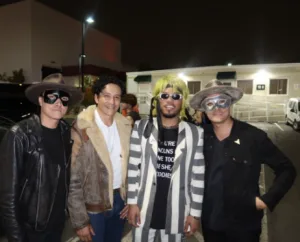
The legendary CBS Studios in West Hollywood gave the 6th Annual party a production venue that matched its ambitions. The evening was hosted by Memehouse Productions and built around explosive live performances, extensive production elements and immersive Halloween experiences. Guests arrived in impressive costumes, and the energy in the room, as the coverage described it, stayed high from the first set to the last.
Studio spaces are built for cameras, and a party held in one benefits from that design. Lighting, sightlines and staging that suit a television production also suit the phones of a thousand guests. For a party whose guests are also its publishers, that advantage matters. Every guest who films a performance or photographs a costume is extending the event’s reach, and a venue designed around cameras makes that work easier.
There is also a practical benefit. A studio is a controlled environment, with known power, known sightlines and known load-in routes. That control allows a production team to build a more ambitious set than a standard venue would allow, and it lets the team change the room’s appearance from one area to the next.
How a party like this is built
A party at this scale is a production, and it is planned like one. The venue has to be chosen early, the lineup has to be booked around artists’ schedules, and the build has to be timed so that the room is ready before the doors open. Partners need time to prepare products and signage, press needs time to plan coverage, and guests need time to plan costumes. Each of those timelines runs in parallel, and each depends on the others.
The guest experience is the product of that planning. A guest who arrives at the carpet, walks into a room designed around Halloween, hears a headline set and finds late-night food at the end of the night has moved through a sequence that someone designed. The best of these sequences do not feel designed at all. They feel like a good night, and the work that goes into them is visible only in the fact that nothing goes wrong.
The performers: four sets across genres
The 2025 lineup covered a wide stretch of music. Miguel, the Grammy-winning R&B artist, performed alongside rapper Juicy J, performer Massume and internationally renowned EDM duo Loud Luxury. Together the sets moved the room from R&B to hip-hop to dance music, which kept the night from settling into a single mood.
Booking across genres is a deliberate choice for a creator party. The guest list is not one audience but many, and a lineup that speaks to several tastes gives more guests a moment to look forward to. It also produces more varied content: a ballad, a rap verse and a festival-style drop each look different on camera, and each gives creators something different to post.
Photos from the night show the performers with the people who run it. Social Life Magazine‘s recap included an image of Miguel with Tara Electra, a reminder that the founder is on the carpet and in the room, not only behind the scenes.
The carpet: where the night began
The red carpet delivered the first wave of coverage. TMZ‘s gallery of the night ran to 43 photos and included Tara Electra with David Weintraub, along with Amber Rose, Chloe Veitch, Anderson .Paak and Xanthe Tasmine. Photography was credited to Lisa O’Connor/Startraks and Unruly.
For outlets, a carpet is a reliable source of content because each arrival is a self-contained photo. For guests, it is the part of the night that is entirely about the costume. For the party, it creates a first impression that sets the tone, and it gives the event a visual identity that editors recognize from year to year.
The carpet also shapes how the rest of the night is remembered. Guests who have been photographed arrive in the room already part of the event’s coverage, and they tend to continue posting through the night. A strong carpet is the start of a content chain that runs until the last set.
The guest as publisher
At most events, the audience watches and the organizers publish. At a creator party, the roles overlap. Every guest with a phone is a potential publisher, and the guests with the largest followings can reach audiences that rival those of traditional outlets. That overlap changes how the event is planned. The organizers design for the guests’ cameras as well as for the guests’ eyes, and they treat the guests’ posts as part of the event’s coverage.
The overlap also changes what success looks like. A conventional party is judged by attendance and by how the guests felt. A creator party is judged by those measures and by how far the content travels. A party that produces strong photos and clips, and that gives guests a reason to share them, reaches far more people than its guest list suggests.
The table: late-night food and drink partners
Hospitality at the 2025 party carried the same ambition as the production. Tailitations served lobster and caviar creations, and Dave’s Hot Chicken supplied late-night bites throughout the evening. The partner list included Rumor, Pizzaslime, FanFix, El Tesoro Tequila, Haku Vodka, Acqua Panna, Perrier-Jouët Champagne, Red Bull, Voss and Smartwater.
The pairing of lobster and caviar with hot chicken is one example of how the party mixes high and low. It reflects the audience: creators and entertainers who value polish and play in equal measure. It also gives partners room to show up in a way that guests remember, which is the goal of any brand activation.
What the party says about the creator calendar
Creator events used to be an afterthought on the entertainment calendar. The Unruly Halloween Party is evidence of how that has changed. A party hosted by a talent and marketing agency now draws performers, entertainers, creators and brand partners to the same room, and the coverage runs in the same outlets that cover other entertainment events.
That shift matters for brands as much as for guests. Unruly’s core focus is connecting brands and customers together through engaging content and innovative campaigns. The Halloween party is a live example of the work: a room of people with large audiences, a set designed for sharing, and partners placed where the content will be made.
It also matters for performers. An artist booked at a creator party performs for a room full of people who will post about the set, which extends the performance to audiences who were not there. For artists releasing new work or building a following online, that exposure is a practical reason to take the booking.
What the coverage showed
The 2025 coverage ran across three kinds of outlets. Social Life Magazine published a full recap with the performer and partner lists. The PR Net posted a photo gallery and release. TMZ ran a 43-image red carpet gallery. Each outlet used the same facts differently, which is the pattern a well-run event produces: a story that works as a recap, as a photo set and as celebrity coverage.
Press coverage of a party is also a record. The recaps from 2025 document who performed, who attended and who partnered, and they provide a baseline for the 2026 edition. Editors who covered the 2025 party can compare the 2026 lineup and guest list against it, which gives them a ready-made angle.
Lessons from the 2025 coverage
- Name the facts clearly. Outlets reused the performer list, the venue and the partner list because they were stated plainly and consistently.
- Provide images with credits. Photos credited to Lisa O’Connor/Startraks gave outlets usable material and a clear way to attribute it.
- Give each outlet something different. A recap, a gallery and a celebrity photo set serve different readers from the same night.
- Keep the founder visible. Images of Tara Electra with guests and performers tie the party to the person who leads it.
- Publish quickly. Coverage that appears within a day or two of the event benefits from the attention the night generates.
Year seven: what changes with Halloween on a Saturday
The calendar helps the 2026 edition. In 2025, Halloween fell on a Friday and the party took place the Saturday before it. In 2026, Halloween is a Saturday, and the party is set for the holiday itself. Costume content is at its most visible on October 31, and creators posting from the party that night publish into the peak of Halloween attention.
Unruly has not yet announced the 2026 venue, performers or partners. Those details will be shared on @Unruly and at UnrulyAgency.com. What is confirmed is the date, the host and the format: a party built around live performance, production, costumes and creators.
What a seventh edition means
Seven years in, the Unruly Halloween Party has the features of an established annual event: a recognizable format, a venue chosen for its production value, performers who span genres, a partner list that grows, and a press record that outlets return to each year. The 2026 edition adds a date that places it on Halloween night.
The test of a recurring event is whether people plan around it. Costumes built for the party, content calendars arranged around it and press schedules that save space for it are all signs that the event has moved from a one-night occasion to an annual fixture. The 2025 coverage suggests that the Unruly Halloween Party has reached that point.
Three storylines to follow in 2026
The Halloween date. Moving the party to October 31 puts it inside the holiday’s news cycle. Editors who plan Halloween coverage in advance can slot the party into costume roundups, celebrity photo stories and weekend entertainment listings.
The lineup. The 2025 bill covered R&B, hip-hop and EDM. The 2026 lineup will show whether the party keeps that range or shifts toward a different mix, and the announcement will be a story on its own.
The partners. The 2025 partner list was among the largest in the party’s coverage. The 2026 roster will show which brands return, which are new and which categories grow.
What to watch for in 2026
- The venue, and whether it matches the studio-scale production of 2025.
- The lineup, and whether it again spans several genres.
- The partner list, and which categories return or appear for the first time.
- The costumes on the carpet, which are the most visible part of the night.
- The volume and variety of content that guests and Unruly share on October 31