Zhoushan, China - October 23, 2026 - Above the sea, vast waves roll beneath shifting clouds. Below the surface, submarine cables carry electricity across the seabed. In Zhoushan, Zhejiang Province, an archipelago comprising 2,085 islands, an invisible energy artery is quietly reshaping China's marine power transmission landscape.
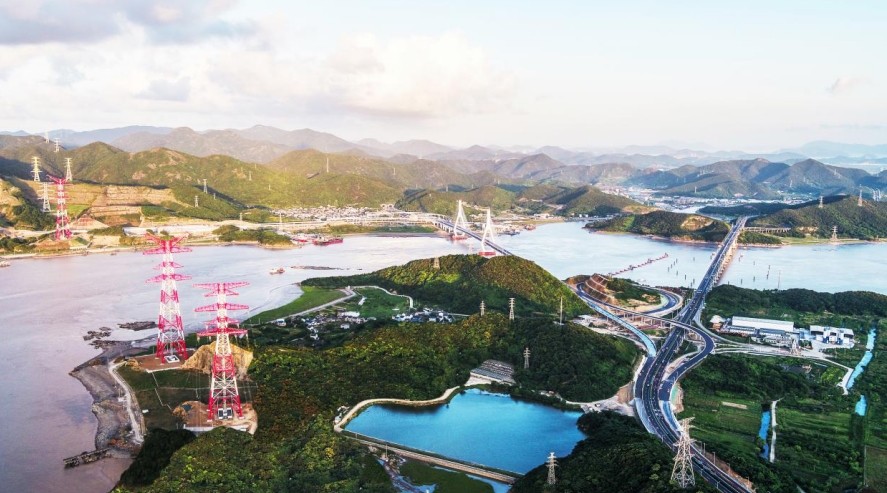
Above: Zhoushan 500 kV Grid Interconnection Project
From the installation of the first submarine power cable in 1983 to the launch of the Guojiao No. 1 marine power transmission technology brand in 2023, generations of power engineers have spent more than four decades working along coastlines and beneath the sea.
Their achievements tell not only the story of submarine cable development but also China's progression from following international technological advances to competing alongside global leaders and eventually pioneering new solutions.
As Guojiao No. 1 expands from Zhoushan to China's coastal regions and from shallow waters into deeper offshore environments, it is addressing critical engineering challenges while contributing to energy security under China's strategy to become a leading maritime nation.
From 5 Kilometers to 4,500 Kilometers: Measuring Progress Beneath the Waves
In 1983, construction began on a five-kilometer submarine cable connecting Shenjiamen and Mount Putuo, marking an early milestone in submarine power interconnection in the East China Sea.
In 1986, construction commenced on a 12-kilometer, ±100 kV high-voltage direct current (HVDC) submarine cable connecting the mainland with Zhoushan, marking China's first major breakthrough in domestic HVDC submarine transmission technology.
More than two decades later, in 2014, the world's first five-terminal voltage-source converter HVDC demonstration project entered operation in Zhoushan. It enabled asynchronous interconnection between island power grids and precise power-flow control, demonstrating China's capabilities in flexible HVDC transmission technology.
The project included a 50.9-kilometer DC submarine cable between Zhoushan and Daishan, setting a domestic record at the time for the longest flexible HVDC submarine cable.
While flexible HVDC technology represented an advance in intelligent power transmission, subsequent grid interconnection projects demonstrated the capacity to deliver electricity at much higher voltage levels.
In November 2018, the world's first 500 kV cross-linked polyethylene (XLPE) insulated AC submarine cable was laid. In January 2019, the Zhoushan 500 kV Grid Interconnection Project entered operation.
Featuring 380-meter-tall cross-sea transmission towers, the project set 14 world records and marked Zhoushan's entry into the extra-high-voltage power transmission era.
Meanwhile, another transformation was taking place on the more remote Dongji Island.
In 2017, the 35 kV grid interconnection project linking Changtu Island in Daishan with Dongji Island in Putuo entered operation. Its 35.8-kilometer submarine cable enabled Dongji Island to move away from diesel-based electricity generation.
Today, all 46 inhabited islands in Zhoushan are connected to the mainland power grid. A submarine cable network extending 1,508 kilometers provides island communities with electricity services comparable to those available on the mainland, while supporting their long-term economic and social development.
Guojiao No. 1 has now expanded its construction activities northward to Hebei Province and southward to Guangdong and Hainan. To date, it has completed more than 400 projects, with a cumulative submarine cable installation length exceeding 4,500 kilometers.
Each kilometer of cable beneath the waves represents another step toward a more interconnected maritime energy system.
From Small Wooden Boats to 10,000-Ton Cable-Laying Vessels: Advancing Marine Engineering Equipment
In the early days of submarine cable installation, construction teams relied on barges and manual towing. Cable deployment depended heavily on experience and physical labor, creating significant operational risks and leaving cables vulnerable to damage from ship anchors.
The development of China's marine power transmission equipment has transformed these labor-intensive operations into increasingly sophisticated offshore engineering processes.
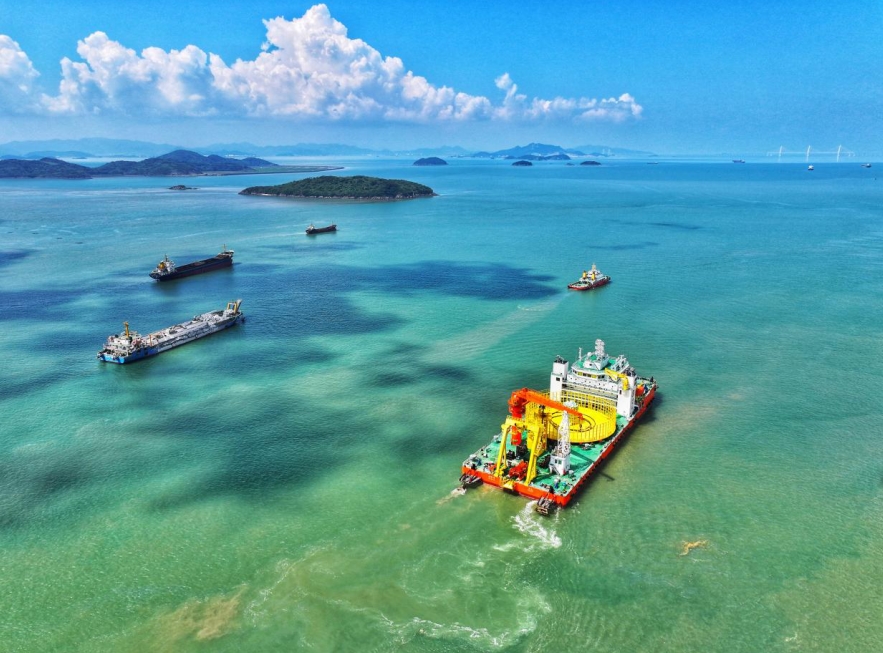
Above: Qifan 19 Submarine Cable Installation Vessel
In 2010, the 900-ton Jianlan 1 entered service. Equipped with a first-generation cable burial plough, it enabled submarine cables to be buried beneath the seabed and significantly reduced reliance on manual installation methods.
In 2018, the 5,000-ton Qifan 9 joined the fleet. Equipped with underwater maintenance capabilities, high-precision positioning systems and other advanced technologies, it became one of China's most advanced submarine cable installation vessels at the time, capable of handling long-distance installations involving large-cross-section cables.
Delivered in 2024, Qifan 19 has a displacement of 24,000 tons and a cable-carrying capacity of 10,000 tons. It can accommodate up to 80 kilometers of 500 kV three-core submarine cable and is designed to support offshore wind power construction.
As China's first submarine cable installation vessel with a 10,000-ton cable-carrying capacity, Qifan 19 represents a major advance in domestic marine engineering capabilities.
For operations farther offshore and in deeper waters, a new ocean-going construction vessel, Qifan 29, is currently under development.
Together with vessels including Qifan 7 and Zhoudian 15, these ships form the Guojiao Fleet, providing integrated capabilities covering seabed excavation, cable laying, cable burial, inspection and maintenance.
In 2026, construction began on China's first smart marine power transmission hub port covering the entire industrial value chain in Aoshan, Zhoushan.
The facility will provide a dedicated operational and logistics base for the Guojiao Fleet while strengthening the infrastructure needed for future deep-sea and far-offshore projects.
From 200 kV to 640 kV: Overcoming Critical Technological Barriers
Some of the greatest challenges in marine power transmission involve submarine cable insulation materials and comprehensive testing under different operating conditions.
For many years, high-end equipment and specialized materials in these fields were largely controlled by overseas suppliers.
In 2010, the Zhoushan Marine Power Transmission Technology Research Center was established. It was subsequently upgraded into the State Grid Marine Power Transmission Engineering Technology Laboratory, which holds recognized qualifications under the China Inspection Body and Laboratory Mandatory Approval (CMA) and China National Accreditation Service for Conformity Assessment (CNAS) systems.
The laboratory has provided a foundation for independent research, testing and technological innovation.
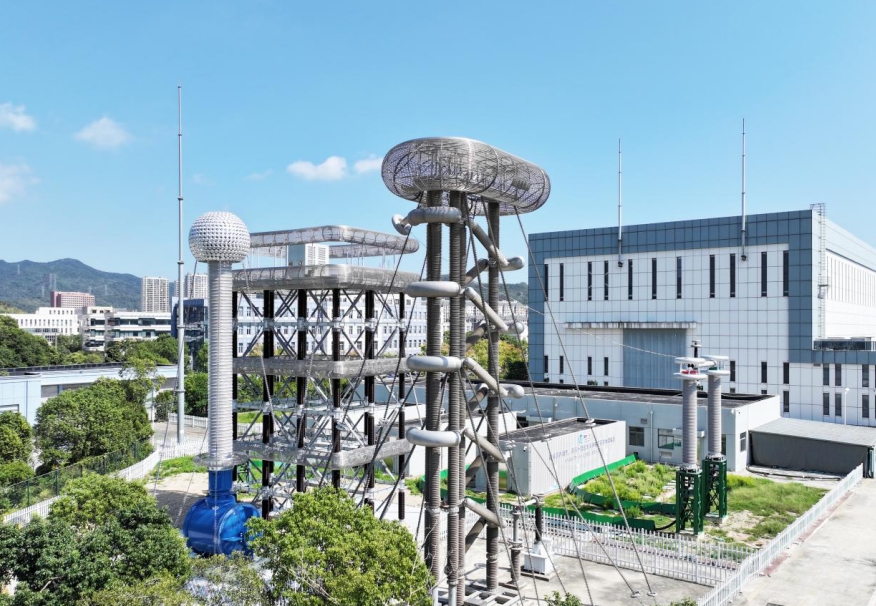
Above: 640 kV Ultra-High-Voltage DC Cable Testing Platform
Over the following decade, China's submarine cable technology achieved a series of breakthroughs.
In 2014, domestic technical capabilities supported the implementation of a ±200 kV flexible HVDC project.
In 2018, China achieved domestic production of 500 kV XLPE-insulated submarine cables.
In 2020, the completion of type testing for a 535 kV DC cable marked a breakthrough in a field previously dominated by overseas technology providers.
In 2023, prequalification testing for 525 kV cables provided technical support for overseas projects.
In 2024, China's first 220 kV DC long-duration energized testing platform entered operation.
In 2025, a 640 kV ultra-high-voltage DC cable testing platform was completed, enabling comprehensive energized testing of DC cables rated at 640 kV and below under a wide range of operating conditions.
Together, these developments have established an independently developed and controlled submarine cable testing and validation system covering a broad range of voltage levels.
Guojiao No. 1 currently possesses testing capabilities covering major AC and DC submarine cable types across voltage levels from 200 kV to 640 kV, marking a transition from replacing imported materials to developing advanced domestic testing infrastructure.
Beyond the Milestones: Charting the Course Ahead
Over more than four decades, submarine cables have connected islands with the mainland, small construction boats have evolved into a specialized engineering fleet, and extensive testing capabilities have established a foundation for technological progress.
These milestones reflect the transformation of Guojiao No. 1 from adopting existing technologies to developing and advancing its own marine power transmission solutions.
To date, Guojiao No. 1 has overcome 40 critical technological challenges, led or participated in the development of more than 30 technical standards, and secured 318 invention patents.
It has also received more than 30 honors at the provincial, ministerial or higher levels, including the National Quality Engineering Award, the China Patent Award and the China Electric Power Science and Technology Award.
Guojiao No. 1 has established comprehensive capabilities across the marine power transmission industrial value chain, covering surveying, research and development, manufacturing, construction, testing, operation and maintenance.
Beneath the waves, submarine cables connect more than islands and the mainland. They link today's energy needs with the infrastructure of tomorrow.
Through continued technological innovation and advances in marine engineering, Guojiao No. 1 is helping build the transmission networks that will support the future of maritime energy.
About State Grid Zhejiang Electric Power Co., Ltd.
State Grid Zhejiang Electric Power Co., Ltd. is a subsidiary of State Grid Corporation of China responsible for power grid development, operation and electricity services across Zhejiang Province. The company is committed to ensuring a safe, reliable and efficient power supply while advancing grid modernization, clean energy integration and green, low-carbon development. Through continuous improvements in power infrastructure and energy services, it supports economic growth, industrial transformation and the high-quality development of businesses and communities throughout Zhejiang.
(By Wu Jiateng)
Media Contact
Company Name: State Grid Zhejiang Electric Power Co., Ltd
Contact Person: Media Department
Email: Send Email
Country: China
Website: https://www.zj.sgcc.com.cn