When people talk about global infrastructure challenges, the conversation usually starts with energy.
But increasingly, the professionals working in desalination, reuse, and water infrastructure know something different:
Water is the next strategic resource. With war breaking out in Iran and spreading to other countries in the middle east, infrastructure and access is more fragile than it has been in a long time.
These important issues are the driving force behind the Salty Water Podcast with Eric Jankel, a new industry-focused show that launched in February 2026 and is already featuring conversations with many of the people who have shaped the modern desalination and water technology sector.
The podcast does something the industry rarely has time to do during conferences and project meetings. It slows down and explores the stories, technologies, and lessons behind the systems that keep water flowing.
Across the first episodes, one thing becomes clear.
The water industry is at a turning point.
A Technology With Deep Roots
One of the most surprising conversations comes from engineer and author Emilio Gabbrielli, who recently published a book tracing the 7,000-year history of desalination.
Many younger engineers assume desalination is a modern technology born in the late 20th century.
In reality, its roots go back millennia.
"I was amazed to discover that desalination is one of the most ancient technologies mankind found," Gabbrielli explained on the podcast.
Historical evidence suggests early distillation devices were used thousands of years ago, first for perfumes and alcohol, and eventually for producing freshwater.
Ancient Greeks wrote about desalination techniques. Roman ships carried distillation devices. Even Leonardo da Vinci sketched a design for desalinating seawater during long voyages.
For professionals working in the sector today, it's a reminder that the water challenges we face are not new.
What has changed is the scale.
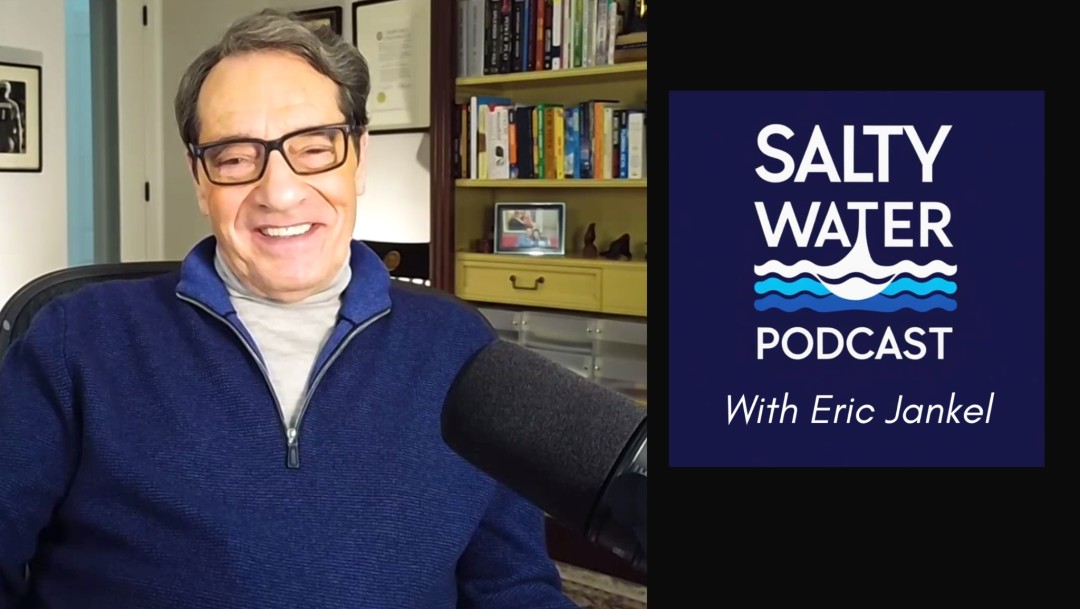
Eric Jankel, Host of the Salty Water Podcast
Meet Eric Jankel:
Jankel has over 25 years of direct experience with desalination, including in all six (6) Gulf Countries as well as Israel and is a recognized authority on water issues in the Middle East since his work on water for peace projects in Egypt in 1992.
• As Founding Director of the Middle East Desalination Research Center (MEDRC) in Muscat, Oman worked with the Government of Israel, a founding county member of MEDRC, on desalination policy along with the USA and Oman. MEDRC created from Multi-Lateral Middle East Peace Process in 1996.
• Oversaw planning, design, construction and operations of seawater desalination plants in Saudi Arabia, UAE, Oman, Israel and led the USAID-funded feasibility study for the Gaza seawater desalination plant.
• Worked in the US Government on water policy issues, such as the allocation of water from the Colorado River, Wester states water rights and trans-boundary water rights under the 1944 US-Mexico Treaty.
• Recently presented "Water Conflict and Cooperation", a review of major trans-national conflicts over water rights to the St. Petersburg World Affairs Council.
• Masters in International Development from Harvard Kennedy School of Government, BA from Rutgers College in Economic Geography.
• Member, Council on Foreign Relations- Tampa Bay Chapter and Society of International Business Fellows.
The Moment Desalination Went Mainstream
Another fascinating moment discussed in the podcast connects desalination technology to one of the most famous scientific efforts in history: the U.S. space race.
According to Gabbrielli, the same era that produced the Apollo program also produced massive investment in desalination research.
President John F. Kennedy launched major research initiatives aimed at reducing the cost of producing freshwater from seawater. That funding accelerated the development of reverse-osmosis membrane technology, which ultimately became the dominant desalination method worldwide.
"It enabled research that multiplied and gained pace," Gabbrielli said. "That program became the father of modern membrane technology."
Today, reverse osmosis plants operate in thousands of locations globally, from large municipal facilities in the Middle East to decentralized systems across island nations and coastal communities.
The Engineers Who Built the Industry
Beyond the technology itself, the podcast highlights the personalities and career paths behind the desalination industry.
In one episode, desalination pioneer Jon Tonner describes his introduction to the field while working on a desalination system in the Cayman Islands early in his career.
The experience was anything but polished.
"It scared me to death," he said, describing a noisy plant filled with leaks and improvised fixes.
But the exposure to early reverse-osmosis systems and mentorship from pioneers in the industry quickly changed his trajectory.
"This business gets in your blood," Tonner recalled being told by a senior engineer.
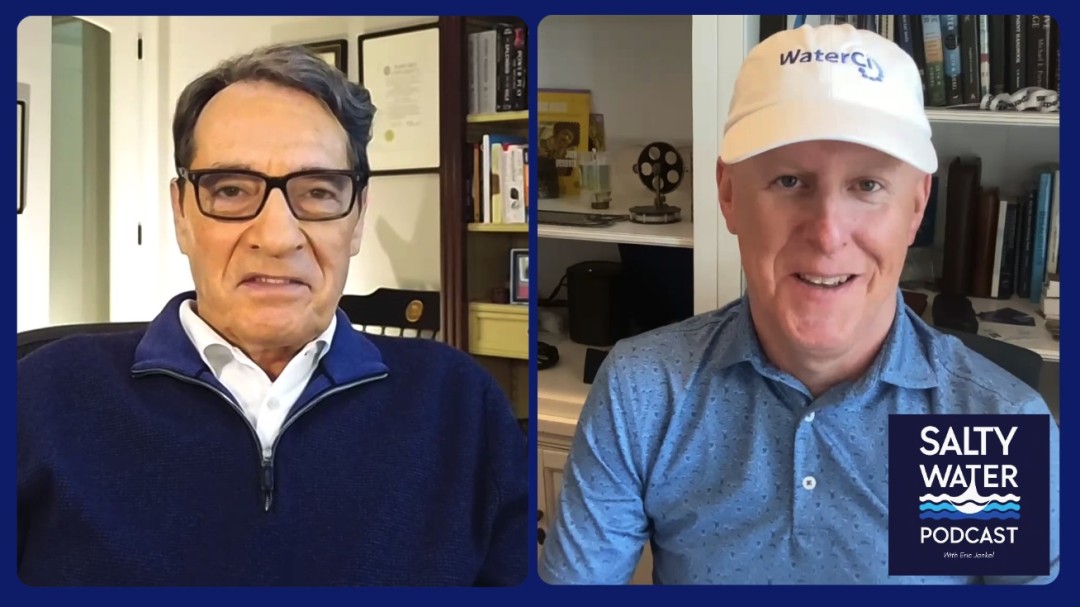
Jon Tonner, Water Industry Executive and Policy Leader — on the Salty Water Podcast
For anyone who has spent time around desalination projects, international plant commissioning, or membrane research, that sentiment will sound familiar.
Water infrastructure tends to attract people who stay for decades.
Approaching the Limits of Current Technology
Several conversations on the podcast also highlight a major reality facing the industry today.
Modern reverse-osmosis systems are incredibly efficient.
In fact, they are approaching the thermodynamic limits of how little energy can be used to separate salt from water.
That creates a new challenge for engineers and researchers.
Incremental improvements are still possible through better plant design, energy recovery systems, and operational optimization. But the next big leap will likely require a completely new approach to water treatment.
"We need a disruptive breakthrough," Tonner explained during his discussion of global innovation challenges like the XPRIZE Water Scarcity competition.
Around the world, research teams are exploring new technologies, from advanced membranes to atmospheric water capture systems.
But for now, the industry continues to rely on the technologies refined over the last half century.
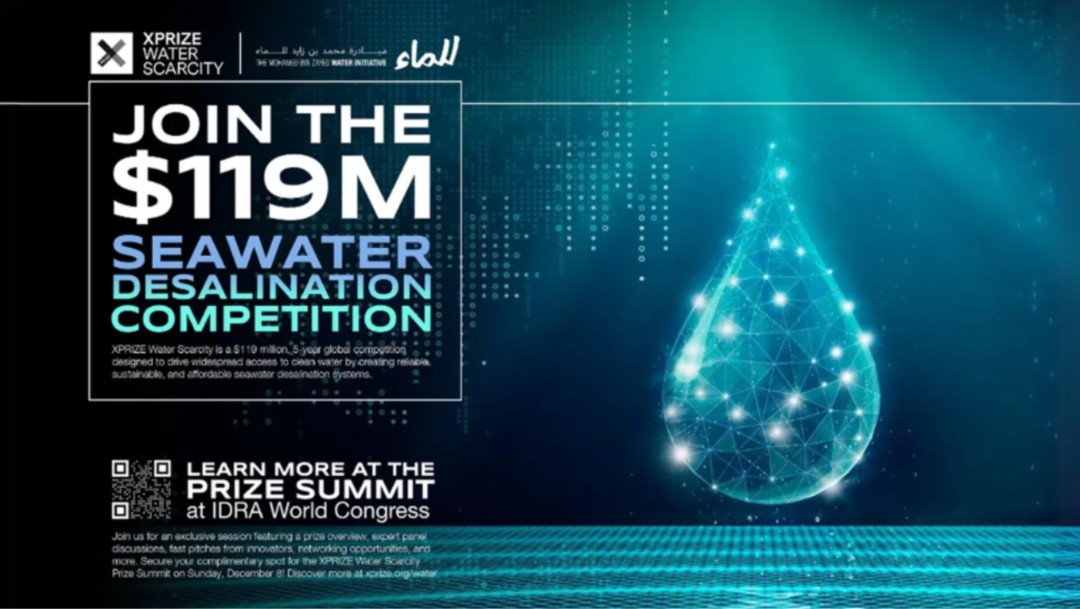
The $119M XPRIZE Water Scarcity competition is pushing innovators to rethink desalination and global water access. Learn more: https://www.xprize.org/water
Dispelling the Myths Around Desalination
Another theme running through the early podcast episodes is the gap between public perception and operational reality.
Despite decades of successful deployment, desalination is still widely misunderstood outside the industry.
Environmental concerns about brine discharge, energy usage, and cost often dominate public discussions.
But experts point out that modern systems are far more efficient and environmentally controlled than many critics realize.
In fact, desalination has quietly become a critical part of the global water supply.
Today, millions of people rely on desalinated water every day, and the technology supports entire economies in regions where natural freshwater resources are limited.
"Five to seven percent of the world's population already drinks desalinated water," Gabbrielli noted.
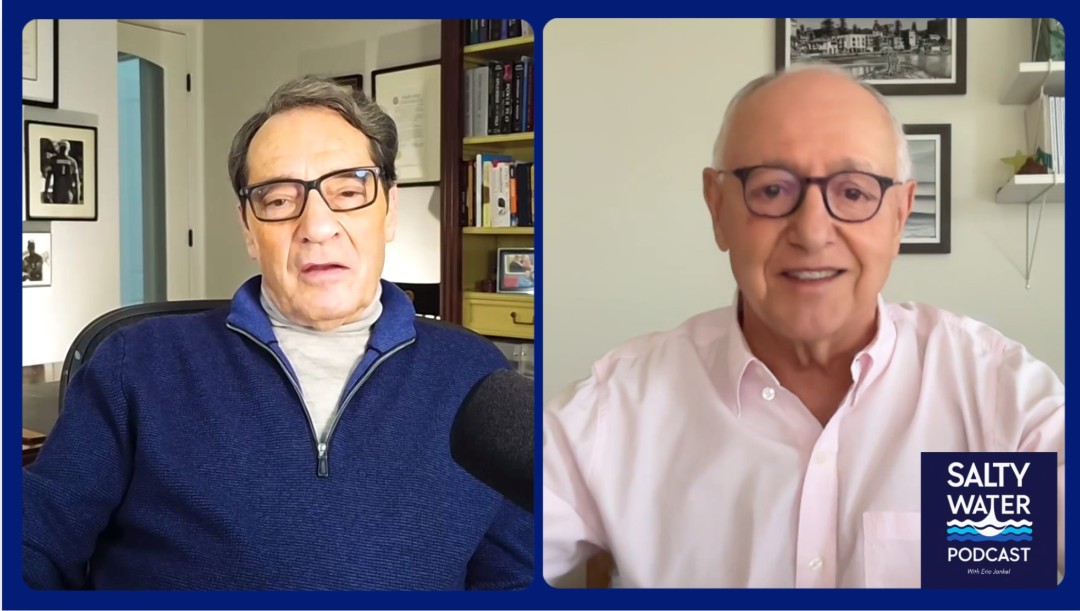
Emilio Gabbrielli, Author and Desalination Historian — on the Salty Water Podcast
For water professionals, that statistic reflects a reality that policymakers and the public are only beginning to recognize.
A Platform for the Water Community
The Salty Water Podcast was created to give the water industry a space to share these stories.
Instead of focusing only on technical papers or conference presentations, the show highlights the experiences of the engineers, executives, researchers, and policymakers who have helped shape the sector.
The conversations range from:
• the early days of reverse-osmosis plants
• to the evolution of membrane technology
• to the geopolitics of water scarcity
• to the next generation of disruptive water technologies.
For professionals working in desalination, reuse, utilities, or infrastructure finance, these conversations offer something rare: perspective.
The industry often focuses on the next project, the next plant, or the next conference presentation.
But stepping back to look at the bigger picture reveals something powerful.
The global water sector is entering a period of rapid transformation.
And the conversations shaping that transformation are just getting started.
* The Salty Water Podcast with Eric Jankel launched in February 2026.
Whether you work in desalination, membranes, water utilities, infrastructure finance, or water policy, the show offers a chance to hear directly from the people shaping the future of the industry.
You can learn more and listen to episodes at: https://SaltyWaterPodcast.com
Available for Media Interviews:
Contact: Jo Allison
Phone: 917-207-1039
Email: Jo@MediaAmbassadors.com
Website: http://www.MediaAmbassadors.com
Or, Contact Eric Podcast / the Salty Water Podcast show directly:
Email: eric@bayshorewater.com
Phone: +1-720-468-1120
Media Contact
Company Name: Media Ambassadors
Contact Person: Jo Allison
Email: Send Email
Country: United States
Website: https://www.MediaAmbassadors.com