Student loan provider Sallie Mae (NASDAQ: SLM) missed Wall Street’s revenue expectations in Q3 2026, with sales falling 31.2% year on year to $375.5 million. Its GAAP loss of $0.19 per share was significantly below analysts’ consensus estimates.
Is now the time to buy Sallie Mae? Find out by accessing our full research report, it’s free.
Sallie Mae (SLM) Q3 2026 highlights:
- Net Interest Income: $339.3 million vs analyst estimates of $358.4 million (9% year-on-year decline, 5.3% miss)
- Revenue: $375.5 million vs analyst estimates of $457.8 million (31.2% year-on-year decline, 18% miss)
- Pre-tax Profit: -$58.91 million (-15.7% margin)
- EPS (GAAP): -$0.19 vs analyst estimates of $0.20 (significant miss)
- EPS (GAAP) guidance for the full year is $2 at the midpoint, missing analyst estimates by 35.9%
- Market Capitalization: $4.29 billion
Company overview
Originally created as a government-sponsored enterprise before privatizing in 2004, Sallie Mae (NASDAQ: SLM) is a financial services company that provides private education loans, savings products, and educational resources to help students and families pay for college.
Revenue growth
A company’s long-term performance is an indicator of its overall quality. Any business can experience short-term success, but top-performing ones enjoy sustained growth for years. Sallie Mae struggled to consistently generate demand over the last five years as its revenue dropped at a 1.3% annual rate. This was below our standards and is a sign of poor business quality.
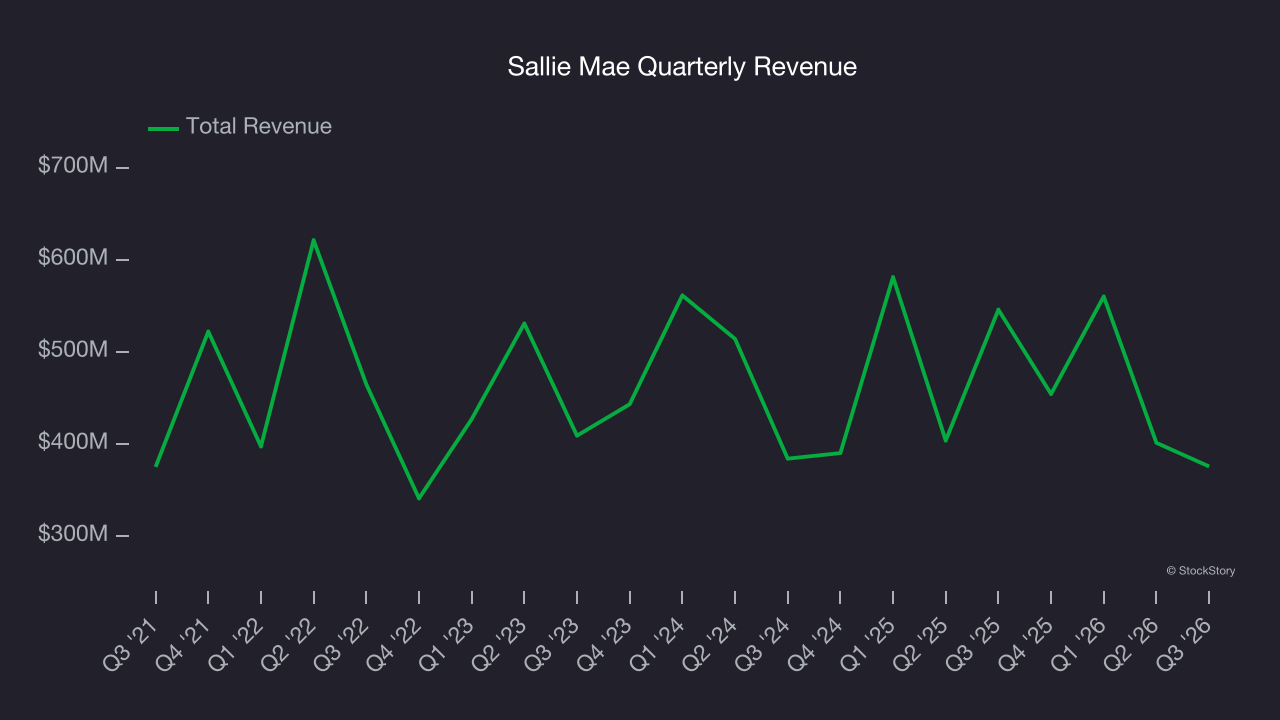
We at StockStory place the most emphasis on long-term growth, but within financials, a half-decade historical view may miss recent interest rate changes, market returns, and industry trends. Sallie Mae’s recent performance shows its demand remained suppressed as its revenue has declined by 3% annually over the last two years. 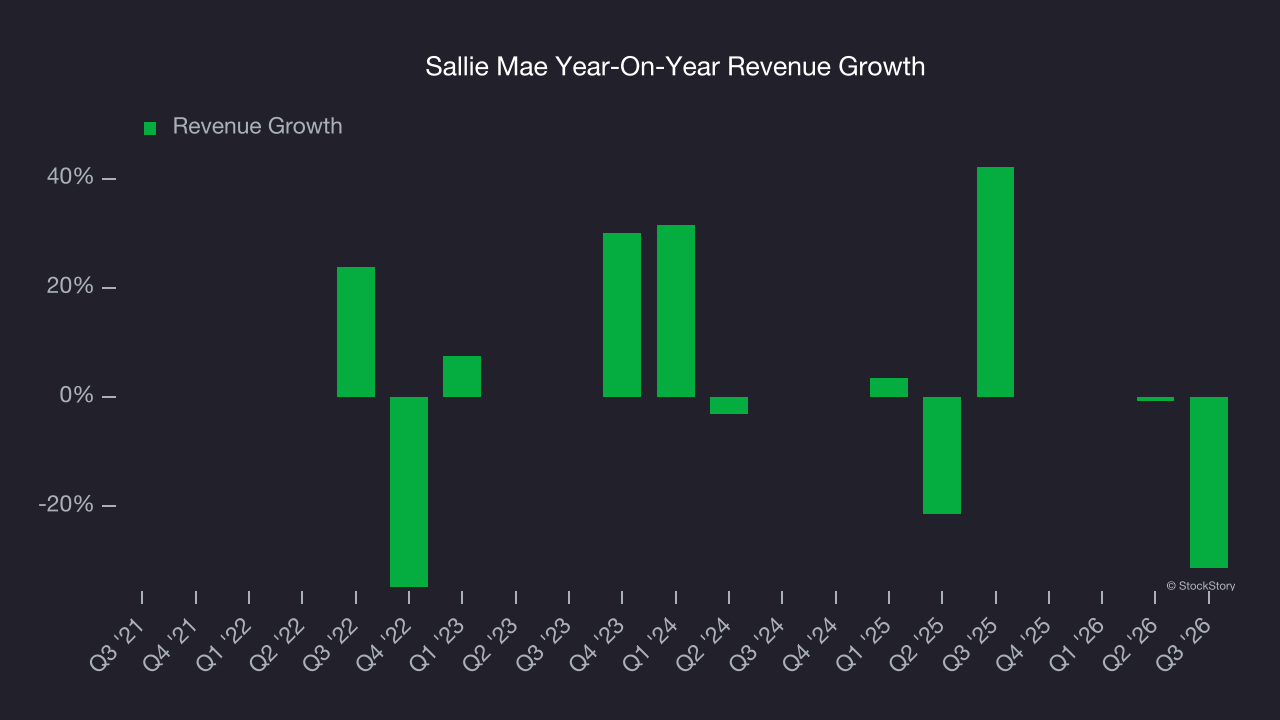 Note: Quarters not shown were determined to be outliers because they were impacted by outsized investment gains/losses that are not indicative of the recurring fundamentals of the business.
This quarter, Sallie Mae missed Wall Street’s estimates and reported a rather uninspiring 31.2% year-on-year revenue decline, generating $375.5 million of revenue.
WHILE YOU’RE HERE: The Next Palantir? One satellite company captures images of every point on Earth. Every single day. The Pentagon wants it. Hedge funds are using it to beat earnings. You’ve probably never heard of it.
This is what the early days of Palantir looked like before it became a giant. Same playbook. Different technology. If you missed Palantir, you need to see this. Claim The Stock Ticker for Free HERE.
Key takeaways from Sallie Mae’s Q3 results
We struggled to find many positives in these results. Its net interest income missed and its full-year EPS guidance fell short of Wall Street’s estimates. Overall, this was a weaker quarter. The stock traded down 4.8% to $20.71 immediately after reporting.
Sallie Mae’s earnings report left more to be desired. Let’s look forward to see if this quarter has created an opportunity to buy the stock. What happened in the latest quarter matters, but not as much as longer-term business quality and valuation, when deciding whether to invest in this stock. We cover that in our actionable full research report which you can read here (it’s free).