Electronic design automation company Cadence Design Systems (NASDAQ: CDNS) reported Q3 2026 results exceeding the market’s revenue expectations, with revenue up 22% year on year to $1.63 billion. The company’s full-year revenue guidance of $6.4 billion at the midpoint came in 1.3% above analysts’ consensus estimates. Its non-GAAP profit of $2.11 per share was 2.8% above analysts’ consensus estimates.
For more on Cadence Design Systems, read the full research report for free.
Cadence Design Systems (CDNS) Q3 2026 highlights:
- Revenue $1.63 billion vs S&P analysts’ consensus estimates of $1.62 billion (22% year-on-year growth, 1.1% beat)
- Adjusted EPS $2.11 vs S&P analysts’ consensus estimates of $2.05 (2.8% beat)
- Revenue guidance The company lifted its revenue guidance for the full year to $6.4 billion at the midpoint from $6.3 billion, a 1.6% increase
- Adjusted EPS guidance Management raised its full-year adjusted EPS guidance to $8.40 at the midpoint, a 3.7% increase
- Operating margin 26.2%, down from 31.8% in the same quarter last year
- Billings $1.61 billion at quarter end, up 18.6% year on year
- Market capitalization $87.16 billion
Revenue growth
Reviewing a company’s long-term revenue performance reveals insights into its quality. Any business can have short-term success, but a top-tier one grows for years. Over the last five years, Cadence Design Systems grew its revenue at a 15.6% annual rate. Though this growth is acceptable on an absolute basis, assessing the software sector requires more than just top-line growth, given its potential for significant earnings volatility. The bar for the sector is particularly high, reflecting the non-essential and hit-driven nature of the products and services offered. Additionally, the five-year CAGR starts around Covid, when revenue was depressed before rebounding. Still, Cadence Design Systems has other strengths.
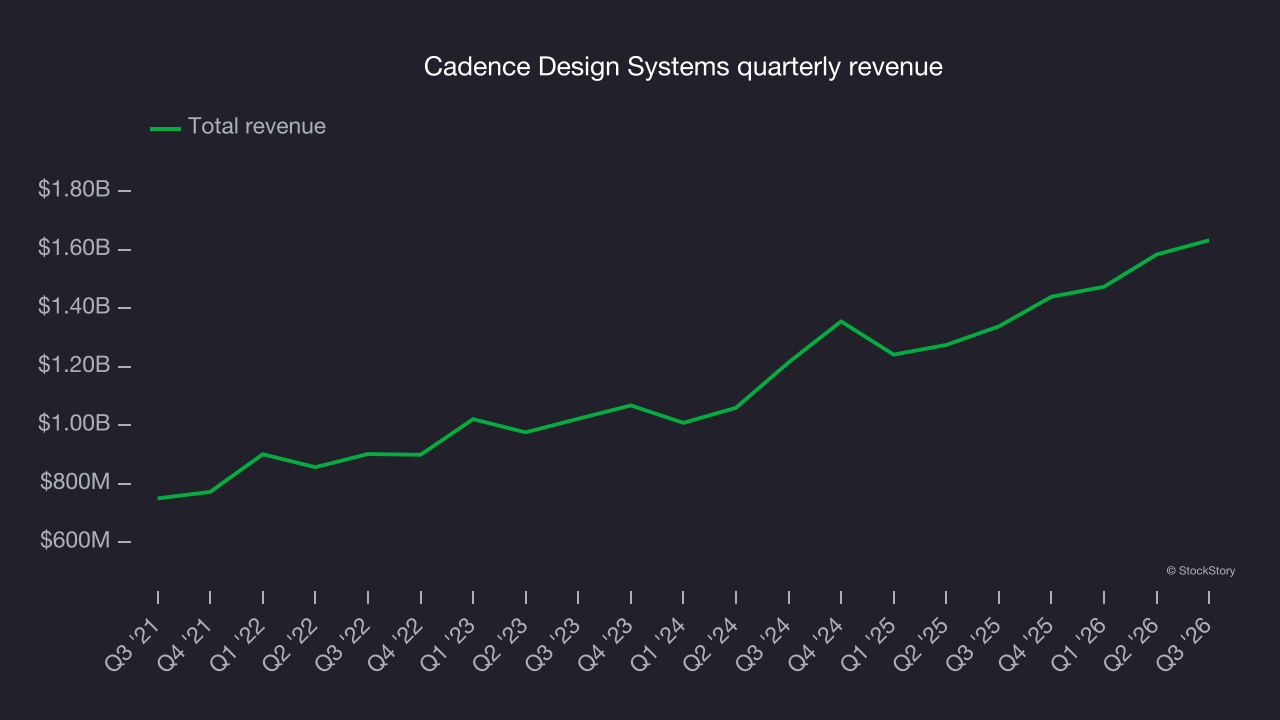
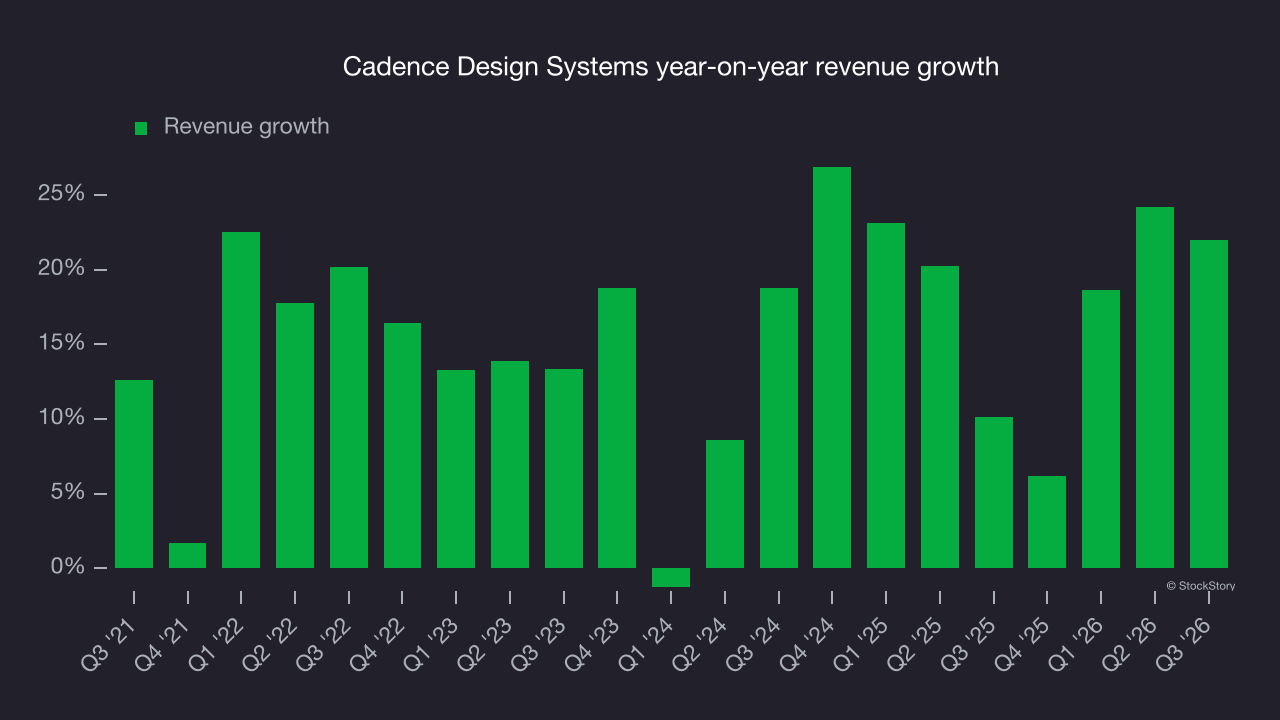
This quarter, Cadence Design Systems reported year-on-year revenue growth of 22%, and its $1.63 billion of revenue topped Wall Street’s consensus estimates by 1.1%.
Looking ahead, sell-side analysts expect revenue to grow 12.9% over the next 12 months, according to S&P, a deceleration versus the last two years. This underwhelming projection implies its products and services will see some demand headwinds. On the positive side, the company is performing well on other measures of financial health.
Billings
Billings is a non-GAAP metric that is often called “cash revenue” because it shows how much money the company has collected from customers in a certain period. This is different from revenue, which must be recognized in pieces over the length of a contract.
Cadence Design Systems’s billings totaled $1.61 billion in Q3, and growth over the last four quarters was strong, averaging 20.3% year on year. This alternative top-line metric grew faster than total revenue, meaning the company collects cash upfront and then recognizes the revenue over the length of its contracts, supporting liquidity and future revenue prospects.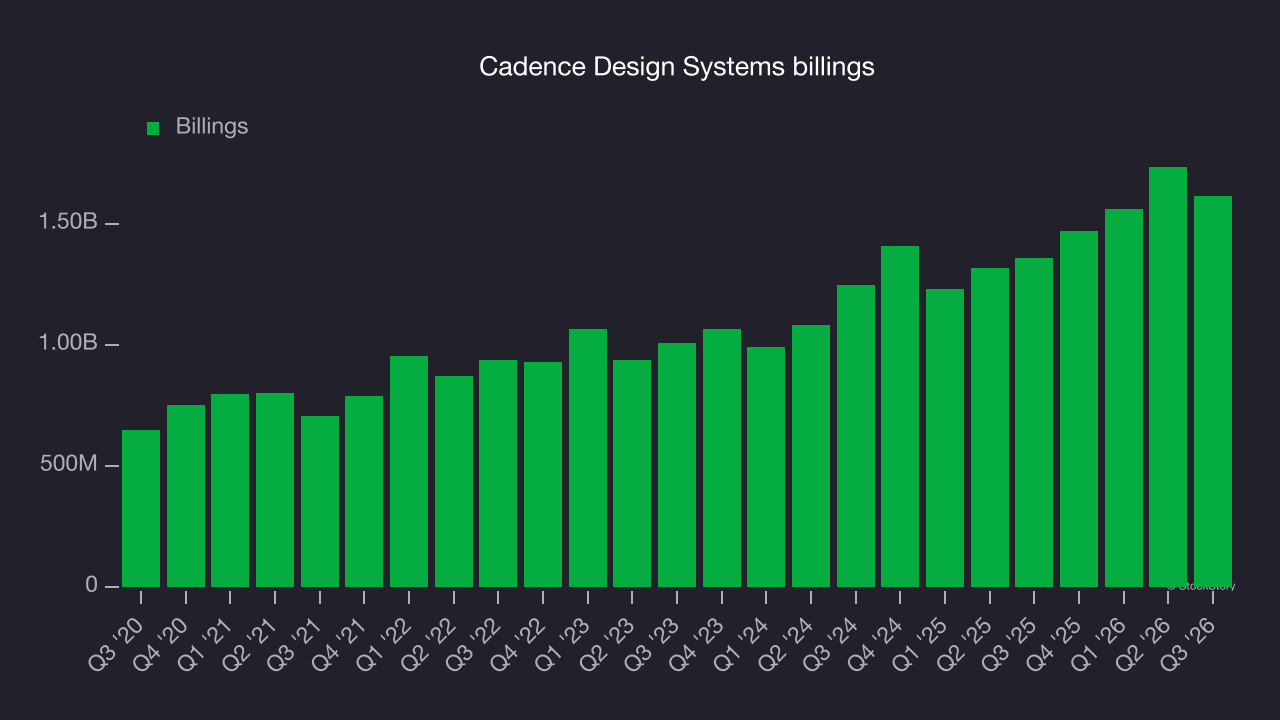
Customer acquisition efficiency
The customer acquisition cost (CAC) payback period represents the months required to recover the cost of acquiring a new customer. Essentially, it’s the break-even point for sales and marketing investments. A shorter CAC payback period is ideal, as it implies better returns on investment and business scalability.
Cadence Design Systems is efficient at acquiring new customers, and its CAC payback period was 13 months this quarter. The company’s rapid recovery of its customer acquisition costs indicates it has a highly differentiated product offering and a strong brand reputation. These dynamics give Cadence Design Systems more resources to pursue new product initiatives while maintaining the flexibility to increase its sales and marketing investments.
Key takeaways from Cadence Design Systems’s Q3 results
EPS guidance was the highlight of a good quarter for Cadence Design Systems: its next-quarter outlook came in well above analysts’ consensus estimates, and its full-year forecast also topped Wall Street’s estimates. The stock remained flat at $325.26 immediately after the results.
Cadence Design Systems may have had a good quarter, but does that mean you should invest now? The latest quarter matters, but not nearly as much as longer-term fundamentals and valuation when deciding whether to buy the stock. For more on Cadence Design Systems, read our full research report here (it’s free).