Regional banking company Northwest Bancshares (NASDAQ: NWBI) beat Wall Street’s revenue expectations in Q3 2026, with revenue up 10% year on year to $184.9 million. Its non-GAAP profit of $0.35 per share was in line with analysts’ consensus estimates.
For more on Northwest Bancshares, read the full research report, available free.
Northwest Bancshares (NWBI) Q3 2026 highlights:
- Net interest income $149 million vs analysts’ consensus estimates of $151.5 million (9.5% year-on-year growth, 1.7% miss)
- Net interest margin 3.7% vs analysts’ consensus estimates of 3.7% (4.9 basis point miss)
- Revenue $184.9 million vs S&P analysts’ consensus estimates of $183.6 million (10% year-on-year growth, 0.7% beat)
- Efficiency ratio 58.9% vs analysts’ consensus estimates of 58.6% (36.5 basis point miss)
- Adjusted EPS $0.35 vs S&P analysts’ consensus estimates of $0.34 (in line)
- Tangible book value per share $9.65 vs analysts’ consensus estimates of $10.01 (3% year-on-year growth, 3.6% miss)
- Market capitalization $2.27 billion
Revenue growth
Net interest income and fee-based revenue are the two pillars supporting bank earnings. The former captures profit from the gap between lending rates and deposit costs, while the latter encompasses charges for banking services, credit products, wealth management and trading activities. Northwest Bancshares’s 6.5% annualized revenue growth over the last five years was tepid. This was below our standard for the banking sector.
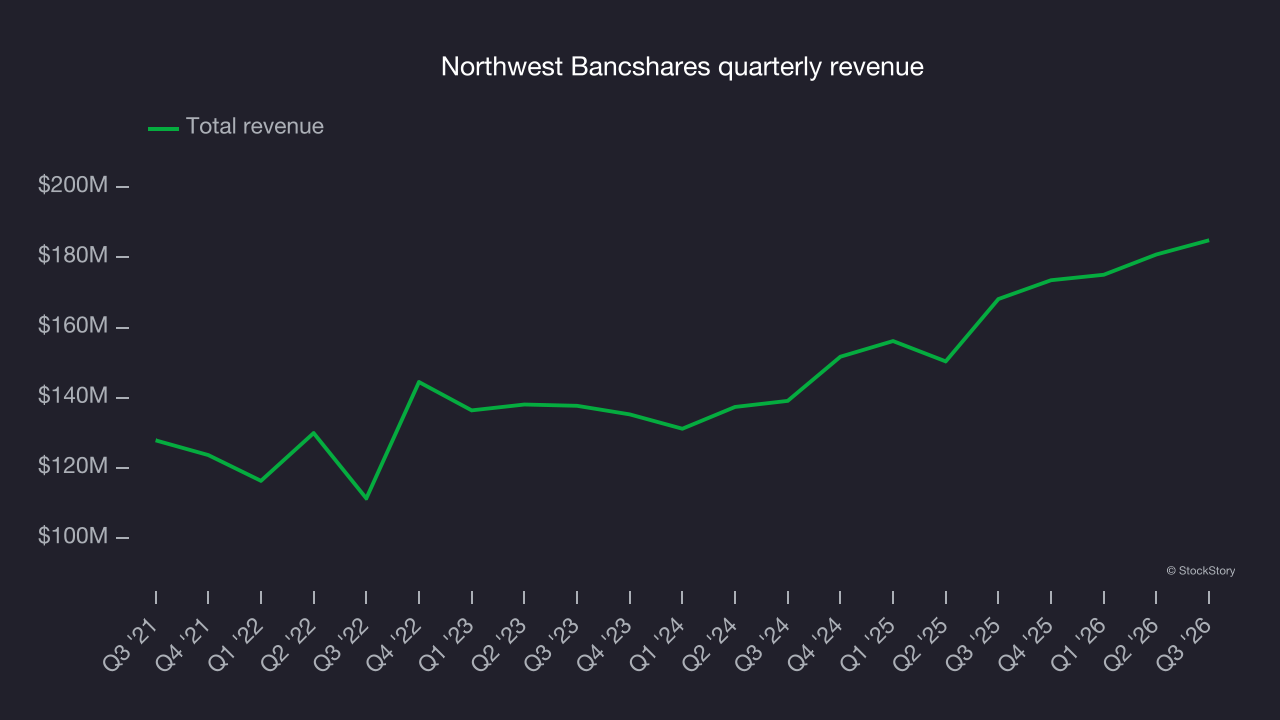
Long-term growth matters most, but within financials, a half-decade historical view may miss recent interest rate changes, market returns and industry trends. Northwest Bancshares’s annualized revenue growth of 14.7% over the last two years is above its five-year trend, suggesting its demand recently accelerated. 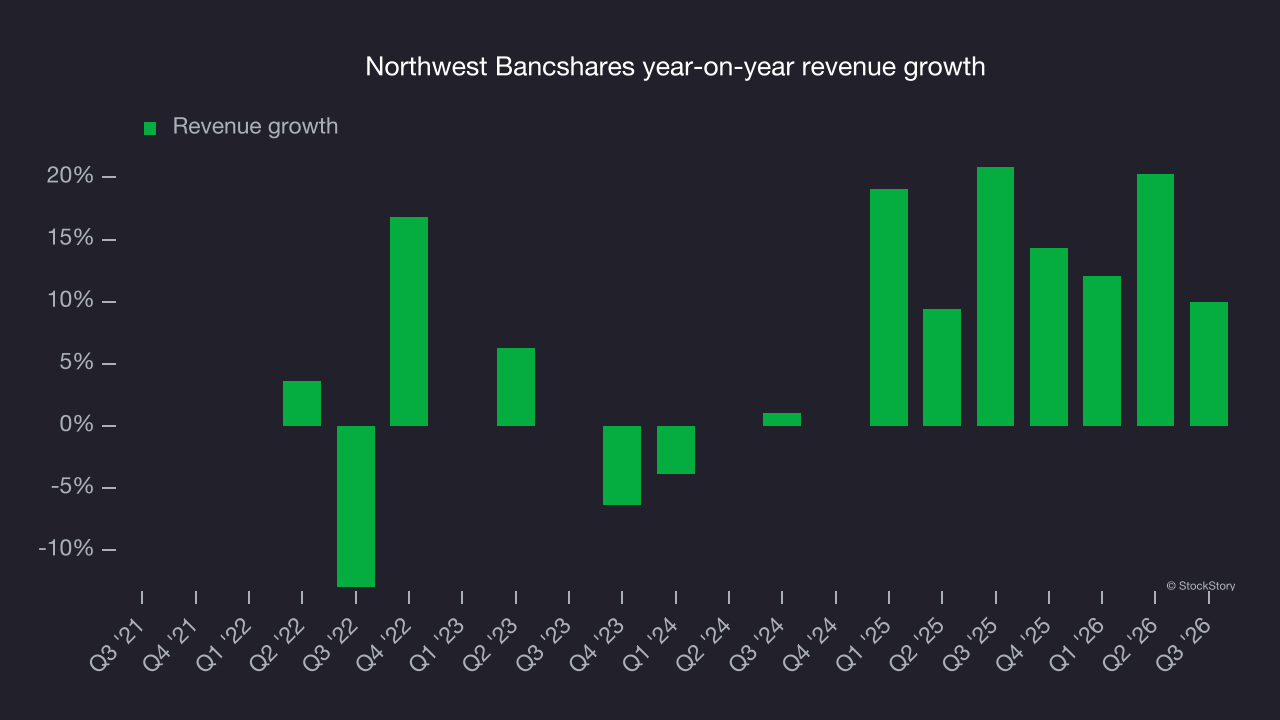 Note: Quarters not shown were determined to be outliers because they were impacted by outsized investment gains/losses that are not indicative of the recurring fundamentals of the business.
This quarter, Northwest Bancshares reported year-on-year revenue growth of 10%, and its $184.9 million of revenue exceeded Wall Street’s estimates by 0.7%.
Net interest income made up 80.6% of the company’s total revenue during the last five years, meaning Northwest Bancshares barely relies on non-interest income to drive its overall growth.
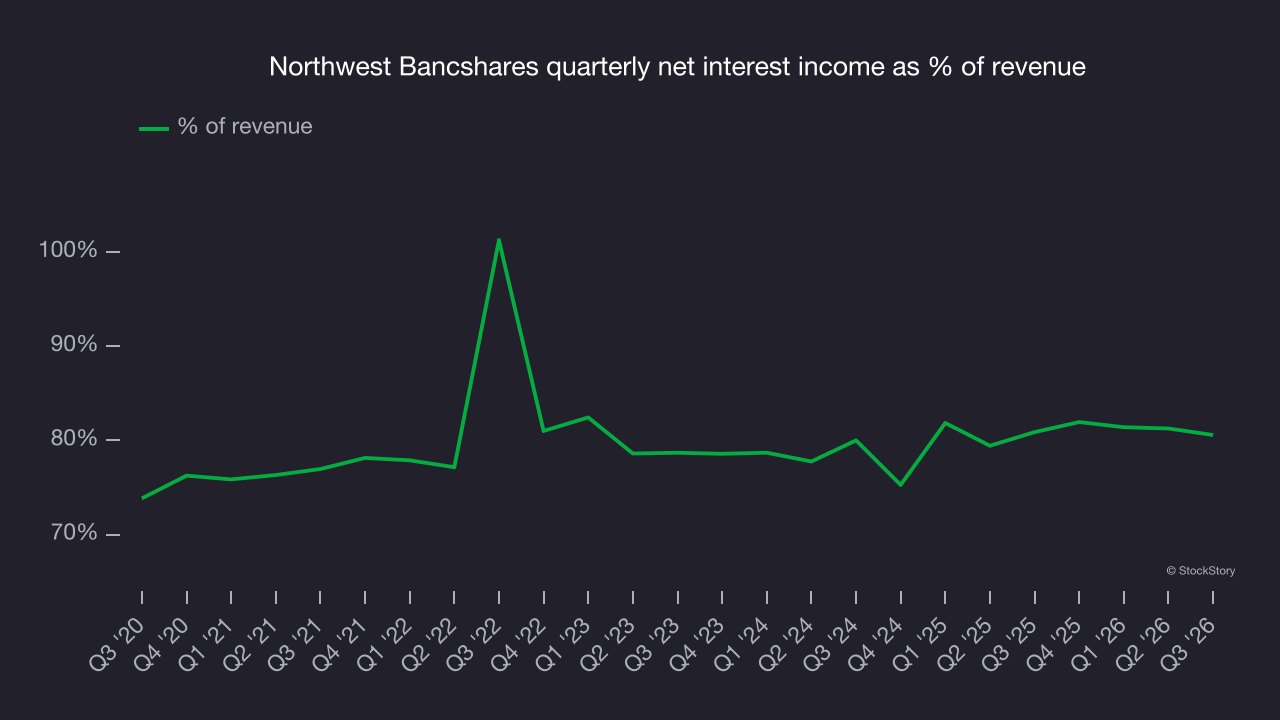
The market cares primarily about a bank’s net interest income growth as non-interest income is considered a lower-quality and non-recurring revenue source.
Tangible book value per share (TBVPS)
Banks are balance sheet-driven businesses because they generate earnings primarily through borrowing and lending. They’re also valued based on their balance sheet strength and ability to compound book value (another name for shareholders’ equity) over time.
When analyzing banks, tangible book value per share (TBVPS) takes precedence over many other metrics. This measure isolates genuine per-share value by removing intangible assets of debatable liquidation worth. Other (and more commonly known) per-share metrics like EPS can sometimes be murky due to M&A or accounting rules allowing for loan losses to be spread out.
Northwest Bancshares’s TBVPS was flat over the last five years. The last two years show a similar pattern, as TBVPS was roughly flat at $9.65 per share.
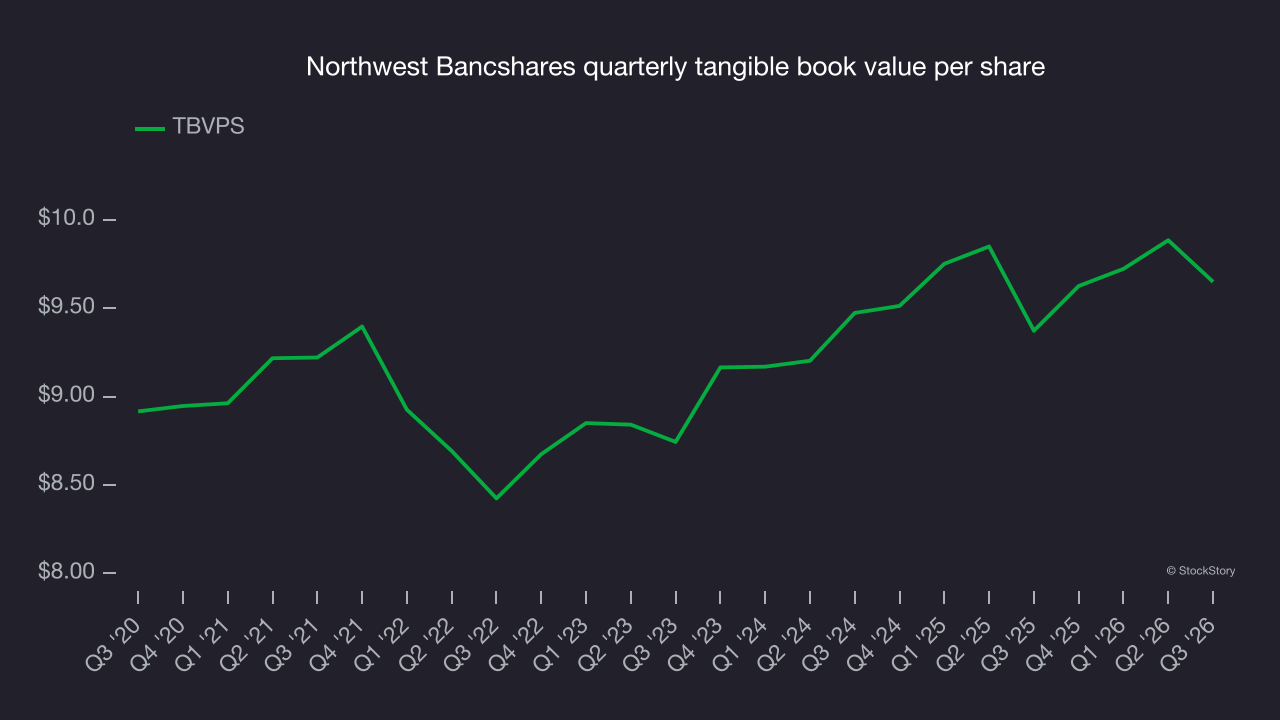
Over the next 12 months, consensus estimates call for Northwest Bancshares’s TBVPS to grow by 12.2% to $10.83, a mediocre growth rate.
Key takeaways from Northwest Bancshares’s Q3 results
A narrow revenue beat wasn’t enough to make this a better quarter for Northwest Bancshares: tangible book value per share missed estimates, and net interest income fell short of Wall Street’s consensus. Those shortfalls made for a weaker quarter overall. Shares remained flat at $15.53 immediately after the release.
Northwest Bancshares’s latest quarter was underwhelming. One earnings report doesn’t define a company’s quality, though, so it is worth examining whether the stock is a buy at the current price. The latest quarter matters, but longer-term business quality and valuation matter more when deciding whether to invest in this stock. For more on those factors, read the full research report here (it’s free).