Payment technology company Marqeta (NASDAQ: MQ) met Wall Street’s revenue expectations in Q3 2026, with revenue up 7.9% year on year to $176.2 million. On the other hand, next quarter’s revenue guidance of $179 million was less impressive, coming in 4.1% below analysts’ consensus estimates. Its GAAP profit of $1.09 per share was significantly above analysts’ consensus estimates.
For more on Marqeta, read our free full research report.
Marqeta (MQ) Q3 2026 highlights:
- Revenue $176.2 million vs S&P analysts’ consensus estimates of $175.4 million (7.9% year-on-year growth, in line)
- EPS (GAAP) $1.09 vs analysts’ consensus estimates of $0.07 (significant beat), due to one-time $107 million non-cash benefit
- Adjusted EBITDA $38.77 million vs analysts’ consensus estimates of $36.84 million (22% margin, 5.3% beat)
- Revenue guidance $179 million at the midpoint for Q4 2026, below analysts’ consensus estimates of $186.7 million
- Adjusted EBITDA guidance Growth in the low-to-mid-30% range for FY2026, up from the prior outlook for growth in the low-30% range
- Operating margin 3.6%, up from -6.4% in the same quarter last year
- Market capitalization $1.94 billion
“Our third quarter results demonstrate the durable, differentiated business Marqeta is building, as well as our focus on enhancing the platform that customers trust to build and scale their payment programs,” said Mike Milotich, CEO of Marqeta. “TPV surpassed a $500 billion annualized run rate for the first time, Adjusted EBITDA margin set a new high-water mark, and we delivered our third consecutive quarter of GAAP profitability. From Square's credit card on the American Express® Network to Google Wallet for kids, the programs we are launching show how the range, flexibility, and scale of our platform are helping leading companies deliver innovative payment experiences.”
Revenue growth
A company’s long-term revenue performance is one signal of its overall quality. Any business can report a good quarter or two, but many enduring ones grow for years. Over the last five years, Marqeta grew its revenue at a sluggish 8.9% compounded annual growth rate, falling short of the software sector benchmark.
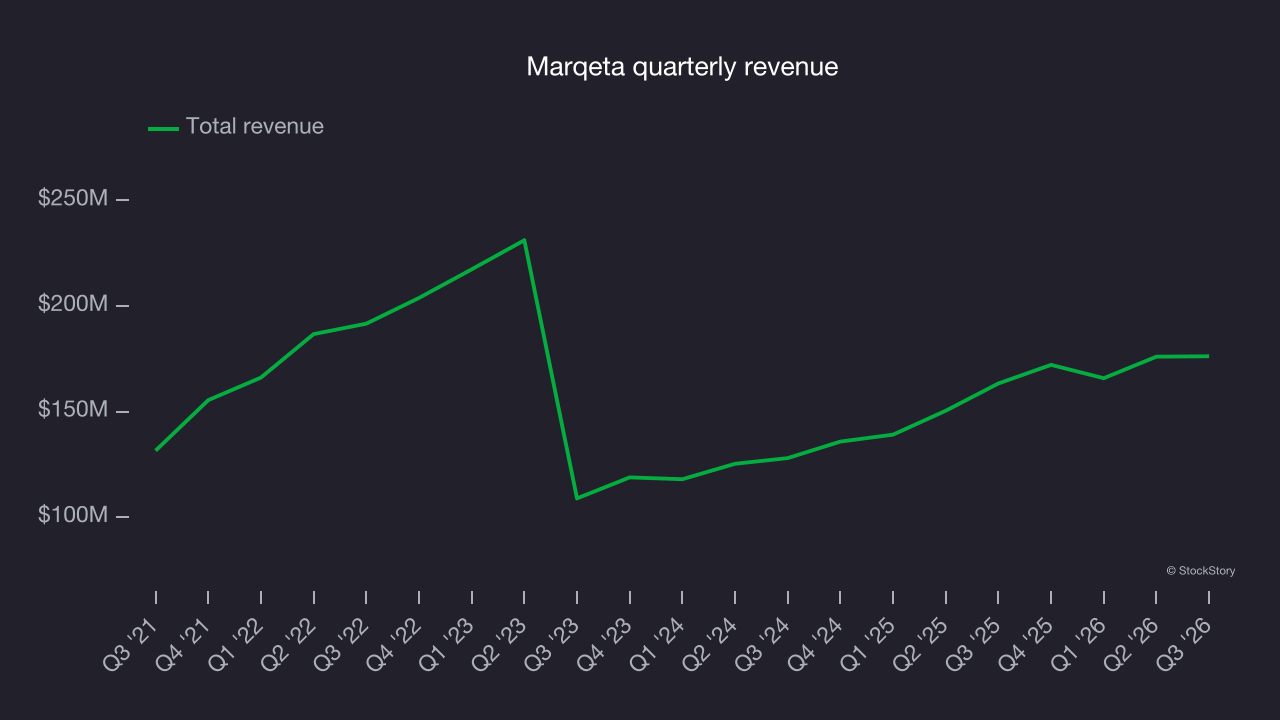
Long-term growth matters most, but within software, a half-decade historical view may miss recent innovations or disruptive industry trends. Marqeta’s annualized revenue growth of 18.7% over the last two years is above its five-year trend, suggesting its demand recently accelerated.
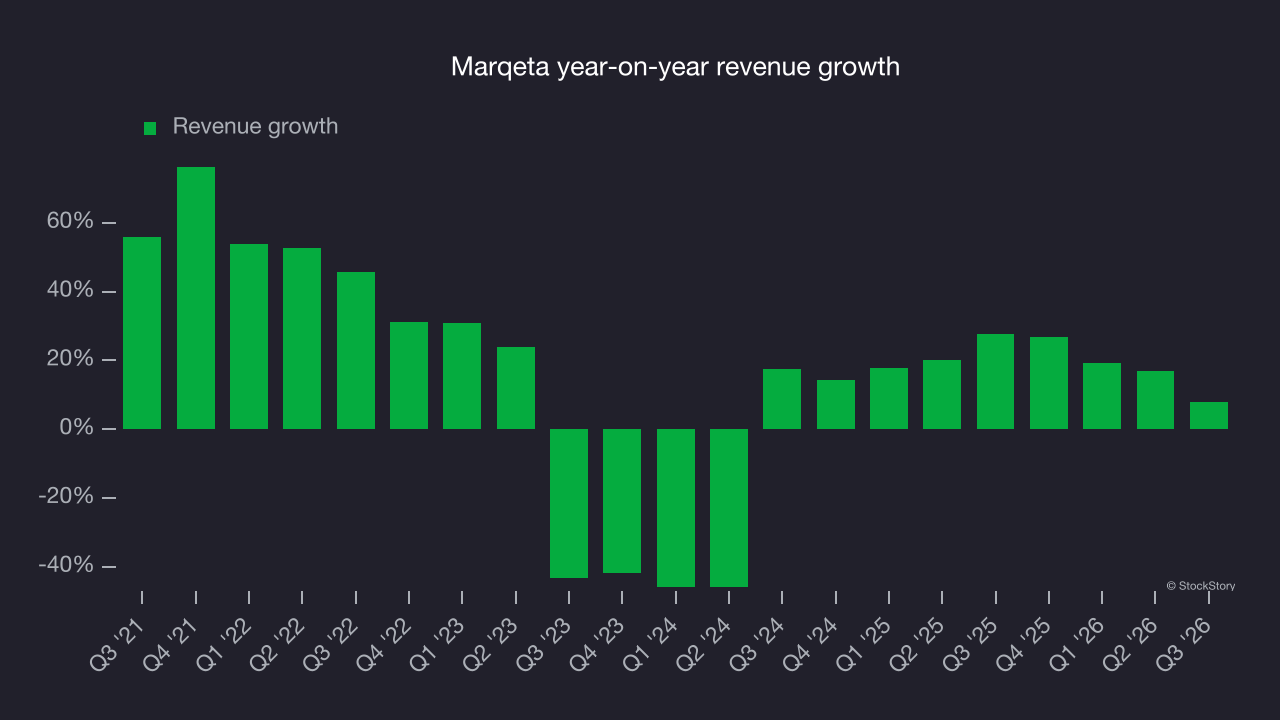
This quarter, Marqeta grew its revenue by 7.9% year on year, and its $176.2 million of revenue was in line with Wall Street’s consensus estimates. Management is guiding for a 4% year-on-year increase in revenue next quarter.
Looking further ahead, sell-side analysts expect revenue to grow 12.1% over the next 12 months, according to S&P, a deceleration versus the last two years. This underwhelming projection implies its products and services will face some demand challenges.
Total payment volume
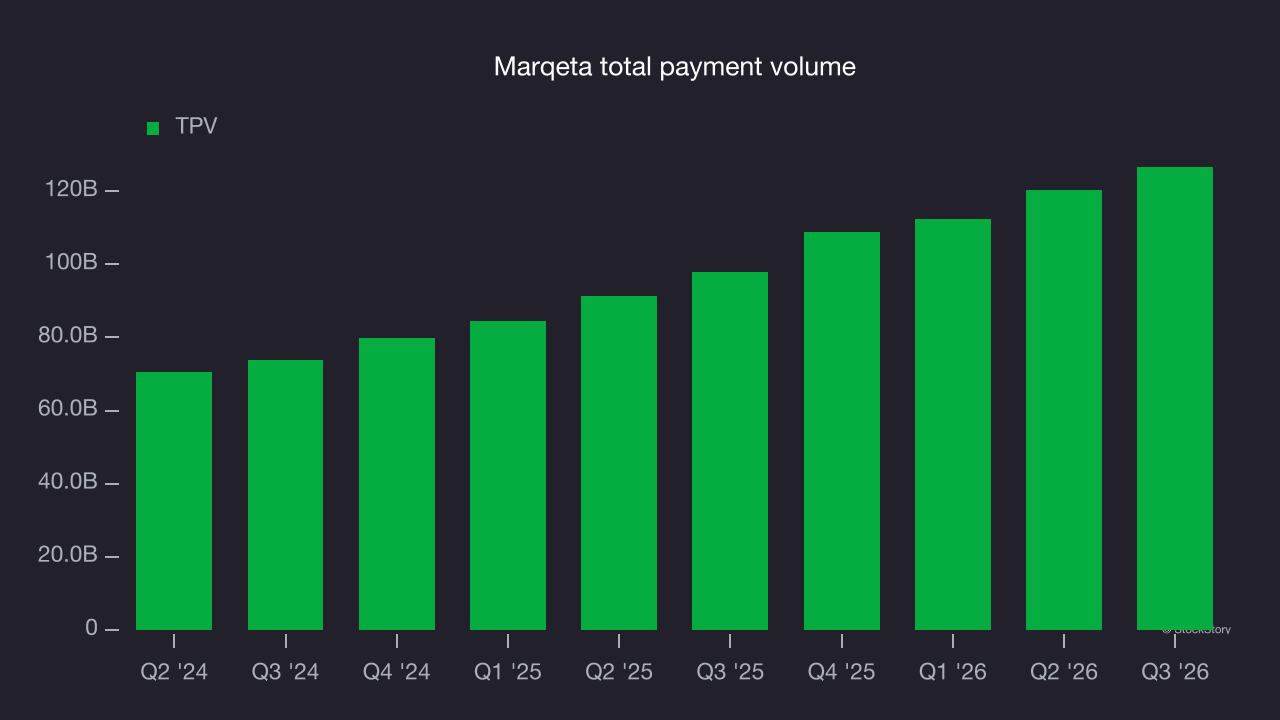
Total processing volume, or TPV, is the aggregate dollar value of transactions flowing through Marqeta’s platform. This is the amount on which the company will ultimately collect fees, and the higher it is, the more opportunities Marqeta has to sell additional services, such as banking.
Marqeta’s TPV reached $126.5 billion in Q3, and over the last four quarters, its growth was strong, averaging 32.5% year on year. This alternative top-line metric grew faster than total revenue, which could mean that take rates have declined. However, that does not necessarily mean the company is reducing its fees because take rates can also vary depending on the type of products sold on its platform.
Customer acquisition efficiency
The customer acquisition cost, or CAC, payback period represents the months required to recover the cost of acquiring a new customer. Essentially, it’s the break-even point for sales and marketing investments. A shorter CAC payback period is ideal, as it implies better returns on investment and business scalability.
Marqeta is highly efficient at acquiring new customers, with a CAC payback period of 7 months this quarter. The company’s rapid recovery of its customer acquisition costs indicates it has a highly differentiated product offering and a strong brand reputation. These dynamics give Marqeta more resources to pursue new product initiatives while maintaining the flexibility to increase its sales and marketing investments.
Key takeaways from Marqeta’s Q3 results
Marqeta delivered a weaker quarter with few positives to point to. Shares fell 4.1% to $17.10 immediately after the release.
Marqeta had a disappointing quarter, but is the stock worth buying at its current price? That decision should take into account the bigger picture of valuation, business quality and the latest earnings. For more on Marqeta, read the full research report here (it’s free).