What Happened?
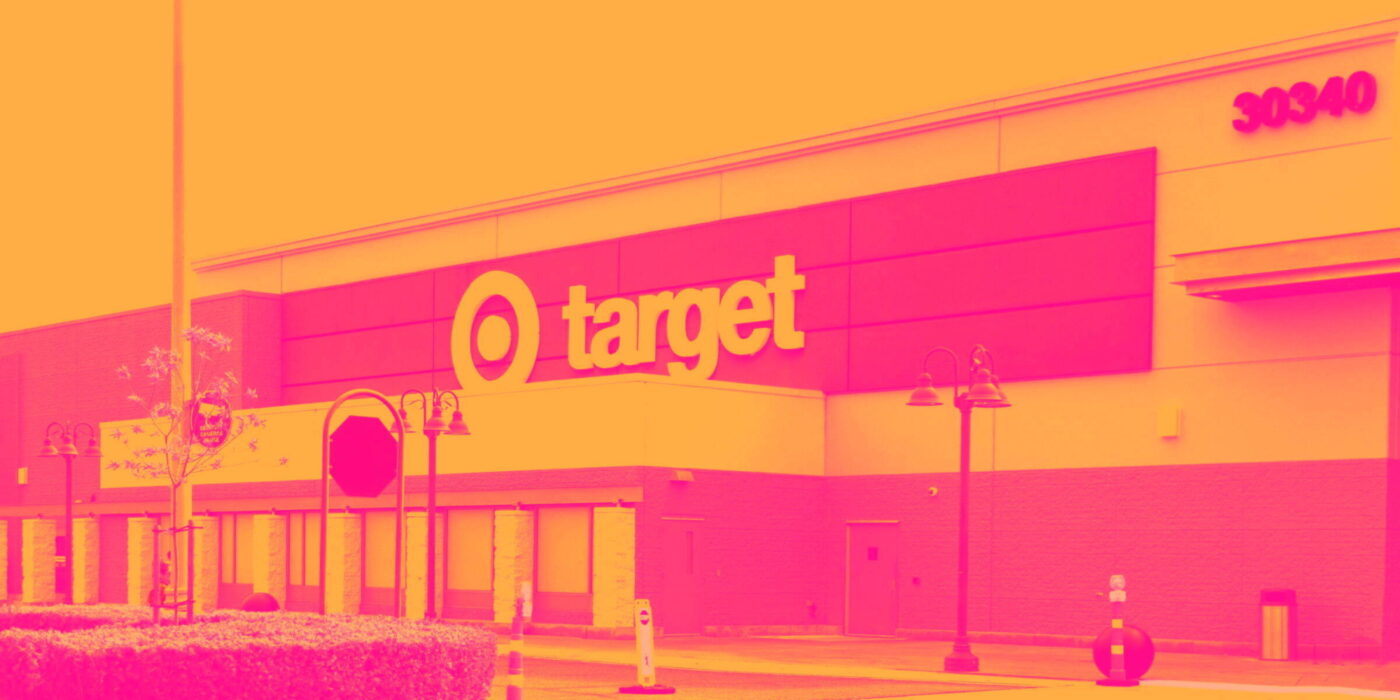
Shares of general merchandise retailer Target (NYSE: TGT) jumped 3.5% in the afternoon session after Wolfe Research upgraded the stock to Outperform from Peer Perform, named it a Top Pick into year-end, and set a Street-high $162 price target, implying about 25% upside.
Wolfe's Spencer Hanus said Target "is becoming a destination once again," citing better-run stores under new management and new-customer trends swinging to positive over the previous four weeks, against a negative 52-week trend Target has been a "show-me" stock for years, so an outside endorsement arguing the fix was working carries weight, especially one that lifts numbers above the Street.
Hanus raised his 2026 EPS estimate to $8.48 and 2027 to $9.52 (above the ~$8.95 consensus), with the $162 target built on roughly 17x mid-$9 EPS. It rests on hard Q1 data reported May 20: net sales of $25.44 billion, up 6.7%, with comparable sales up 5.6% (Target's first positive comps in five quarters) driven by 4.4% traffic growth and a 24.6% jump in high-margin non-merchandise revenue (Roundel advertising, Circle 360).
The relative-strength signal matters as much as the upgrade: with money rotating out of expensive AI names, a relatively cheaper retailer that's already up about 41% over the past year offers a different kind of bet and Wolfe funded the call partly by downgrading Home Depot and Five Below.
Separately, Target is partnering with Abercrombie & Fitch's Hollister brand for the first time. The multi-season collaboration would launch with nearly 60 products across apparel and, for the first time, Hollister-branded home and décor items. The launch was timed to coincide with back-to-school and college-preparation spending. The positive news came amid a backdrop of stronger-than-expected May retail sales, which reinforced the idea of consumer resilience.
The shares closed the day at $134.12, up 3.4% from the previous close.
Is now the time to buy Target? Access our full analysis report here, it’s free.
What Is The Market Telling Us
Target’s shares are not very volatile and have only had 4 moves greater than 5% over the last year. In that context, today’s move indicates the market considers this news meaningful, although it might not be something that would fundamentally change its perception of the business.
The previous big move we wrote about was 12 days ago when the stock gained 3.3% on the news that President Trump reversed course on a military escalation against Iran that wiped $1.2 trillion from the market earlier in the day.
The session opened under heavy pressure after Trump posted on Truth Social that the U.S. would attack Iran "VERY HARD TONIGHT" and threatened to seize the country's oil assets. Then, around midday, he posted again cancelling the planned strikes. His statement said discussions had been brought to "the highest level of Iranian leadership" and that final points of a peace deal had been "approved by all parties involved," citing thirteen countries including the U.S., Israel, Saudi Arabia, UAE, and Qatar. A signing date would be "announced shortly."
The market moved the moment the post landed. The S&P 500 jumped 1.4%, the Dow surged, and the Nasdaq gained 1.8%. Oil fell more than 3%. The 10-year Treasury yield eased from 4.55% to 4.47%. The read-through is simple: lower oil means lower inflation means less pressure on the Fed to hike. Iran's disruption of the Strait of Hormuz was the single largest driver of the 4.2% annual inflation print reported earlier in the week as energy alone accounted for more than 60% of May's monthly CPI increase. A ceasefire that reopens the Strait unwinds that pressure immediately, potentially taking the December rate hike that markets were fully pricing in off the table.
Target is up 33.2% since the beginning of the year, and at $133.86 per share, it has set a new 52-week high. Despite the year-to-date gain, investors who bought $1,000 worth of Target’s shares 5 years ago would now be looking at only $564.05.
ONE MORE THING: 3 Hidden Platforms Growing 3X Faster than Amazon, Google, and PayPal. Amazon, Google, and Meta all followed the same playbook: Dominate an ignored market. Build an unbeatable moat. Scale until you’re unstoppable.
These three platforms are running that exact playbook right now. The early investors in Amazon made fortunes. The early investors in these could do the same. Get All 3 Stocks Here for FREE.