
Data security company Varonis Systems (NASDAQ: VRNS) reported Q2 CY2026 results beating Wall Street’s revenue expectations, with sales up 18.3% year on year to $180 million. The company expects next quarter’s revenue to be around $186.5 million, close to analysts’ estimates. Its non-GAAP profit of $0.04 per share was significantly above analysts’ consensus estimates.
Is now the time to buy Varonis Systems? Find out by accessing our full research report, it’s free.
Varonis Systems (VRNS) Q2 CY2026 Highlights:
- Revenue: $180 million vs analyst estimates of $176.9 million (18.3% year-on-year growth, 1.8% beat)
- Adjusted EPS: $0.04 vs analyst estimates of $0.01 (significant beat)
- Adjusted Operating Income: $3.71 million vs analyst estimates of -$453,310 (2.1% margin, significant beat)
- The company slightly lifted its revenue guidance for the full year to $737 million at the midpoint from $734 million
- Management raised its full-year Adjusted EPS guidance to $0.15 at the midpoint, a 26.1% increase
- Operating Margin: -22.6%, up from -24% in the same quarter last year
- Free Cash Flow Margin: 11.1%, down from 28.3% in the previous quarter
- Billings: $176.1 million at quarter end, down 1.5% year on year
- Market Capitalization: $5.36 billion
Yaki Faitelson, Varonis CEO, said, “Our Q2 results were highlighted by SaaS ARR excluding conversions growth of 25%, SaaS ARR from new logos growing more than 20% and increasing momentum from our newer products, including Atlas, Interceptor, and Database Activity Monitoring. Organizations are prioritizing data and AI security, and we are uniquely positioned to help customers secure sensitive data, govern AI and automate risk reduction.”
Company Overview
Beginning with protecting Windows file shares in 2005 and evolving into a comprehensive security platform, Varonis Systems (NASDAQ: VRNS) provides data security software that helps organizations protect sensitive information, detect threats, and comply with privacy regulations.
Revenue Growth
Examining a company’s long-term performance can provide clues about its quality. Any business can experience short-term success, but top-performing ones enjoy sustained growth for years. Over the last five years, Varonis Systems grew its sales at a 15.5% compounded annual growth rate. Though this growth is acceptable on an absolute basis, we need to see more than just topline growth for the software sector, which can display significant earnings volatility. This means our bar for the sector is particularly high, reflecting the non-essential and hit-driven nature of the products and services offered. Additionally, five-year CAGR starts around Covid, when revenue was depressed then rebounded.
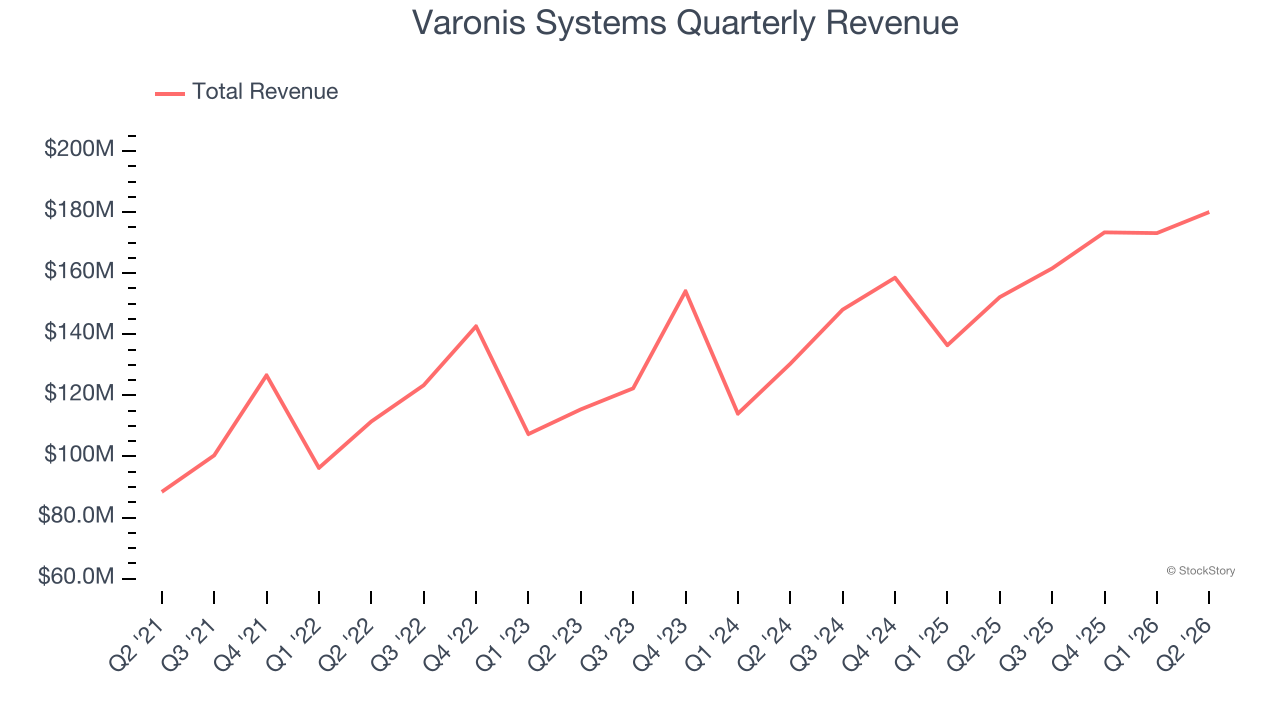
We at StockStory place the most emphasis on long-term growth, but within software, a half-decade historical view may miss recent innovations or disruptive industry trends. Varonis Systems’s annualized revenue growth of 14.9% over the last two years aligns with its five-year trend, suggesting its demand was consistently weak. 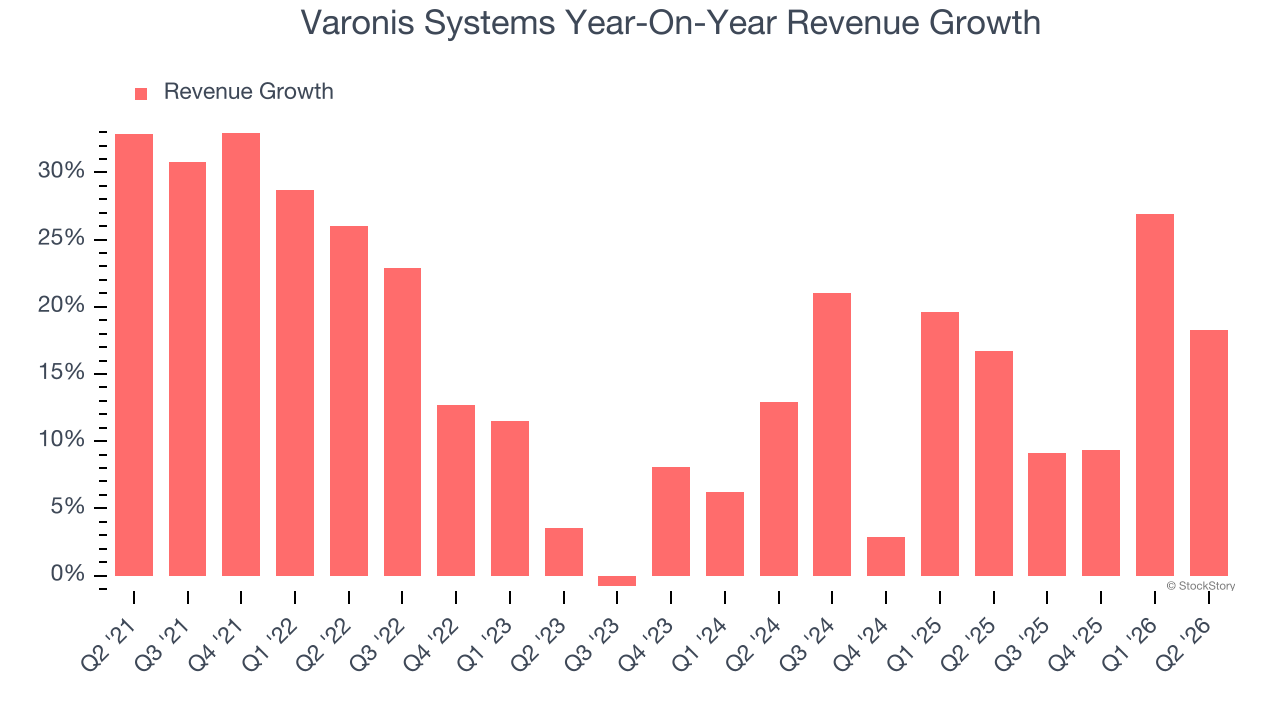
This quarter, Varonis Systems reported year-on-year revenue growth of 18.3%, and its $180 million of revenue exceeded Wall Street’s estimates by 1.8%. Company management is currently guiding for a 15.4% year-on-year increase in sales next quarter.
Looking further ahead, sell-side analysts expect revenue to grow 16.7% over the next 12 months, an improvement versus the last two years. This projection is above the sector average and indicates its newer products and services will spur better top-line performance.
ONE MORE THING: 3 Hidden Platforms Growing 3X Faster than Amazon, Google, and PayPal. Amazon, Google, and Meta all followed the same playbook: Dominate an ignored market. Build an unbeatable moat. Scale until you’re unstoppable.
These three platforms are running that exact playbook right now. The early investors in Amazon made fortunes. The early investors in these could do the same. Get All 3 Stocks Here for FREE.
Billings
Billings is a non-GAAP metric that is often called “cash revenue” because it shows how much money the company has collected from customers in a certain period. This is different from revenue, which must be recognized in pieces over the length of a contract.
Varonis Systems’s billings came in at $176.1 million in Q2, and over the last four quarters, its growth slightly lagged the sector as it averaged 13% year-on-year increases. This alternate topline metric grew slower than total sales, meaning the company recognizes revenue faster than it collects cash - a headwind for its liquidity that could also signal a slowdown in future revenue growth. 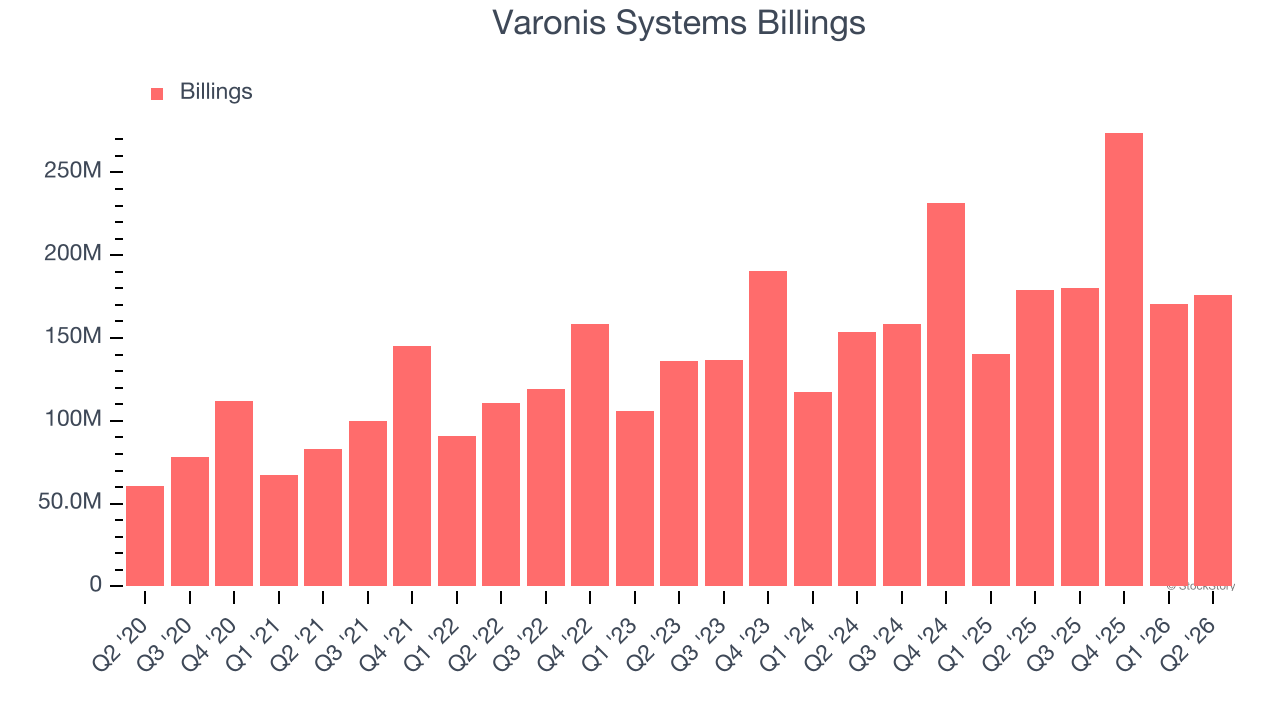
Customer Acquisition Efficiency
The customer acquisition cost (CAC) payback period represents the months required to recover the cost of acquiring a new customer. Essentially, it’s the break-even point for sales and marketing investments. A shorter CAC payback period is ideal, as it implies better returns on investment and business scalability.
Varonis Systems’s recent customer acquisition efforts haven’t yielded returns as its CAC payback period was negative this quarter, meaning its incremental sales and marketing investments outpaced its revenue. The company’s inefficiency indicates it operates in a highly competitive environment where there is little differentiation between Varonis Systems’s products and its peers.
Key Takeaways from Varonis Systems’s Q2 Results
We were impressed by Varonis Systems’s optimistic EPS guidance for next quarter, which blew past analysts’ expectations. We were also excited its adjusted operating income outperformed Wall Street’s estimates by a wide margin. On the other hand, its billings missed and free cash flow margin deteriorated compared to the same quarter last year. Overall, we think this was a decent quarter with some key metrics above expectations. Investors were likely hoping for more, and shares traded down 7.8% to $41.12 immediately following the results.
Big picture, is Varonis Systems a buy here and now? The latest quarter does matter, but not nearly as much as longer-term fundamentals and valuation, when deciding if the stock is a buy. We cover that in our actionable full research report which you can read here (it’s free).