As the Q2 earnings season comes to a close, it’s time to take stock of this quarter’s best and worst performers in the personal loan industry, including Atlanticus Holdings (NASDAQ: ATLC) and its peers.
Personal loan providers offer unsecured credit for various consumer needs. The sector benefits from digital application processes, increasing consumer comfort with online financial services, and opportunities in underserved credit segments. Headwinds include credit risk management in unsecured lending, regulatory oversight of lending practices, and intense competition affecting margins from both traditional and fintech lenders.
The 8 personal loan stocks we track reported a very strong Q2. As a group, revenues beat analysts’ consensus estimates by 4.3% while next quarter’s revenue guidance was 3.6% above.
Amidst this news, share prices of the companies have had a rough stretch. On average, they are down 10.8% since the latest earnings results.
Atlanticus Holdings (NASDAQ: ATLC)
Using data analytics to serve the millions of Americans with less-than-perfect credit scores, Atlanticus Holdings (NASDAQ: ATLC) provides technology and services that help lenders offer credit products to consumers often overlooked by traditional financing providers.
Atlanticus Holdings reported revenues of $620.9 million, up 82.5% year on year. This print exceeded analysts’ expectations by 4.8%. Overall, it was a strong quarter for the company with EPS in line with analysts’ estimates.
Jeff Howard, President and Chief Executive Officer of Atlanticus stated, ”This month marks the 30th anniversary of the founding of our company. Over our 30 year history, we have funded over $53 billion in receivables, raised over $20 billion in capital, and weathered numerous economic cycles, regulatory changes, and competitive pressures. Most importantly, we have served over 23 million consumers and played a vital role in meeting their families' daily financial needs, often at times when others would not. We are proud of the role we have played for three decades in Empowering Better Financial Outcomes for millions of Everyday Americans.
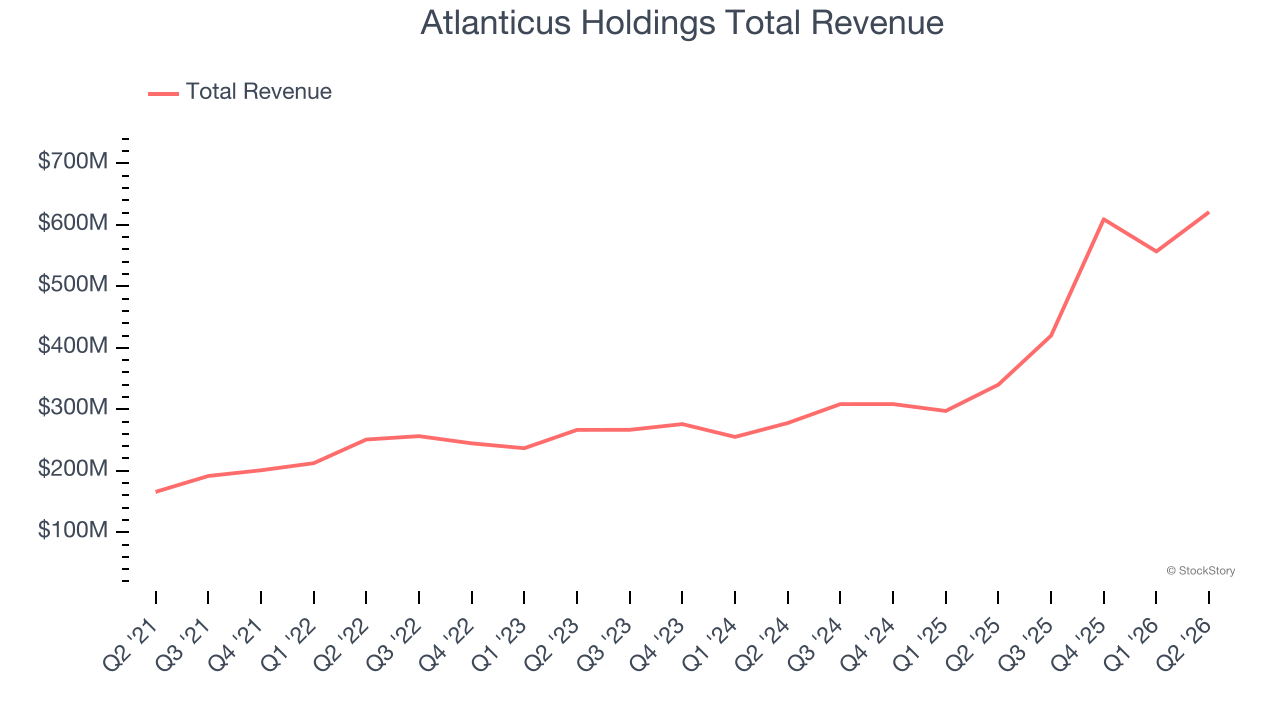
Atlanticus Holdings achieved the fastest revenue growth in the group. Investor expectations, however, were likely higher than Wall Street’s published projections, leaving some wishing for even better results (analysts’ consensus estimates are those published by big banks and advisory firms, not the investors who make buy and sell decisions). The stock is down 16.7% since reporting and currently trades at $93.12.
Best Q2: Affirm (NASDAQ: AFRM)
Founded by PayPal co-founder Max Levchin with a mission to create honest financial products, Affirm (NASDAQ: AFRM) provides a payment network that allows consumers to make purchases and pay for them over time with transparent, flexible installment loans.
Affirm reported revenues of $1.17 billion, up 33% year on year, outperforming analysts’ expectations by 5.2%. The business had a stunning quarter with a beat of analysts’ EPS estimates and a solid beat of analysts’ EBITDA estimates.
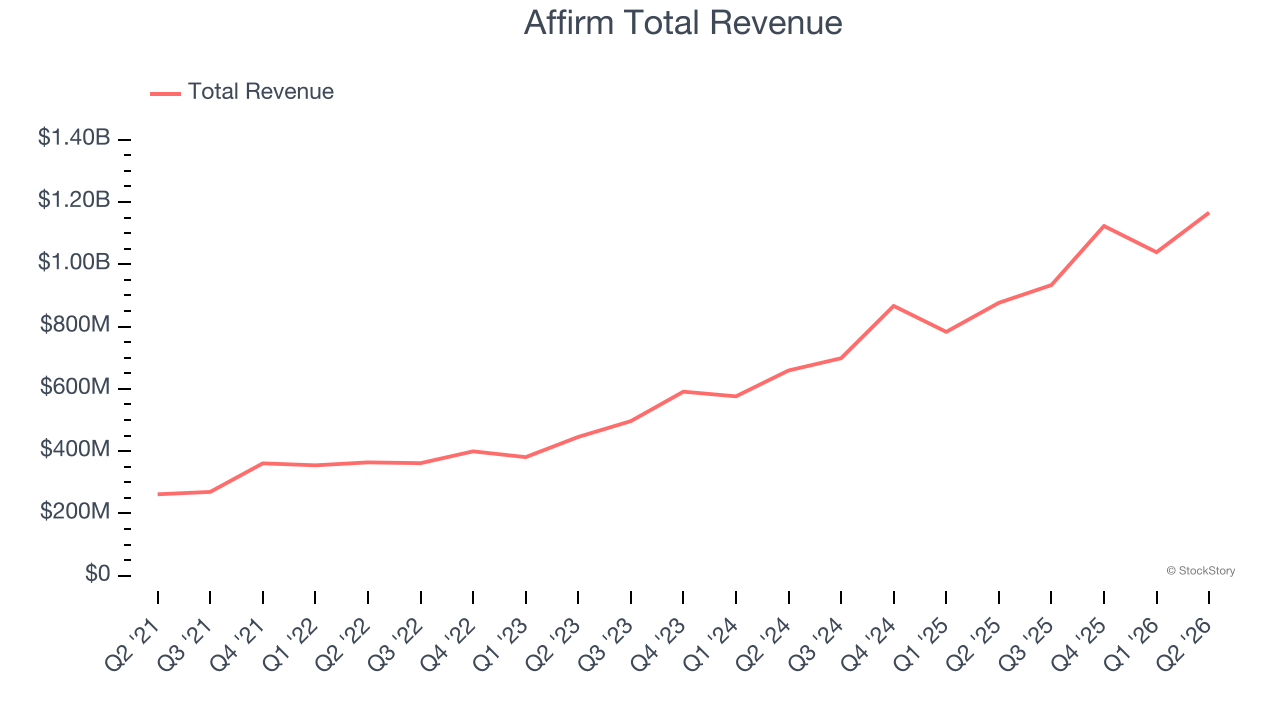
Although it had a fine quarter compared to its peers, the market seems unhappy with the results as the stock is down 7% since reporting. It currently trades at $72.05.
Is now the time to buy Affirm? Access our full analysis of the earnings results here, it’s free.
Weakest Q2: OneMain (NYSE: OMF)
Dating back to 1912 and formerly known as Springleaf, OneMain Holdings (NYSE: OMF) provides personal loans, auto financing, and credit cards to nonprime consumers who have limited access to traditional banking services.
OneMain reported revenues of $1.29 billion, up 6.9% year on year, exceeding analysts’ expectations by 1.4%. It was a satisfactory quarter as it also posted a narrow beat of analysts’ net interest income estimates but a significant miss of analysts’ EBITDA estimates.
As expected, the stock is down 1.2% since the results and currently trades at $61.52.
Read our full analysis of OneMain’s results here.
SoFi (NASDAQ: SOFI)
Starting as a student loan refinancing company founded by Stanford business school students in 2011, SoFi Technologies (NASDAQ: SOFI) operates a digital financial platform offering lending, banking, investing, and other financial services to help members borrow, save, spend, invest, and protect their money.
SoFi reported revenues of $1.21 billion, up 40.5% year on year. This number surpassed analysts’ expectations by 7.1%. Overall, it was an exceptional quarter as it also produced a solid beat of analysts’ EBITDA estimates and a beat of analysts’ EPS estimates.
The stock is up 2.1% since reporting and currently trades at $17.10.
Read our full, actionable report on SoFi here, it’s free.
Sezzle (NASDAQ: SEZL)
Founded in 2016 as an alternative to traditional credit cards for younger shoppers, Sezzle (NASDAQ: SEZL) provides a payment platform that allows consumers to split purchases into four interest-free installments over six weeks at participating retailers.
Sezzle reported revenues of $149.7 million, up 51.7% year on year. This print beat analysts’ expectations by 9.8%. It was an exceptional quarter as it also put up a solid beat of analysts’ EBITDA estimates and a beat of analysts’ EPS estimates.
Sezzle scored the biggest analyst estimate beat among its peers. The stock is down 33.9% since reporting and currently trades at $118.01.
Read our full, actionable report on Sezzle here, it’s free.
Market Update
Over the past year, investors have been forced to repeatedly answer the same question: what is the market’s biggest risk? The answer has changed several times, and each shift has reshaped market leadership.
Late in 2025 and early 2026, artificial intelligence became the market’s primary uncertainty. Investors questioned whether AI would erode software pricing power and weaken competitive moats as AI made it easier to replicate once-differentiated products.
By the spring, technology took a back seat to geopolitics. The U.S. conflict with Iran briefly became the market’s dominant narrative, raising concerns about oil prices, inflation, and global growth. But as energy markets remained orderly and fears of a prolonged supply disruption faded, investors quickly turned their focus back to fundamentals.
Want to invest in winners with rock-solid fundamentals? Check out our 9 Best Market-Beating Stocks and add them to your watchlist. These companies are poised for growth regardless of the political or macroeconomic climate.