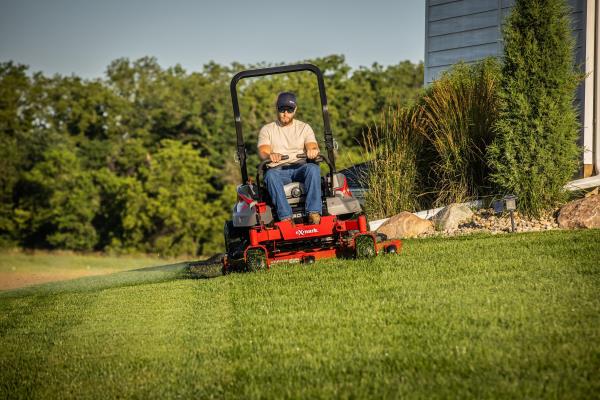
SPONSORED CONTENT -- (StatePoint) How short to mow is a commonly debated topic, and getting it right is not only tricky, but critical to a healthy lawn.
“The goal is to find the right height for the turf type. Mowing too low can over-expose your lawn to the sun, weakening the roots and creating the potential for a weed infestation; and mowing too high runs the risk of excess moisture build-up, creating a welcoming environment for pests and disease,” says Exmark marketing manager, Lenny Mangnall. “On the other hand, grass mowed to the right height can most effectively leverage vital sunlight, rain and nutrients for deeper, denser, stronger and healthier blades.”
A video that Exmark made to demystify lawn care explains that to strike the right balance, you should follow the golden rule of mowing: Never cut off more than one-third of the blade at a time, even if your lawn is overgrown. While you may feel like you’re saving time, overzealous mowing is doing your lawn a disservice. Gradually lowering your blades to the desired height will help maintain a strong root system and lush yard canopy.
Another consideration is grass type, with warm-season grasses and cool-season grasses falling into two mowing height ranges.
For warm-season grasses, like Zosia and Bermuda, drop the deck height of your mower close to its lowest setting, between 1-2 inches high. These grasses thrive in scorching summer sun and can handle a lower height. If you have cool-season grass, like Fescue or Kentucky Bluegrass, cut it a little bit higher, between 2.5-4 inches. These grasses are built for freezing winters and need some height as protection from the elements.
It’s also important to remember that over the course of a year, the height you mow to within the recommended range of your grass type will change. Once springtime rolls around, lower your deck height by a half inch from your normal summer height. This encourages new growth.
During summer, mow on the higher end of your grass type’s specified range. Taller grass provides shade to the soil, helping it retain the moisture needed to stay healthy and cool.
In fall, continue your normal summer routine, especially if you have warm-season grass. If you have a cool-season lawn, you might have to up your mowing frequency, as it’s this grass type’s prime growing season.
For the last mowing session of the year, drop your mowing height by half an inch again. That brings you up to winter, the perfect season for you and your lawn to rest. With most grasses going dormant in winter, mowing isn’t typically necessary. So take that time to do other activities and tasks you enjoy in the yard. For warmer climates, you can continue to mow, just cut down on the frequency to ensure a healthier lawn.
For additional insights, watch “How to Determine Mowing Height,” an episode of “Done-In-A-Weekend Projects,” an original series from lawn care equipment manufacturer, Exmark. To watch the video, visit Backyard Life –– a unique multimedia destination focused on helping homeowners improve their outdoor living spaces. There you can also download additional tips and view other Exmark Original Series videos.
Lawn care may seem complex, but with the right knowledge, you can cultivate a lush, thriving lawn this summer and beyond.
*****