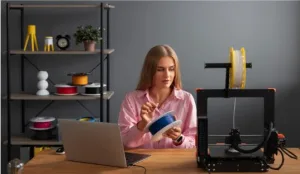
The maker movement has always been about one central idea: control.
Control over how things are designed, how they function, and how they fit into everyday life. Whether it’s a custom 3D-printed object, a modified tool, or a fully original creation, makers are driven by the desire to move beyond standardized solutions and build something that works specifically for them.
What’s interesting is that this mindset is no longer limited to physical objects.
It is now shaping how people approach their health, beauty routines, and overall well-being.
From Standardization to Personalization
For decades, most consumer products followed a one-size-fits-all model. Whether it was nutrition plans, skincare routines, or supplements, the assumption was that general solutions could serve a wide audience.
Today, that assumption is being challenged.
Just as makers design objects to meet specific needs, individuals are beginning to approach their personal routines with the same level of intention. Instead of following generic advice, they are seeking solutions that reflect their individual preferences, values, and biological differences.
This shift is particularly visible in areas like nutrition.
Nutrition as a Custom System
Nutrition is no longer viewed as a static set of rules. It is increasingly understood as something dynamic, influenced by lifestyle, health goals, and ethical considerations.
For individuals following plant-based lifestyles, for example, the need for tailored guidance becomes even more important. Nutritional balance, micronutrient intake, and long-term sustainability all require a more nuanced approach than general recommendations can provide.
Access to a vegan dietitian available online makes this level of personalization more accessible. Instead of navigating conflicting information, individuals can receive guidance that aligns with both their dietary choices and their health needs.
In many ways, this mirrors the maker mindset. It is about building a system that works, not just in theory, but in practice.
The Expansion of Personalization into Beauty
The same shift toward customization is happening in the beauty and wellness space.
Hair care, skincare, and overall appearance are no longer treated as surface-level concerns. They are being approached with the same level of detail and analysis that makers apply to their projects.
Consumers are asking more questions: What ingredients are being used? How do they interact with individual biology? What results can realistically be expected?
Resources like https://www.rennorabeauty.com/ reflect this growing demand for deeper insight. By comparing different approaches to hair and wellness solutions, they provide a more informed perspective, allowing individuals to make decisions based on understanding rather than assumption.
This type of transparency is becoming a defining feature of modern wellness.
The Influence of Technology
Technology plays a key role in enabling this shift. Just as 3D printing allows for rapid prototyping and customization, digital platforms are making personalized health and beauty solutions more accessible.
Data tracking, online consultations, and detailed educational resources all contribute to a more informed decision-making process. Individuals can test, adjust, and refine their routines in a way that was not possible before.
This creates a feedback loop similar to what makers experience when iterating on a design. Each adjustment leads to a better outcome, gradually refining the system.
A Mindset of Iteration
At its core, personalization is not about getting everything right the first time. It is about iteration.
Makers understand this well. A design rarely works perfectly on the first attempt. It is tested, adjusted, and improved over time.
The same principle applies to wellness. What works at one stage may need to be modified later. New information, changing circumstances, and evolving goals all influence the process.
By approaching health and beauty with this mindset, individuals can move away from rigid expectations and toward a more flexible, sustainable system.
Balancing Simplicity and Complexity
One potential challenge of personalization is complexity. With so many options available, it can be easy to overcomplicate routines.
This is where the maker mindset offers an important lesson: simplicity is often the result of refinement.
A well-designed object is not complex for the sake of it. It is streamlined, with each element serving a clear purpose. The same approach can be applied to personal routines.
Instead of adding more, the goal becomes selecting what is most effective and removing what is unnecessary.
According to the World Health Organization, sustainable health practices are those that can be maintained over time without excessive complexity. This reinforces the importance of balance, combining personalization with practicality.
The Future of Everyday Customization
As technology continues to evolve, the line between creation and consumption is becoming increasingly blurred. Individuals are no longer passive users of products and services. They are active participants in shaping their own experiences.
This trend is likely to continue, influencing not only wellness, but also how people interact with the world around them.
For the maker community, this represents an exciting extension of familiar principles. The same creativity, curiosity, and problem-solving approach that drives innovation in physical design is now being applied to personal well-being.
The rise of personalization reflects a broader shift in how people think about control, choice, and responsibility.
From 3D printing to tailored nutrition and beauty routines, the underlying principle remains the same: solutions work best when they are designed with the individual in mind.
By adopting a maker mindset, one that values experimentation, iteration, and intentional design, individuals can create systems that support their health and well-being in a meaningful way.
And in a world full of standardized options, that level of customization is becoming not just desirable, but essential.