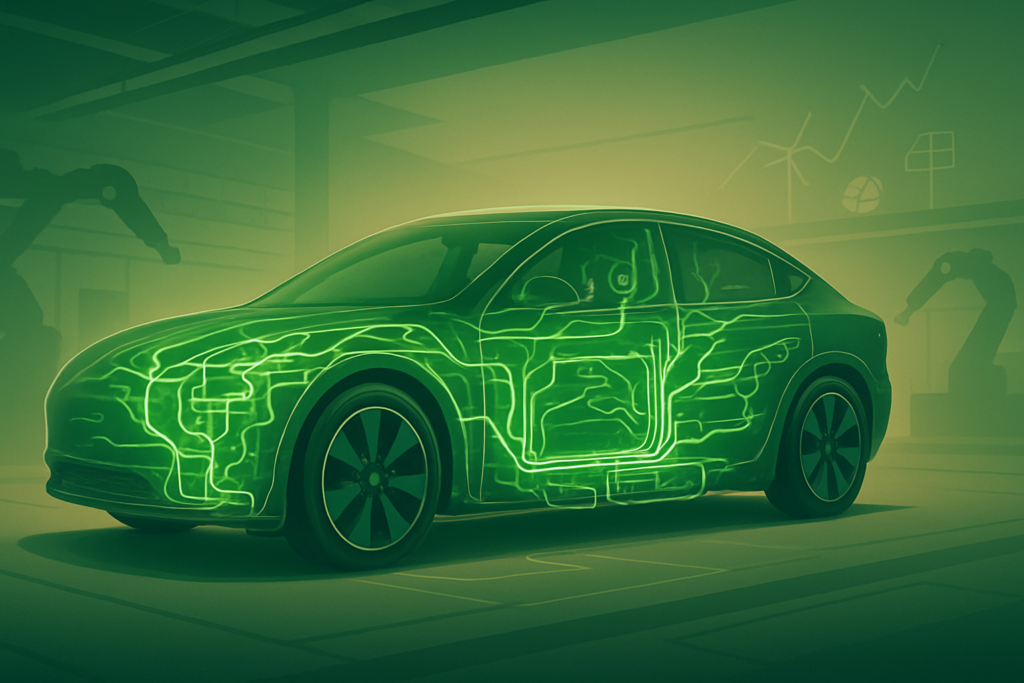
On the morning of April 1, 2026, a new titan emerged on the New York Stock Exchange floor. Versigent PLC (NYSE: VGNT) began its life as an independent public entity, marking one of the most significant automotive sector spin-offs of the decade. Formed from the Electrical Distribution Systems (EDS) segment of Aptiv PLC (NYSE: APTV), Versigent represents the "nervous system" of the modern vehicle.
While the name is new, the company is anything but a startup. It enters the market with nearly $9 billion in annual revenue and a lineage that stretches back to the dawn of the automotive age. As the industry pivots aggressively toward electric vehicles (EVs) and software-defined architectures, Versigent is being positioned by management as a pure-play leader in the physical infrastructure required to power the next generation of mobility.
Historical Background
Versigent’s journey to independence is rooted in the long history of the automotive supply chain. Its core operations originated within General Motors (NYSE: GM) as part of the Packard Electric division, which later became a foundational piece of Delphi Automotive. When Delphi rebranded as Aptiv in 2017, the company began a strategic pivot toward software and "active safety" (the "brain" of the car), while the electrical architecture segment (the "nervous system") continued to provide the steady cash flow and manufacturing backbone.
In early 2025, Aptiv leadership determined that the market would better value the two entities separately. The goal was to allow Aptiv to trade as a high-growth technology stock, while Versigent could attract investors seeking steady cash flows and high-dividend potential from its market-leading manufacturing operations. The spin-off was finalized on April 1, 2026, making Versigent a standalone Swiss-domiciled company.
Business Model
Versigent operates as a global leader in power and signal distribution. Its business model revolves around the design and high-volume manufacturing of:
- Wiring Harnesses: Complex, labor-intensive assemblies of wires that span the entire length of a vehicle.
- Connection Systems: Precision-engineered terminals and connectors that link sensors, computers, and batteries.
- Power Distribution Centers: The "fuse boxes" of the modern car, managing the flow of electricity from the battery to subsystems.
- High-Voltage Solutions: Specialized cabling and charging components specifically designed for the massive electrical demands of battery electric vehicles (BEVs).
The company follows a long-cycle contract model, often securing agreements with Original Equipment Manufacturers (OEMs) like Ford (NYSE: F), Stellantis (NYSE: STLA), and Volkswagen (OTC: VWAGY) years before a vehicle enters production.
Stock Performance Overview
As of today, April 2, 2026, Versigent is in its second full day of trading. The stock’s debut was marked by the typical volatility associated with major spin-offs. On April 1, VGNT opened at a "when-issued" price implied by the spin-off ratio but saw immediate downward pressure as index funds and institutional holders of Aptiv rebalanced their portfolios.
VGNT closed its first day at $27.85, representing an initial market capitalization of approximately $2.26 billion. While this initial dip of nearly 9% might concern retail onlookers, analysts view it as a standard "mechanical" sell-off caused by Aptiv-focused growth funds shedding their new shares in a value-oriented manufacturing business.
Financial Performance
Versigent enters the public market with a robust financial profile inherited from its time as a division of Aptiv.
- Pro-forma 2025 Revenue: $8.8 billion.
- 2026 Guidance: Management has projected revenue between $9.1 billion and $9.4 billion, indicating a 4-7% growth rate.
- Profitability: The company reported an adjusted EBITDA of $893 million in 2025, with a healthy EBITDA margin of roughly 10.1%.
- Valuation: Trading at approximately 2.5x EV/EBITDA, Versigent is positioned as a "value play" compared to the higher multiples seen in pure-play software or semiconductor-heavy auto suppliers.
The company holds a debt-to-equity ratio that is currently above its long-term target of 1.5x, a result of the capital structure established during the spin-off, but plans to use free cash flow to deleverage over the next 18 months.
Leadership and Management
Versigent is led by Joseph Liotine, a seasoned executive with a deep operational background. Liotine previously served as the Chief Operating Officer of Whirlpool Corporation, where he gained extensive experience managing global, high-complexity manufacturing footprints.
Joining him is Thomas Ostermann as CFO. Ostermann brings deep automotive ties from previous senior roles at Stellantis and GM. The board of directors consists of a mix of former Aptiv executives and industrial specialists, signaling a strategy focused on "operational excellence"—code for aggressive cost-cutting and manufacturing automation to improve margins.
Products, Services, and Innovations
Versigent's competitive edge lies in its "High-Voltage Portfolio." As vehicles move from 12V to 400V and 800V systems for EVs, the requirements for shielding, heat dissipation, and connector reliability become exponentially more difficult.
The company’s recent innovations include:
- Smart Fuse Boxes: Power distribution units that use solid-state switching rather than mechanical fuses, allowing for software-controlled power management.
- Weight-Reduction Cabling: Using aluminum and thin-walled insulation to reduce vehicle weight, a critical factor for extending EV range.
- Automated Wire Termination: A push to automate the historically manual process of wiring harness assembly, which could provide a massive tailwind to margins if successfully scaled.
Competitive Landscape
Versigent is one of the "Big Three" in the global electrical architecture market.
- Yazaki Corporation: A privately held Japanese giant and the current market share leader.
- Sumitomo Electric: Another Japanese heavyweight with a diversified industrial base.
- Lear Corporation (NYSE: LEA): Versigent's closest public peer. Lear’s E-Systems segment competes directly for high-voltage contracts.
While Yazaki and Sumitomo have strong relationships with Japanese OEMs like Toyota (NYSE: TM), Versigent is deeply embedded with North American and European manufacturers. Its primary weakness is a lower market share among the "New Gen" Chinese EV manufacturers, such as BYD (OTC: BYDDF) and Nio (NYSE: NIO).
Industry and Market Trends
The "Megatrend" favoring Versigent is the electrification of the powertrain. A battery electric vehicle contains roughly 2x to 2.5x the dollar value of electrical content compared to a traditional internal combustion engine (ICE) vehicle. As the global fleet transitions, Versigent’s "revenue per vehicle" naturally expands even if total vehicle units remain flat.
However, the industry is also facing a shift toward "Zonal Architecture." Instead of miles of wiring running back and forth to a central computer, cars are being built with localized "zones." While this reduces the total amount of wiring, it increases the complexity and value of the connectors and zonal controllers that Versigent produces.
Risks and Challenges
- Labor Costs: Wiring harness assembly remains surprisingly manual. Versigent operates massive plants in low-cost regions like North Africa and Mexico. Any labor unrest or significant wage inflation in these areas poses a direct threat to margins.
- Commodity Price Volatility: Copper is the lifeblood of Versigent’s products. While the company has "pass-through" agreements with most OEMs, there is often a lag between a spike in copper prices and the adjustment in customer pricing.
- Geopolitical Friction: With manufacturing in over 25 countries, trade wars or regional instability (particularly in Eastern Europe or North Africa) could disrupt supply chains overnight.
Opportunities and Catalysts
- Margin Expansion: If Joseph Liotine can successfully implement the "Digital Factory" initiatives started at Aptiv, automating even 15% of the assembly process could lead to a 200-300 basis point improvement in EBITDA margins.
- M&A Potential: As an independent entity with its own currency (stock), Versigent is expected to be an active consolidator of smaller, tier-2 connector companies.
- Dividend Initiation: Analysts anticipate that the board will announce a quarterly dividend by late 2026, which would likely attract a new class of yield-seeking investors and provide a floor for the stock price.
Investor Sentiment and Analyst Coverage
Initial sentiment is "cautiously optimistic." RBC Capital Markets recently initiated coverage with a "Sector Perform" rating, noting that while the valuation is attractive, the company needs to prove it can win contracts with Chinese OEMs to secure long-term growth.
Retail sentiment on platforms like Stocktwits and Reddit has been mixed, with many "accidental" shareholders (from the Aptiv spin-off) questioning whether to hold the new entity or sell. Institutional "smart money" has shown interest in Versigent’s free cash flow profile, viewing it as a safer, more tangible play on EVs than the pre-revenue EV startups that dominated headlines in years past.
Regulatory, Policy, and Geopolitical Factors
Versigent is a major beneficiary of government mandates like the U.S. Inflation Reduction Act (IRA) and the EU's Green Deal, which provide incentives for EV production and infrastructure. However, the company must also navigate increasingly stringent "Rules of Origin" in trade agreements like the USMCA, which dictate where components must be manufactured to qualify for duty-free status.
Furthermore, as a Swiss-domiciled company with significant U.S. operations, Versigent faces a complex global tax landscape, particularly regarding the OECD’s global minimum tax initiatives.
Conclusion
Versigent PLC (VGNT) represents a fascinating intersection of old-world manufacturing and new-world technology. It is a century-old business dressed in a brand-new ticker symbol. For investors, the bull case is simple: Versigent is the indispensable plumber of the electric vehicle revolution, and its revenue per vehicle is set to double as the world abandons the internal combustion engine.
However, the path forward is not without friction. Investors must weigh the company’s impressive scale and cash flow against the risks of labor inflation and its currently limited footprint in the high-growth Chinese market. As the dust settles from its April 1 debut, VGNT will likely transition from a "spin-off story" to a "margin story." If Liotine and his team can deliver on automation and EV contract wins, the current $27.85 entry point may eventually be seen as a ground-floor opportunity in a critical infrastructure play.
This content is intended for informational purposes only and is not financial advice.