On April 5, 2026, the global energy market faced an unprecedented crisis characterized by a "symbolic" production hike from OPEC+ and the effective closure of the world's most critical oil chokepoint, the Strait of Hormuz.
The global energy market is currently reeling from a profound disconnect between diplomatic gestures and physical reality. On April 5, 2026, the OPEC+ alliance announced a coordinated production increase of 206,000 barrels per day (bpd) to combat soaring prices. However, the move has been roundly dismissed by analysts and traders alike. With the Strait of Hormuz remaining effectively closed following a series of military escalations in late February, the market is currently grappling with a staggering shortfall of 17.8 million bpd—leaving the OPEC+ contribution as little more than a "rounding error" in a global economy starving for fuel.
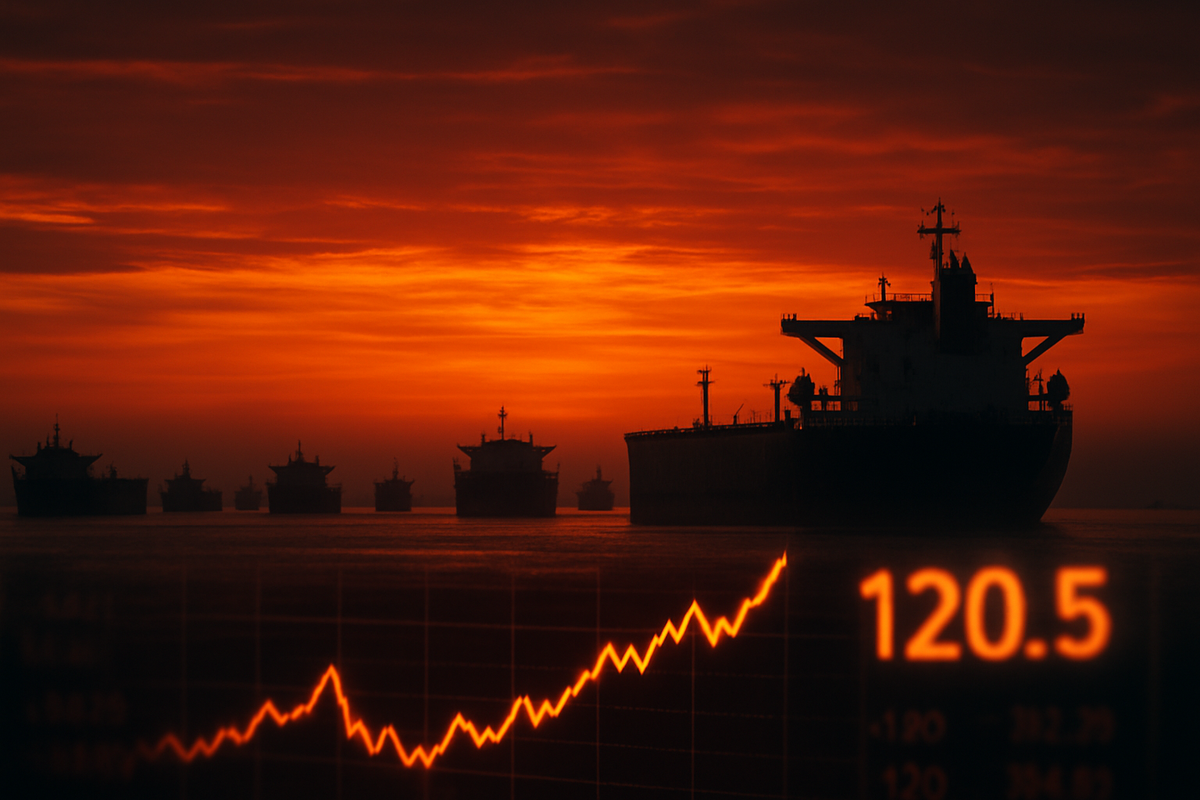
As of today, April 7, 2026, Brent crude is hovering near $124 per barrel, having surged over 40% since the onset of the blockade. The 206,000 bpd increase, while intended to signal stability, represents less than 1.2% of the daily volume currently trapped behind the Persian Gulf’s chokepoint. Market participants are increasingly vocal, characterizing the production hike as "wholly inadequate" and "symbolic at best," as the physical shortage of crude and liquefied natural gas (LNG) begins to shutter industrial capacity across Europe and Asia.
The Arithmetic of a Crisis: Why 206,000 Barrels Cannot Fix a 17.8 Million Hole
The recent OPEC+ virtual meeting, led by heavyweight members Saudi Arabia and Russia, concluded with an agreement to begin a partial rollback of voluntary cuts that were originally implemented in 2023. Under the new agreement, Saudi Arabia and Russia will each contribute an additional 62,000 bpd starting in May, with Iraq and the United Arab Emirates adding 26,000 and 18,000 bpd, respectively. While this technically puts more oil on the "theoretical" market, the logistics of actually moving that oil to refineries have been shattered by the closure of the Strait of Hormuz.
The blockade, which began in late February 2026 following "Operation Epic Fury"—a massive military strike on regional infrastructure—has effectively halted 20% of the world’s seaborne oil and fuel trade. Rystad Energy confirms that 17.8 million bpd of liquid fuels are now unreachable. Although Saudi Arabia has attempted to utilize its East-West Pipeline to move oil to the Red Sea port of Yanbu, terminal constraints have capped this workaround at roughly 7 million bpd. This leaves a net global deficit of nearly 11 million barrels every single day, a gap that the 206,000 bpd hike does virtually nothing to bridge.
The immediate reaction from the trading desks was one of disbelief. WTI crude futures have entered a state of record backwardation, with the front-month contract trading nearly $17 above the second month. This extreme pricing structure indicates a desperate, immediate need for physical barrels. Analysts from Capital Street FX noted that the OPEC+ move fails to address the "structural supply deficit" created by the war, describing the group's response as "academic" as long as the world’s most critical waterway remains impassable.
Winners and Losers in the Great Supply Crunch
The primary victims of this supply-demand chasm are the Western supermajors with heavy footprints in the Persian Gulf. Shell (NYSE: SHEL) and ExxonMobil (NYSE: XOM) are currently facing severe operational disruptions to their multi-billion dollar LNG interests in Qatar. With the Strait closed, Qatari LNG—responsible for a significant portion of the heating and power needs of the European Union—is essentially stranded. Both companies have seen their stock prices struggle despite high commodity prices, as investors fear the long-term impact of "stranded assets" and the potential for infrastructure damage should the conflict escalate.
Conversely, companies with production bases far removed from the Middle East are seeing a windfall. Chevron (NYSE: CVX), which has significant production in the Permian Basin and Kazakhstan, has seen its shares outperform the broader energy sector. However, even for winners, the situation is precarious. Chevron CEO Mike Wirth recently warned at the CERAWeek conference that the market is "underpricing" the reality of a physical supply crunch, noting that logistics chains are being severed so quickly that simply managing inventory has become an hourly struggle for global energy firms.
European majors like TotalEnergies (NYSE: TTE) and BP (NYSE: BP) find themselves in a unique bind. While they benefit from the record-high margins on the oil they can deliver, their substantial investments in Middle Eastern extraction have become a liability. In Europe, diesel prices have topped $200 per barrel for the first time in history, and retail fuel costs in France are nearing €3 per liter. This has sparked widespread haulage protests, putting political pressure on these companies to provide relief that they physically cannot deliver.
A Systemic Failure of Energy Security
The current crisis highlights a broader trend: the extreme vulnerability of the global "just-in-time" energy supply chain. For years, OPEC+ has functioned as the market’s "central bank of oil," but the April 2026 decision reveals the limits of its power. When the physical infrastructure of trade—the literal waterways—are blocked, the ability to increase production at the wellhead becomes irrelevant. This event is being compared to the 1973 oil embargo, but with the added complexity of a modern, interconnected global economy that relies on LNG and refined products just as much as crude oil.
The failure of the 206,000 bpd hike to calm markets also suggests a growing rift in geopolitical influence. While Saudi Arabia and the UAE have expressed a desire to stabilize prices, their inability to guarantee safe passage through the Strait of Hormuz has rendered their production capacity moot. This has led to emergency discussions in Washington and Brussels regarding further releases from Strategic Petroleum Reserves (SPR). However, after years of utilizing the SPR to manage smaller price spikes, many analysts warn that the remaining reserves are insufficient to cover a deficit of 11 million bpd for more than a few weeks.
Regulatory and policy shifts are already in motion. The International Energy Agency (IEA) is reportedly considering a "Level 3" emergency response, which would mandate fuel rationing in member countries to prevent a total collapse of the grid. This historical precedent—the first since the mid-20th century—underscores the gravity of the situation. The OPEC+ decision, rather than providing relief, has served only to highlight how little "spare capacity" the world actually has when a major chokepoint is taken offline.
The Road Ahead: Potential Scenarios and Strategic Pivots
In the short term, the market is bracing for Brent to potentially breach $150 per barrel if a diplomatic or military solution to the Hormuz blockade is not found by the end of April. The 206,000 bpd increase will technically come online in May, but its impact will be negligible unless insurance providers like Lloyd's of London resume "war risk" coverage for tankers, which is currently suspended. For energy companies, the strategic pivot is already underway: a massive reallocation of capital toward "secure" geography, such as the North Sea, the Americas, and offshore Guyana.
Looking further ahead, this crisis may act as the final catalyst for a radical acceleration in non-fossil energy investment, not for environmental reasons, but for national security. However, the "energy transition" takes decades, and the immediate challenge is surviving the next six months. If the Strait remains closed, we may see the emergence of a two-tier global oil market: "Inside-Hormuz" oil that is effectively worthless because it cannot be moved, and "Outside-Hormuz" oil that commands a massive premium.
Investors should watch for the next OPEC+ monitoring committee meeting, though expectations for a larger hike are low given that most members are already producing at their physical limits. The more critical indicators will be the status of "Operation Epic Fury" and any breakthrough in naval escort negotiations. Until tankers can safely navigate the Gulf, the global economy remains at the mercy of a 17.8 million barrel deficit that no amount of diplomatic posturing can fill.
Wrap-Up: A Market Out of Control
The OPEC+ decision of April 2026 will likely be remembered as a footnote in a year defined by energy scarcity. The 206,000 bpd production hike, while a gesture toward market stability, is mathematically irrelevant against the backdrop of the 17.8 million bpd loss caused by the Strait of Hormuz closure. The market’s "wholly inadequate" verdict is reflected in the vertical climb of crude prices and the record backwardation that suggests a system near its breaking point.
For the moving forward, investors must differentiate between companies with diversified, "safe" production and those heavily exposed to the Persian Gulf. While high prices generally benefit the sector, the logistical impossibility of moving product presents a unique risk that higher margins cannot solve. The coming months will be a period of extreme volatility, and the primary metric for success will not be production capacity, but delivery capability.
The lasting impact of this crisis will likely be a total re-evaluation of global energy security and a realization that "spare capacity" is a myth if the paths to market are not secure. For now, the world waits for a resolution to the blockade, as the small increase from OPEC+ does little to alleviate the growing shadow of a global energy depression.
This content is intended for informational purposes only and is not financial advice.