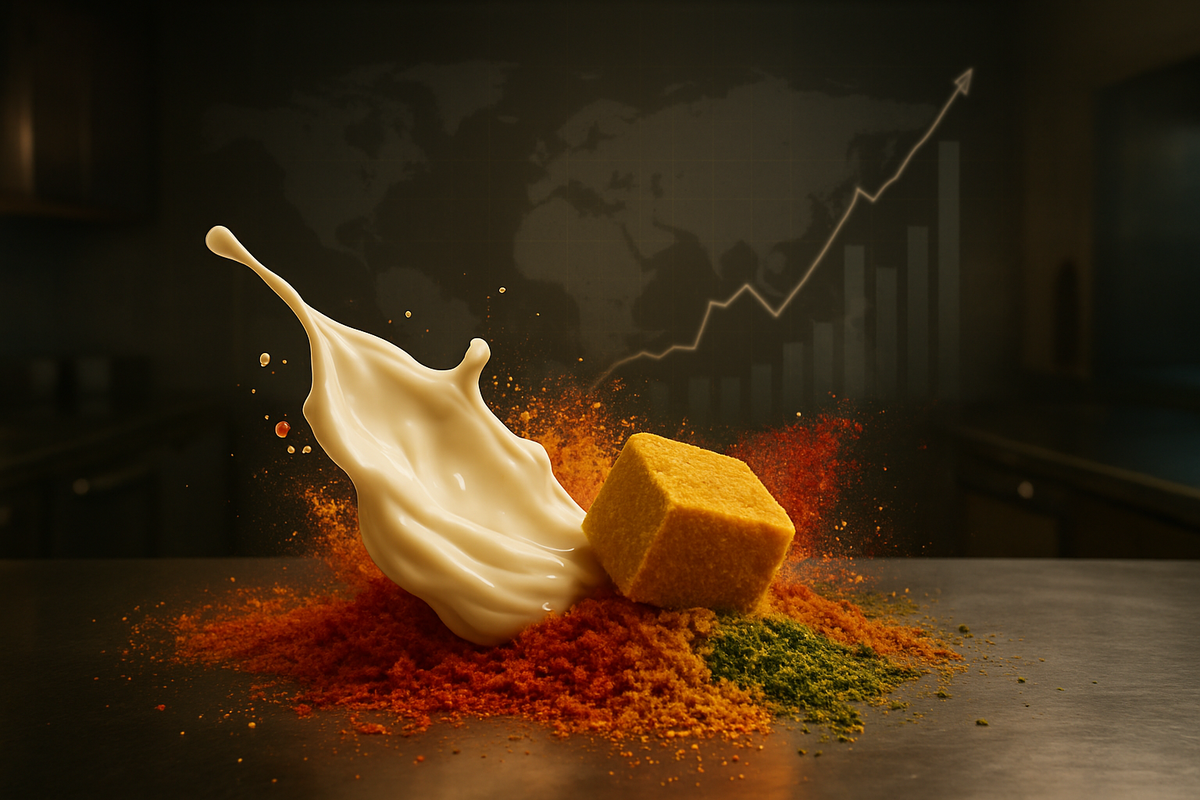
In a move that has sent shockwaves through the consumer staples sector, McCormick & Company (NYSE: MKC) and Unilever PLC (NYSE: UL) have announced a definitive agreement to merge Unilever’s extensive food business with the spice giant. The $65 billion transaction, structured as a tax-efficient Reverse Morris Trust, aims to create a "global flavor powerhouse" with a combined pro forma annual revenue of approximately $20 billion. The deal unites the world's leading spice and seasoning portfolio with iconic household staples such as Knorr and Hellmann’s, fundamentally altering the landscape of the global pantry.
The immediate implications of the merger are significant, as McCormick transforms from a specialized seasoning player into a diversified global food titan. By absorbing Unilever’s "Nutrition" division, McCormick gains an unprecedented distribution network in Europe and Asia, while Unilever completes its multi-year pivot toward becoming a pure-play beauty and wellness company. However, the market’s initial reaction has been tempered by the sheer scale of the $15.7 billion in new debt McCormick is assuming to facilitate the transaction, raising questions about the company’s near-term fiscal flexibility in a high-interest-rate environment.
The Architecture of a $65 Billion Powerhouse
The merger is the culmination of a strategic shift at Unilever that began in late 2024 under pressure from activist investors seeking to simplify the conglomerate's sprawling structure. Following the successful spinoff of its ice cream unit in November 2025, Unilever turned its attention to its heritage food brands. On March 31, 2026, the companies officially unveiled the deal, revealing a Reverse Morris Trust structure designed to avoid the massive tax liabilities associated with a traditional sale. Under the terms, Unilever will spin off its food business into a new entity that will immediately merge with a McCormick subsidiary. Upon completion, Unilever and its shareholders will hold a 65% stake in the new combined company, while existing McCormick shareholders will retain 35%.
To fund the $15.7 billion cash payment required by the deal, McCormick has secured committed bridge financing from a consortium of major banks, including Citigroup, Goldman Sachs, and Morgan Stanley. This capital will be used by Unilever to aggressively pay down its own debt and fund a €6 billion share buyback program. The combined entity, which will retain the McCormick name and be led by McCormick CEO Brendan Foley from its Hunt Valley, Maryland headquarters, will command a portfolio featuring Knorr—the world’s leading savory brand—and Hellmann’s, the global leader in mayonnaise, alongside McCormick’s existing high-growth brands like Cholula and Frank’s RedHot.
Identifying the Winners and Losers in the Flavor War
McCormick stands as the primary strategic winner, effectively tripling its scale overnight and gaining access to institutional knowledge in the "quick-scratch" cooking and condiments categories where Unilever has dominated for decades. By leveraging Unilever’s international supply chains, McCormick can more aggressively push its spice and hot sauce portfolios into emerging markets where it previously lacked a strong foothold. However, the victory comes at a cost; the company’s net leverage is expected to spike to 4.0x at closing, a figure that has caused some credit rating agencies to place McCormick’s debt on a negative watch.
For Unilever, the deal represents a clean break from its slower-growth food roots, allowing management to focus entirely on its high-margin Personal Care and Beauty segments. While the cash infusion and buyback program are wins for shareholders in the short term, the company loses the reliable, "inflation-proof" cash flows that brands like Knorr and Hellmann’s provided during economic downturns. Analysts are divided on whether Unilever’s remaining portfolio can sustain the same level of defensive stability that the food business once offered. Meanwhile, mid-tier competitors in the condiments space may find themselves squeezed as the new McCormick-Unilever entity uses its massive scale to dominate shelf space and marketing spend.
Industry Trends and Regulatory Headwinds
This merger fits into a broader trend of "portfolio pruning" among global consumer goods companies. Over the last three years, we have seen a definitive shift away from the "conglomerate model" of the 20th century toward leaner, specialized organizations. By divesting food, Unilever follows the path of other giants that have spun off slower-moving divisions to chase the higher valuations found in the health and wellness sectors. This deal is also a testament to the enduring power of "heritage brands" in a fragmented media landscape; in an era of TikTok trends and viral recipes, owning the "staple" ingredients like bouillon and mayonnaise provides a moat that newer direct-to-consumer brands struggle to replicate.
However, the path to closing—slated for mid-2027—is fraught with regulatory hurdles. The combined company will hold a dominant, and in some regions near-monopolistic, market share in categories such as bouillons, dry seasonings, and premium condiments. Antitrust regulators in the European Union and the U.S. Federal Trade Commission (FTC) are expected to scrutinize the deal heavily. Historical precedents, such as the blocked mergers in the healthcare and tech sectors in 2024 and 2025, suggest that the "Flavor Powerhouse" may be forced to divest several secondary brands—perhaps Maille mustard or specific regional seasoning lines—to satisfy competition authorities and ensure consumers aren't faced with price hikes at the grocery store.
The Strategic Pivot and the Road to 2027
As the integration process begins, McCormick management has already identified $600 million in annual run-rate cost synergies, with plans to reinvest $100 million of those savings back into R&D and brand innovation. The short-term challenge will be the "deleveraging marathon." McCormick has committed to reducing its debt-to-EBITDA ratio from 4.0x to 3.0x within 24 months of closing. This will require disciplined capital allocation and potentially the sale of non-core assets inherited from the Unilever portfolio. If McCormick can successfully navigate this debt load, the long-term opportunity is the creation of a "one-stop-shop" for global retailers, offering everything from basic table salt to sophisticated ethnic sauces.
Furthermore, the merger creates a unique data opportunity. By combining Unilever’s vast consumer insights from the European market with McCormick’s "Flavor Forecast" and North American digital footprint, the new entity could lead the industry in AI-driven product development. The "smart kitchen" of the future will likely be stocked with products that were cross-pollinated through this deal—think Knorr-infused McCormick spice blends or Hellmann’s dressings featuring Frank’s RedHot flavor profiles. The success of these "synergy products" will be a key metric for investors watching the integration.
Conclusion: A High-Stakes Bet on the Global Palate
The McCormick-Unilever merger is more than just a consolidation of brands; it is a $65 billion bet on the permanence of home cooking and the global demand for flavor. By utilizing the Reverse Morris Trust structure, the companies have engineered a sophisticated exit for Unilever’s food business while providing McCormick with the tools to become an undisputed leader in the grocery aisle. The deal marks the end of an era for Unilever as a diversified conglomerate and the beginning of a new chapter for McCormick as a diversified global food giant.
For investors, the coming months will be defined by regulatory filings and credit updates. While the strategic rationale is sound, the execution risk remains high given the $15.7 billion debt burden and the complexity of merging two distinct corporate cultures. As the 2027 closing date approaches, the market will be looking for signs that the "Global Flavor Powerhouse" can translate its massive scale into superior pricing power and innovation. In a world where food costs remain a central concern for consumers, the impact of this merger will be felt not just on Wall Street, but at dinner tables across the globe.
This content is intended for informational purposes only and is not financial advice